Why in news?
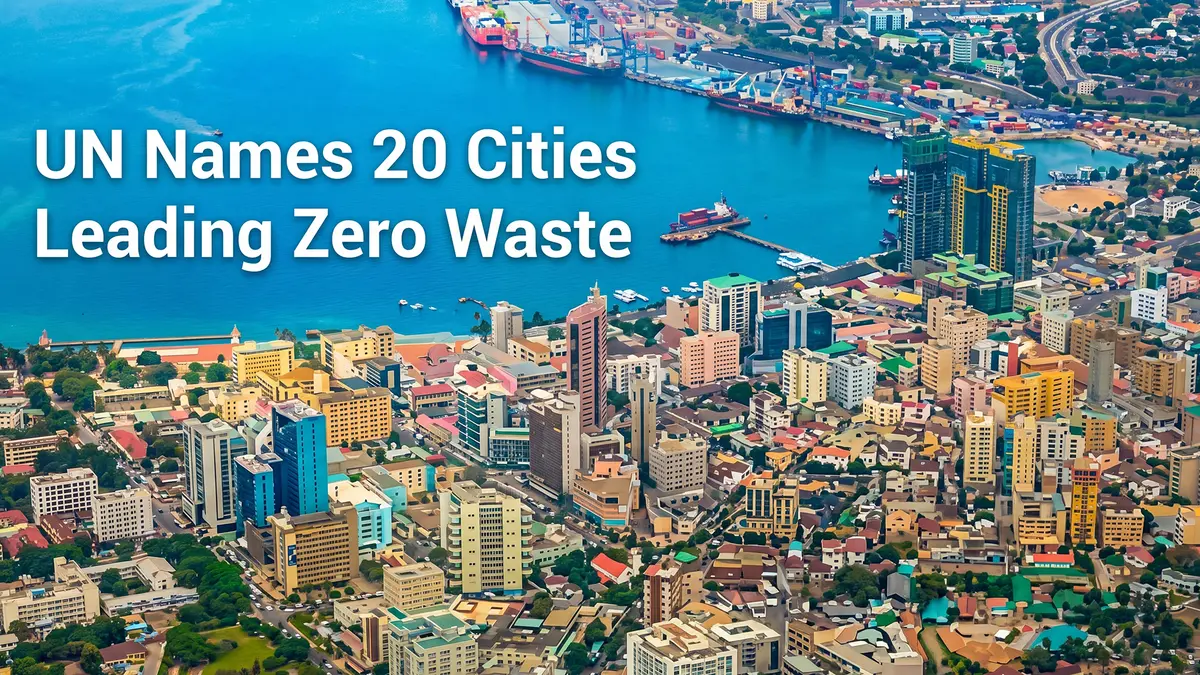
On 27 March 2026 the UN Secretary‑General’s Advisory Board on Zero Waste announced its inaugural “20 Cities Towards Zero Waste” list. The initiative recognises cities implementing innovative waste‑reduction and circular‑economy measures, and Kerala’s coastal town of Varkala was the only Indian city included.
Background
The initiative is coordinated by the UN Secretary‑General’s Advisory Board on Zero Waste with support from UN‑Habitat and the United Nations Environment Programme (UNEP). Cities generate more than 2.1 billion tonnes of municipal solid waste each year, and rapid urbanisation magnifies the challenge of managing waste sustainably. The programme celebrates local governments that translate ambitious zero‑waste plans into practical action.
Objectives
- Recognise leadership: Highlight administrations that demonstrate commitment to reducing waste and building resilient urban systems.
- Share best practices: Encourage exchange of experiences and lessons learned among cities to scale up successful models.
- Inspire others: Motivate other municipalities to adopt circular‑economy approaches like source segregation, composting, reuse and refill systems, and inclusive recycling that integrates informal waste pickers.
- Support implementation: Provide technical assistance and align actions with Sustainable Development Goals 11 (Sustainable Cities and Communities), 12 (Responsible Consumption and Production) and 13 (Climate Action).
About UNEP
- Establishment: UNEP was created in 1972 and serves as the leading global authority on environmental issues.
- Headquarters: Located in Nairobi, Kenya.
- Mandate: Monitors the state of the environment, supports negotiations of environmental treaties, publishes authoritative assessments such as the Global Environment Outlook, and assists countries through capacity building and technical assistance.
Significance
- Model for other cities: Varkala’s inclusion demonstrates how local governments can implement zero‑waste practices that reduce pollution and foster community participation.
- Support for SDGs: The initiative aligns municipal waste management with global commitments on sustainable development and climate action.
- Circular‑economy promotion: Recognising reuse, recycling and composting solutions encourages a shift away from linear “take‑make‑dispose” models.
Conclusion
By spotlighting 20 pioneering cities, the UN’s zero‑waste initiative underscores that sustainable urban living is attainable. With supportive policies and community engagement, cities like Varkala can lead the way toward cleaner and more resilient futures.