

Why in news?
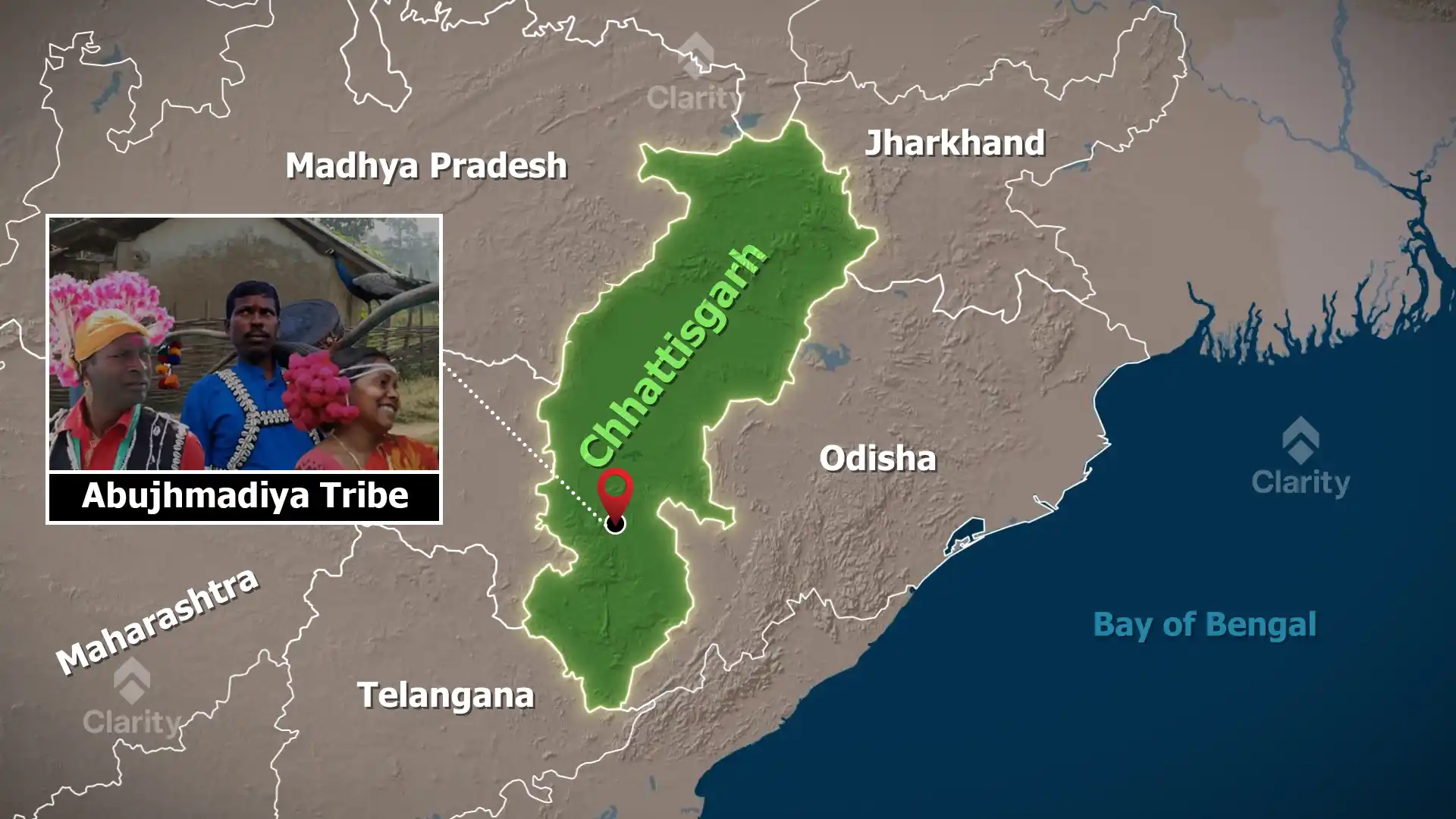
The Abujhmadiya tribal community garnered attention after athletes from the group participated in the Bastar Olympics, a regional sports festival in Chhattisgarh. Their appearance at the games highlighted the tribe’s rich culture and raised awareness about the need to protect its heritage and fragile forest homeland.
Background
The Abujhmadiya, also called Abuj Maria or Hill Maria, live in the hilly Abujmarh region of Narayanpur and Dantewada districts in southern Chhattisgarh. They form a sub‑group of the larger Gond ethnic group and are classified by the Indian government as a Particularly Vulnerable Tribal Group (PVTG) because of their small population, low literacy and continued dependence on subsistence agriculture. Their remote territory was effectively off limits to outsiders until the late 2000s due to insurgent activity and dense forests.
Culture and traditions
- Society: Abujhmadiya communities are organised into clans led by elders. Decisions are taken collectively and property is managed communally.
- Language: They speak a dialect known as Abuj Maria, distinct from mainstream Chhattisgarhi and Hindi.
- Beliefs: The tribe practises animism, worshipping forest spirits and ancestors. Sacred groves are protected as abodes of deities.
- Art and adornment: Women wear distinctive tattoos and jewellery. Music, dance and oral storytelling are central to social life.
- Festivals: The community celebrates Saja and the larger Bastar Dussehra, involving communal feasting, rituals and traditional sports.
Challenges
Abujhmadiya households rely on shifting cultivation, hunting and gathering. Limited access to education, health care and markets leaves them vulnerable to poverty. Recent road building and mining proposals threaten to fragment their forests, while continued conflict in the region exposes villagers to violence and displacement. Activists stress that development programmes must respect the community’s rights, language and customs.
Sources: IE ·