Why in news?
Laboratory experiments simulating the conditions on Saturn’s moon Titan have shown that acrylonitrile, a molecule present in Titan’s atmosphere, does not form cell‑like membranes in liquid methane and ethane. Instead, acrylonitrile co‑crystallises with ethane at the moon’s cryogenic temperatures. The results overturn earlier computer models that suggested acrylonitrile could assemble into membrane‑like “azotosomes,” raising questions about the building blocks of life in Titan’s lakes.
Background
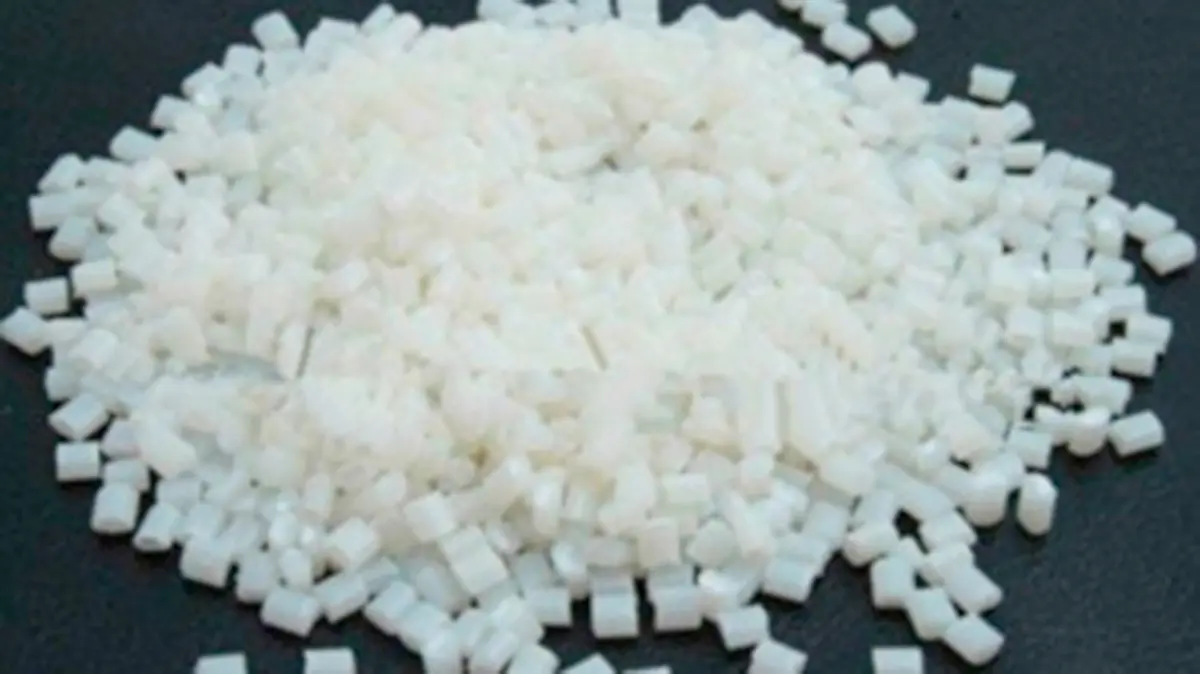
Acrylonitrile is a colourless, synthetic liquid with a sharp, onion‑like odour. In industry it is used to manufacture plastics, synthetic rubber and acrylic fibres. Exposure to high concentrations can irritate the eyes, skin and respiratory tract and is considered a potential carcinogen. Acrylonitrile dissolves in water and evaporates quickly; it was once used as a pesticide but has been discontinued for that purpose.
Titan, the largest moon of Saturn, is unique in possessing lakes and seas of liquid methane and ethane under a nitrogen‑rich atmosphere. In 2015 scientists proposed that acrylonitrile on Titan could form stable membranes, dubbed azotosomes, potentially analogous to lipid membranes in Earth’s cells. Recent experiments cooled mixtures of acrylonitrile, methane and ethane to −179 °C and found that the molecules crystallise rather than assemble into flexible vesicles.
Key points
- No membrane formation: The study shows that at Titan’s temperatures, acrylonitrile and ethane form a crystalline co‑structure. Membrane‑like vesicles did not form, reducing the likelihood of Earth‑like cell membranes in Titan’s lakes.
- Implications for astrobiology: While Titan remains a candidate in the search for life, these findings suggest that alternative chemistries may be required for life to emerge in liquid hydrocarbons.
- Understanding acrylonitrile: On Earth the chemical is produced industrially and can be hazardous. Its detection on Titan hints at complex organic chemistry but not necessarily biology.
Sources: The Hindu