

Why in news?
Conservationists have warned that the African penguin population has continued to plummet and could disappear from the wild by mid‑century if current trends persist. A series of mass starvations between 2004 and 2012, caused by the collapse of sardine stocks and climate change, killed tens of thousands of penguins. As of 2025 fewer than 10,000 breeding pairs remain.
Background
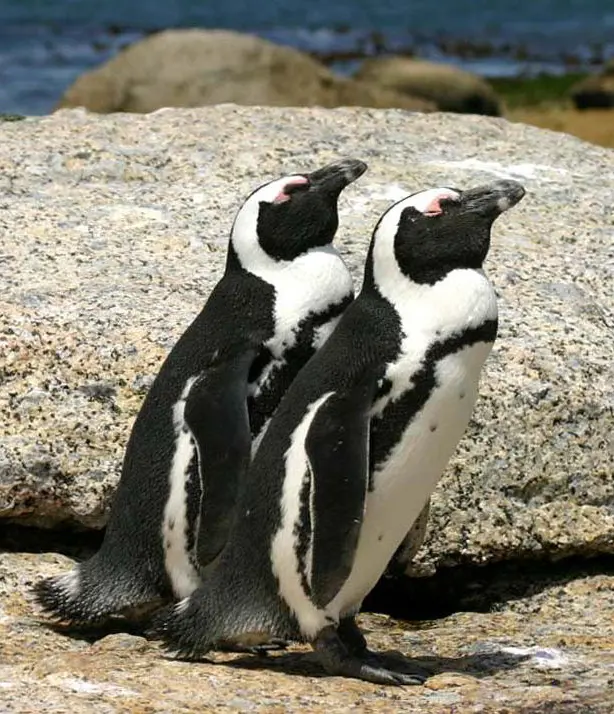
The African penguin (Spheniscus demersus) is the only penguin species that breeds on the African continent. Also called the Cape or jackass penguin for its braying call, it lives along the coasts of South Africa and Namibia. Adults stand about 60–70 cm tall and weigh between 2 and 4 kg. They have a white belly, black back and a distinctive black band across the chest, with pink glands above their eyes that help regulate body temperature.
Life history
- Breeding colonies are found on islands and a few mainland beaches. Penguins form monogamous pairs and lay two eggs in burrows or under bushes to protect them from the sun.
- Chicks fledge at about three months old. Adults moult annually and fast for several weeks during this period, relying on fat reserves.
- The species feeds primarily on small fish such as sardines and anchovies. Penguins may travel tens of kilometres each day while foraging at sea.
Threats
- Overfishing: Industrial fishing depleted sardine stocks off southern Africa. Between 2004 and 2012 more than 60,000 penguins starved because they lacked fat reserves during their moult.
- Climate change: Warming oceans and shifting currents drive sardine and anchovy schools farther from penguin colonies, increasing foraging effort and reducing breeding success.
- Habitat loss and pollution: Oil spills, coastal development and guano scraping have destroyed nesting sites, while predators like seals and gulls prey on chicks.
Conservation measures
- South Africa has closed commercial sardine fishing around major colonies and created marine protected areas to safeguard feeding grounds.
- Rehabilitation centres rescue oiled or injured penguins and hand‑rear chicks when parents cannot provide food.
- Researchers track penguin movements with GPS tags to inform management plans and lobby for sustainable fisheries.
Sources: Down to Earth