

Why in news?
The Union Minister for Development of the North Eastern Region recently laid the foundation stone for an ₹80 crore Agarwood Value Chain Development Scheme in Tripura. The project aims to increase the state’s annual agarwood turnover from around ₹100 crore to ₹2,000 crore by establishing common processing centres, expanding nurseries and distillation units and providing skills training. The government also intends to obtain a Geographical Indication (GI) tag for Tripura’s agarwood and to increase India’s export quota for agarwood oil from 1,500 kilograms to 7,500 kilograms.
Background
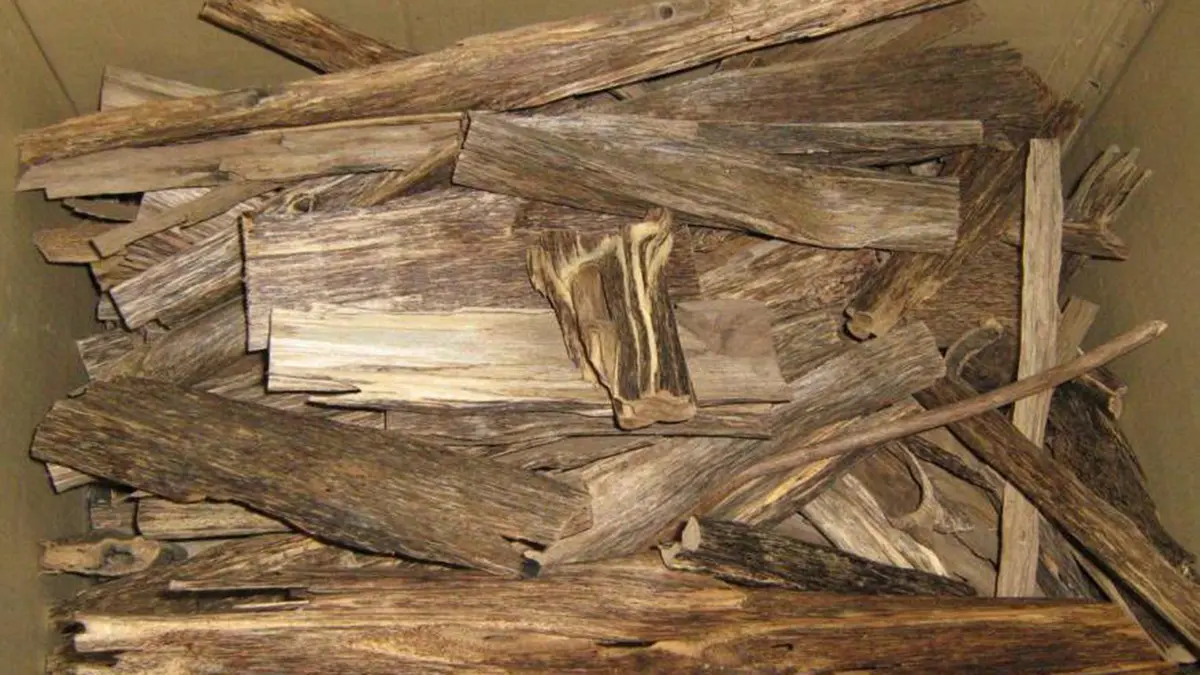
Agarwood is the dark, fragrant heartwood produced by trees of the genus Aquilaria when they become infected with certain fungi. In response to the infection, the tree produces a resin that soaks into the wood. After harvest, this resinous wood is distilled to yield oil used in incense, perfumes and traditional medicines. The resin forms only in a small percentage of trees, making agarwood extremely valuable. Known as oud, gaharu or aloeswood, it has been prized for centuries in West Asia, South Asia and East Asia.
Distribution and cultivation
- Native range: Aquilaria trees grow in the foothills of the Himalayas, Southeast Asia and Papua New Guinea. In India they are found mainly in Assam, Tripura, Arunachal Pradesh, Nagaland, Mizoram and Manipur.
- Growing conditions: The trees prefer tropical, humid climates and can tolerate a range of soils, including poor sandy soil. In the wild they take around ten years to mature.
- Artificial infection: To meet demand, cultivators sometimes inoculate trees with fungal cultures to stimulate resin formation. These techniques must be managed carefully to ensure quality and sustainability.
About the value‑chain scheme
- Processing hubs: Two common processing centres will be established – one in Tripura and another in Golaghat, Assam – to provide distillation and quality control facilities for small growers.
- Integrated cluster: The project will include nurseries, resin extraction labs, distillation units and a training academy. More than 7,000 people, including tribal farmers, are expected to benefit.
- GI tag and exports: A GI tag for Tripura’s agarwood would recognise its unique aroma and harvesting traditions. Raising the export quota will allow India to sell more agarwood oil legally on the international market.
- Economic potential: An estimated 96 percent of India’s agarwood trees grow in the Northeast, and Tripura alone has about 15 million agar trees. By adding value within India, the scheme aims to capture a larger share of the global agarwood market and discourage illegal trade.
Significance
- Boosting rural incomes: Better processing facilities and higher export quotas could transform agarwood into a major livelihood source for farmers in the North‑East.
- Conservation: Promoting cultivated agarwood helps reduce pressure on wild populations and encourages sustainable forestry.
- Cultural and commercial value: Agarwood has deep cultural significance in India and abroad. Strengthening its supply chain supports traditional perfumery and handicrafts and opens new export markets.
Source: PIB