Why in news?
UNESCO has advised Indian authorities that any plan to divert the Aghanashini River in Karnataka to the Vedavathi River must comply with World Heritage Conservation norms. The guidance followed a petition from environmental groups who fear that a proposed inter‑basin transfer could damage the Western Ghats, a UNESCO World Heritage site.
Background
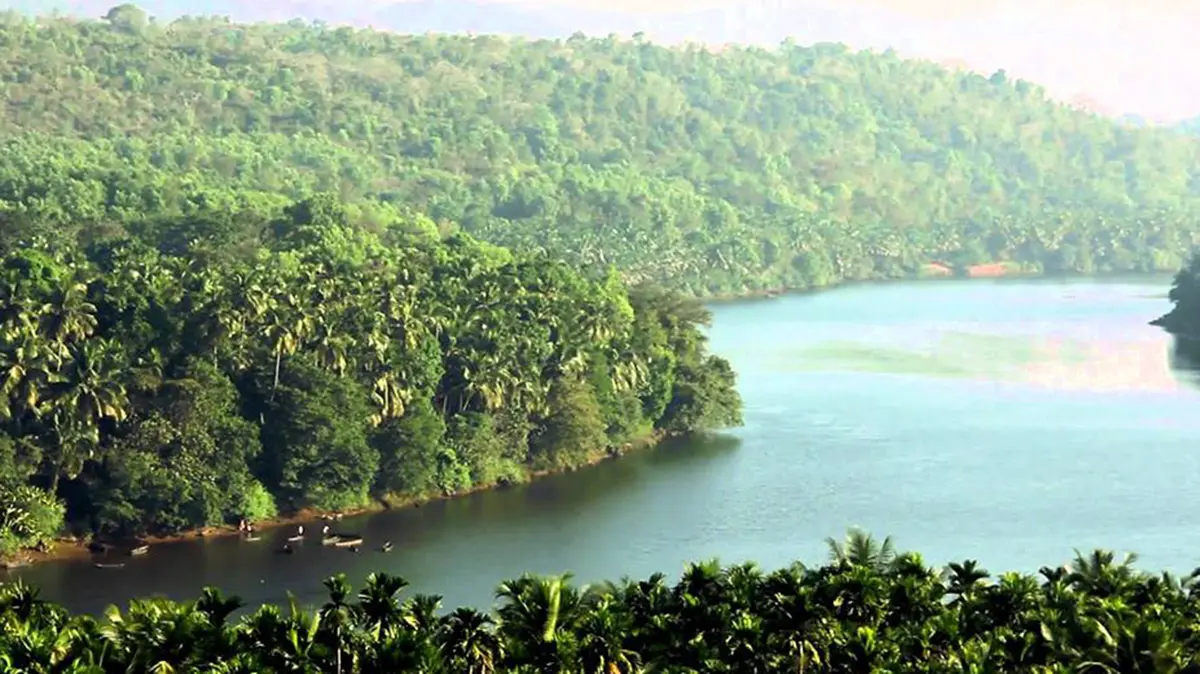
The Aghanashini River rises near Sirsi in the Western Ghats of Karnataka and flows west for about 117 km before emptying into the Arabian Sea at Tadri. Its catchment covers roughly 1,449 square kilometres and receives heavy monsoon rainfall ranging from 2,500 mm on the plains to over 6,300 mm in the hills. Unlike many Indian rivers, the Aghanashini remains largely free‑flowing, supporting rich biodiversity, waterfalls such as Unchalli and Dabbe, and the livelihoods of downstream communities.
The proposed river‑linking project
- Diversion plan: State authorities have proposed constructing a dam on the Aghanashini and pumping about 35 thousand million cubic feet (TMC) of water eastwards to the Vedavathi basin. The project aims to augment water supply in drought‑prone districts but would submerge farms and forests along the Aghanashini.
- Environmental concerns: Activists argue that damming one of the last undammed rivers in the Western Ghats would disrupt fish migration, reduce sediment flow to the coast and threaten endemic species. Thousands of families could lose land and livelihoods.
- UNESCO’s position: Responding to a memorandum from local citizens, UNESCO emphasised that any project affecting a World Heritage site must abide by conservation guidelines and avoid irreversible damage.
Significance
- Balancing needs: The controversy highlights the challenge of balancing water supply requirements with the protection of fragile ecosystems. Free‑flowing rivers like the Aghanashini are increasingly rare and provide ecosystem services that dams cannot replace.
- Global scrutiny: Because the Western Ghats is a UNESCO‑listed biodiversity hotspot, any major project draws international attention, raising the bar for environmental safeguards.
- Community voices: The debate underscores the importance of including local communities in decision‑making and respecting their dependence on rivers for agriculture, fishing and cultural practices.
Conclusion
The future of the Aghanashini–Vedavathi link remains uncertain. UNESCO’s cautionary note serves as a reminder that development projects must adhere to rigorous environmental standards, especially within World Heritage areas. Preserving the Aghanashini’s free flow could safeguard biodiversity and cultural heritage for generations.
Source: NIE