
Why in news?
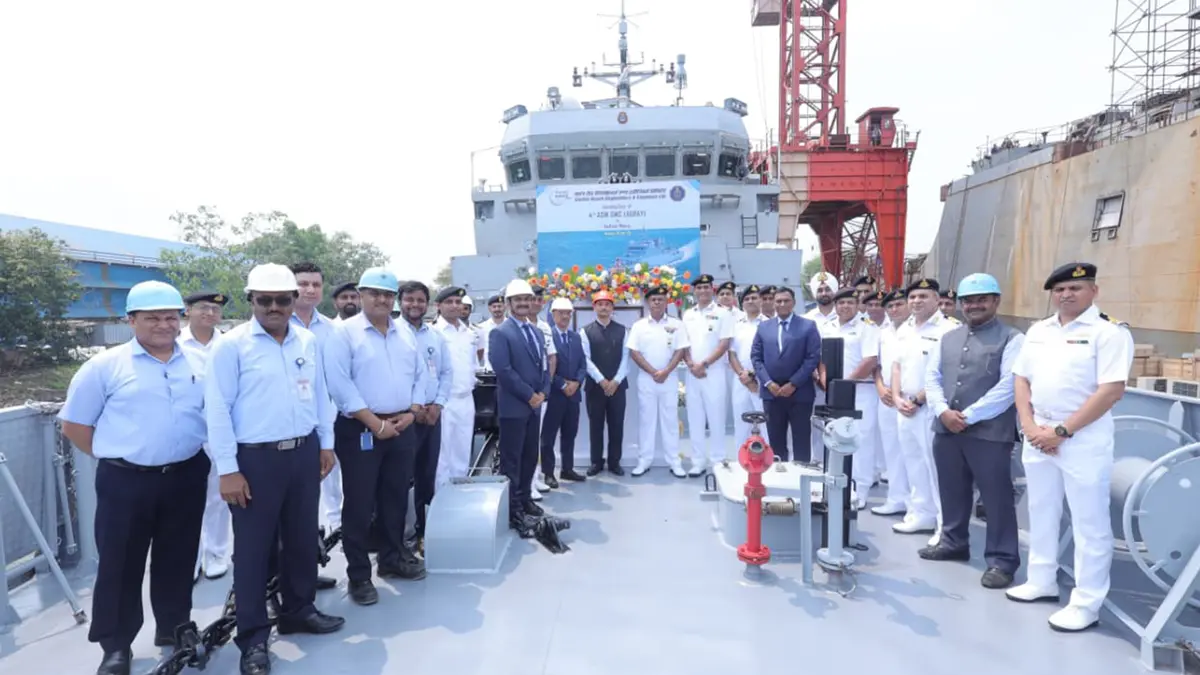
On 30 March 2026 the Indian Navy received Agray, the fourth vessel in a series of eight Anti‑Submarine Warfare Shallow Water Crafts (ASW SWCs) built by Garden Reach Shipbuilders & Engineers. The ship continues the legacy of the erstwhile INS Agray and showcases progress in indigenous shipbuilding under the Aatmanirbhar Bharat initiative. Its induction will boost the Navy’s ability to detect and engage submarines in shallow coastal waters.
Background
Shallow water crafts are designed to patrol littoral zones where conventional warships cannot manoeuvre effectively. In 2019 the Indian Navy contracted GRSE to design and construct eight ASW SWCs to safeguard harbours and shipping lanes. The earlier INS Agray, a patrol vessel of the 1241 PE class, served the Navy until its decommissioning in 2017. The new Agray retains the name while incorporating improved technology and design.
Key features
- Propulsion: Waterjet propulsion makes it the largest Indian naval warship propelled by waterjets, allowing high manoeuvrability and shallow‑draft operations.
- Sensors and weapons: Equipped with state‑of‑the‑art lightweight torpedoes, indigenous rocket launchers and advanced shallow‑water sonar systems to detect and neutralise submarines and mines. Integrated communication and navigation systems support coastal surveillance.
- Indigenous design: Designed by the Warship Design Bureau and built by GRSE with over 80 per cent indigenous content, underscoring self‑reliance in defence manufacturing.
- Legacy: The ship revives the name “Agray” and meets classification standards of the Indian Register of Shipping.
Significance
- Enhanced coastal defence: The craft improves the Navy’s ability to protect harbours, shipping lanes and offshore infrastructure from underwater threats.
- Promotion of Aatmanirbhar Bharat: High indigenous content supports domestic industries and reduces dependence on foreign suppliers.
- Technological advancement: Adoption of waterjet propulsion and modern sonar reflects progress in Indian naval architecture.
Conclusion
The delivery of Agray demonstrates India’s commitment to strengthening littoral defence through indigenous shipbuilding. As more ASW SWCs join the fleet, they will provide a network of agile platforms that safeguard coastal waters and underpin maritime security.
Source: Press Information Bureau

