

Why in news?
A peer‑reviewed study published in November 2025 reported that people in Indian megacities are unknowingly inhaling microscopic plastic particles. Researchers from IISER Kolkata, AIIMS Kalyani and IMSc Chennai collected air samples from bustling markets in Delhi, Kolkata, Mumbai and Chennai and found that microplastics constitute up to 5 % of PM10 and 2 % of PM2.5 in these environments. The average person spending eight hours in a busy market could inhale between 190 and 370 plastic particles per day.
Background
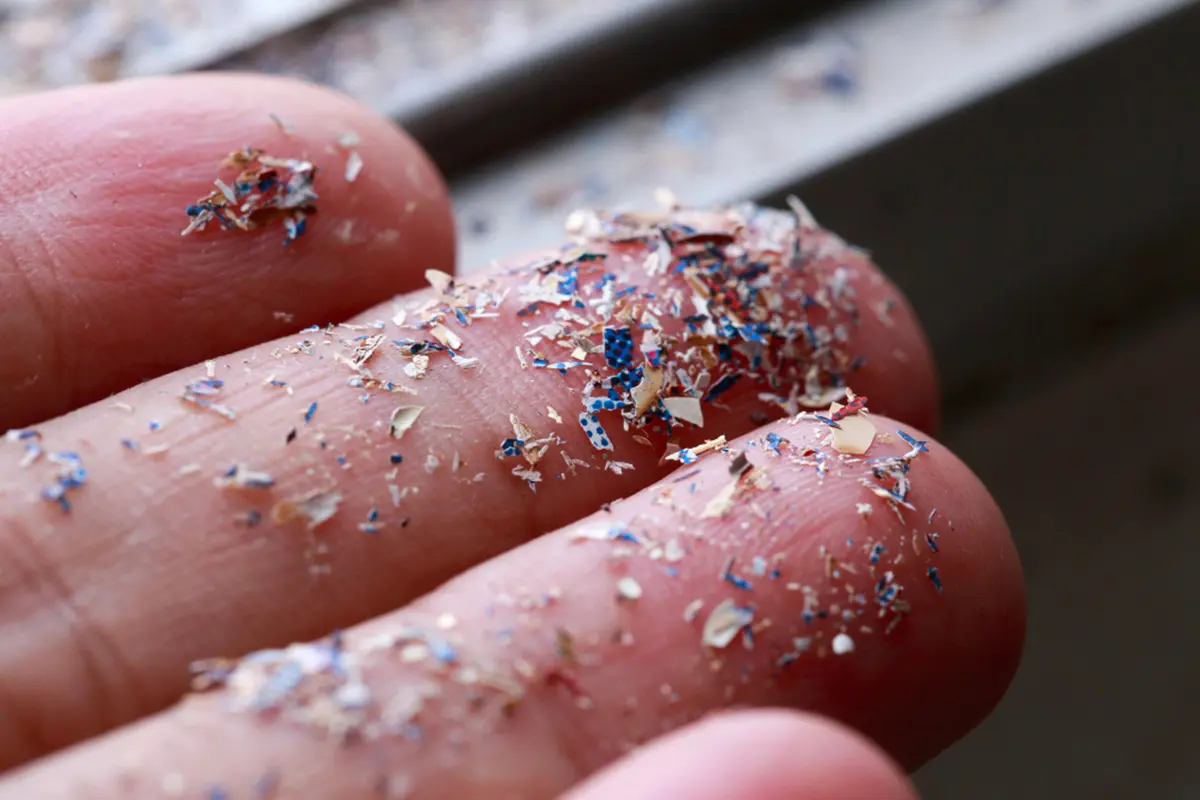
Microplastics are tiny fragments and fibres formed when larger plastic items break down. They are less than 5 mm in size; airborne microplastics (iMPs) are even smaller, often under 10 micrometres. Until recently, microplastics were primarily studied in water bodies and soil. The new research reveals that polymer dust is also a significant component of the air we breathe.
Findings of the 2025 study
- Concentrations: The average concentration of inhalable microplastics across the four cities was 8.8 micrograms per cubic metre of air. Kolkata recorded the highest concentration (about 14.23 µg/m³), followed closely by Delhi (14.18 µg/m³), while Chennai and Mumbai registered 4 µg/m³ and 2.65 µg/m³ respectively.
- Exposure estimate: The researchers calculated that a Kolkata resident could inhale around 2.9 grams of plastic over a lifetime—roughly the weight of a small plastic bottle. Coastal winds reduce concentrations in Chennai, but exposure is still substantial.
- Sources: Most of the detected polymers were polyester fibres shed from synthetic clothing, polyethylene from packaging materials and styrene‑butadiene rubber from tyre wear and footwear. Indoor plastic use and waste sorting activities also contribute.
- Toxic hitch‑hikers: Chemical analysis revealed that microplastics carry phthalates and heavy metals such as lead, arsenic and chromium, as well as microbes including fungal spores and antibiotic‑resistant bacteria. Researchers termed them “Trojan horses” that may ferry toxins deep into the lungs.
- Health risks: Inhaled microplastics can lodge in the lungs, enter the bloodstream and potentially reach organs. Exposure has been linked to respiratory irritation, endocrine disruption and cancer. The study identified 28 harmful chemicals on microplastic surfaces associated with 72 diseases.
Implications and way ahead
- Air quality monitoring networks need to include microplastics alongside particulate matter to better understand exposure risks.
- Reducing single‑use plastics, promoting natural fibres and improving waste management will help curb the release of polymer dust.
- Individuals can reduce exposure by choosing cotton and other natural fabrics, maintaining proper ventilation and supporting policies that limit plastic pollution.