Why in news?
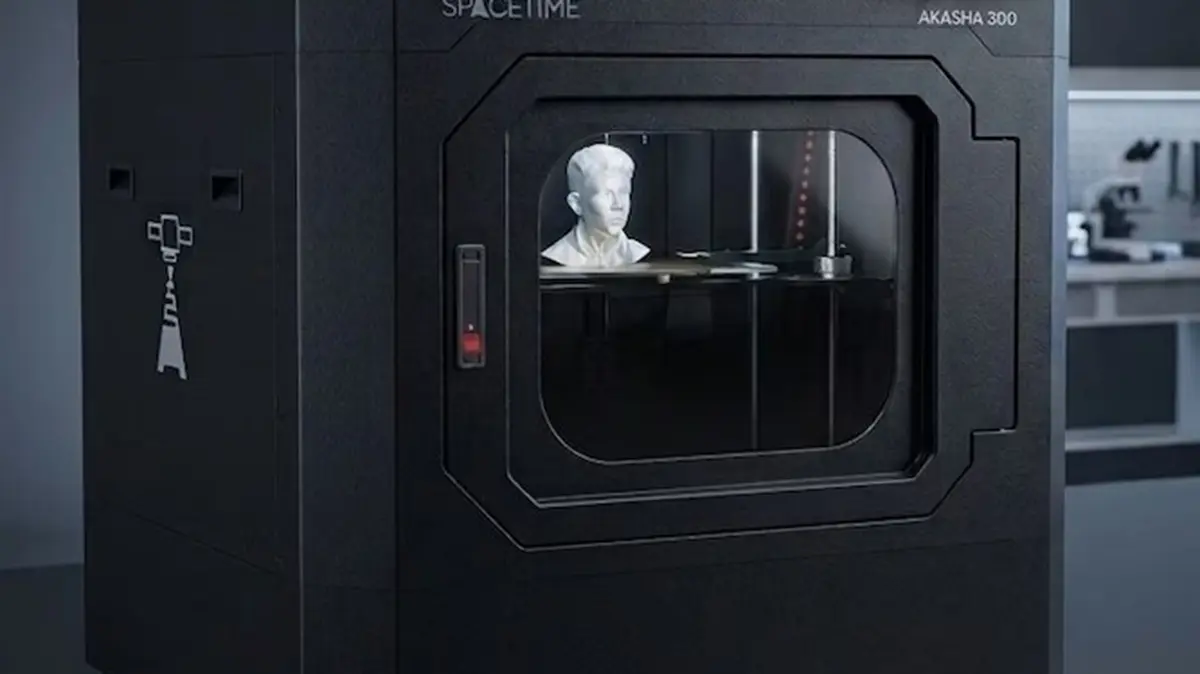
A domestically developed Akasha300 3D printer was recently delivered to the Indian Space Research Organisation’s Liquid Propulsion Systems Centre. This high‑temperature, dual‑extrusion machine will enable researchers to print complex components using advanced materials, accelerating the development of propulsion systems and prototypes.
Background
Three‑dimensional printing (also known as additive manufacturing) builds objects layer by layer from digital models, reducing material waste and enabling intricate designs that are difficult or impossible to produce with traditional machining. For space applications, 3D printing can significantly shorten design cycles and allow rapid iteration of components such as thruster parts, brackets and structural elements. The Akasha300 was developed by a start‑up incubated at the Space Technology Innovation and Incubation Centre of the Indian Institute of Space Science & Technology, with support from the Kerala Startup Mission.
Key features
- High‑temperature dual extrusion: The printer’s twin extruders can operate at up to 350 °C and are upgradeable to 500 °C, allowing the use of high‑performance polymers such as PEEK and PEKK.
- Modular design: A modular extruder assembly supports hybrid additive manufacturing, enabling different materials or printing methods to be swapped quickly.
- Heated bed and chamber: The build platform heats to 110 °C (upgradeable to 150 °C), while an enclosed chamber maintains up to 80 °C, ensuring consistent print quality and reducing warping.
- Robust mechanics and filtration: A rigid motion system provides stability during high‑temperature printing, and built‑in air filters remove fumes and particulates for safer operation.
Significance
- Indigenous technology: Developing a high‑end multi‑material 3D printer domestically promotes technological self‑reliance and reduces dependence on imported equipment.
- Research and prototyping: The printer will allow engineers at ISRO’s propulsion centre to rapidly prototype components, evaluate new materials and optimise designs for rockets and spacecraft.
- Broader applications: Beyond space research, such printers can benefit industries like aerospace, defence, automotive and healthcare where high‑temperature polymers and complex geometries are required.
Conclusion
The delivery of the Akasha300 3D printer marks a milestone for India’s additive manufacturing capabilities. By enabling high‑ temperature, multi‑material printing on home soil, it strengthens research infrastructure and supports the nation’s push towards self‑reliant technological innovation.
Source: India Today