
Why in news?
Authorities recently increased patrolling and community awareness at Anamalai Tiger Reserve after reports of rising human–elephant conflict and sightings of tigers near plantations. The measures aim to protect both wildlife and local residents and to promote ecotourism in the reserve.
Background
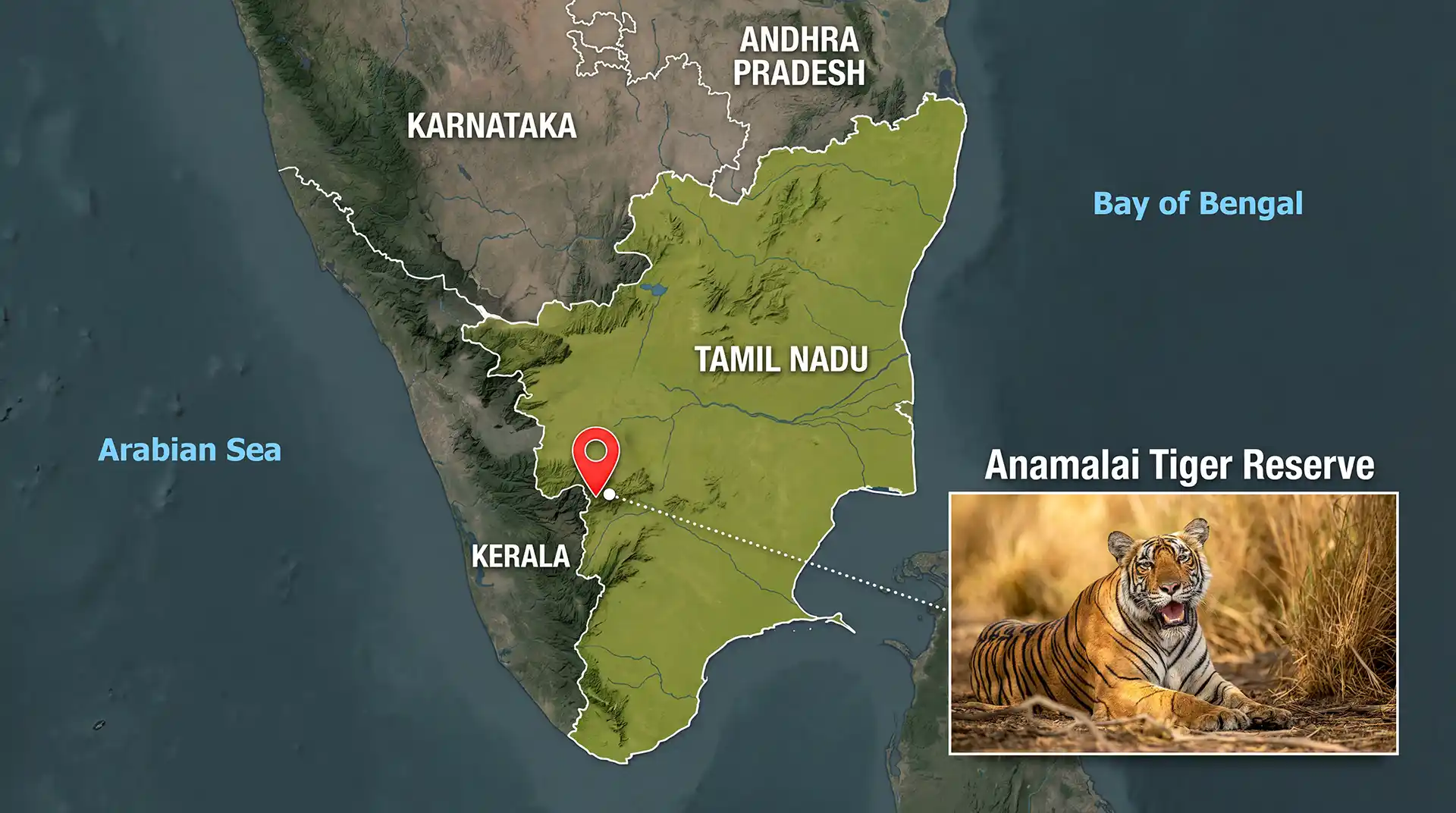
Anamalai Tiger Reserve, formerly known as the Indira Gandhi Wildlife Sanctuary and National Park, is located in the Anaimalai Hills (meaning “Elephant Hills”) of Tamil Nadu’s Coimbatore and Tiruppur districts. Originally established as a wildlife sanctuary in 1976, it was declared a tiger reserve in 2007. The reserve comprises a core area of about 959 km² and a buffer zone of 521 km², forming a total protected area of roughly 1,480 km².
Landscape and biodiversity
- Topography and climate: Elevations range from 340 metres to 2,513 metres, creating a mosaic of habitats. High rainfall on the windward slopes supports tropical rainforests, while lower areas contain moist and dry deciduous forests, thorn scrub and grasslands.
- Flora: Over 2,000 plant species have been recorded, including many medicinal plants. Evergreen species such as Hopea parviflora, Mesua ferrea, Vateria indica and Cullenia excelsa dominate the canopy, while bamboo brakes and reed beds occupy valley bottoms. High‑altitude shola forests and grasslands harbour relic species like the conifer Podocarpus wallichianus.
- Fauna: The reserve hosts a large population of Bengal tigers, Indian elephants, Indian leopards, dholes, gaurs, lion‑tailed macaques, Nilgiri langurs, Nilgiri tahr and sloth bears. Over 250 bird species include hornbills, trogons, kingfishers, drongos and raptors, with 15 endemic to the Western Ghats. Rare amphibians such as the purple frog and Anaimalai flying frog inhabit streams.
- Tribal communities: More than 4,600 Adivasi people from tribes such as the Kadars, Malasars, Pulaiyars, Mudugars and Eravallan live in 34 settlements within the reserve. They rely on the forest for non‑timber products and practise traditional agriculture.
Conservation and tourism
- Tiger conservation: The reserve forms part of the Anamalai–Parambikulam–Chinnar landscape, an important tiger habitat in the Western Ghats. Monitoring, anti‑poaching camps and habitat management aim to maintain healthy tiger numbers.
- Human–wildlife coexistence: Crop raiding by elephants and gaurs and occasional big cat encounters pose risks to villagers. Authorities use early‑warning systems, trenches and solar fencing to minimise conflicts and compensate farmers for losses.
- Ecotourism opportunities: Visitors can undertake guided safaris, stay in forest rest houses at Top Slip and participate in elephant feeding and bathing. Tourism revenues support conservation but must be managed to reduce disturbance.
Conclusion
Anamalai Tiger Reserve showcases the ecological richness of the Western Ghats and highlights the challenges of conserving biodiversity alongside human communities. Continued habitat protection, scientific monitoring and community engagement are essential for the long‑term survival of its wildlife.
Sources: TOI

