Why in news?
Farmers cultivating annatto seeds in the tribal belts of Andhra Pradesh have urged the government to provide organic certification, procurement facilities and fair pricing. Despite strong demand abroad, growers are forced to sell their produce at low prices to middlemen because of a lack of support infrastructure. The appeal has drawn attention to the economic potential of this natural colourant.
Background
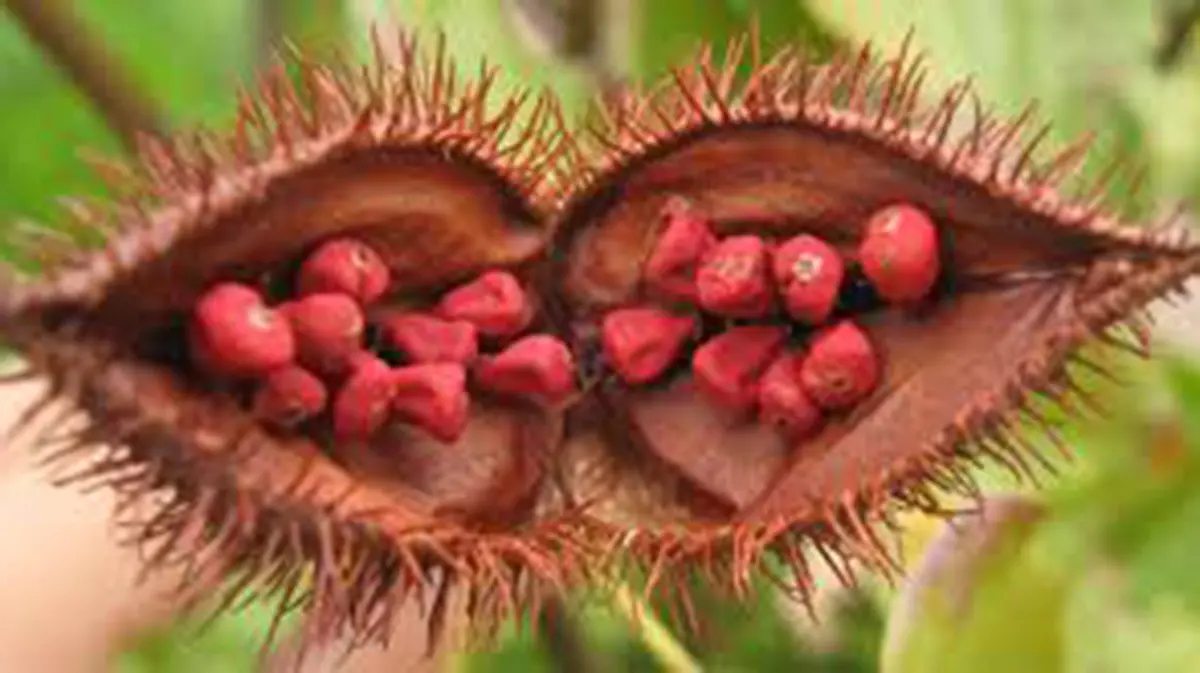
Annatto comes from the seeds of the achiote tree (Bixa orellana), native to tropical regions of the Americas. The seeds have a bright red‑orange coating rich in carotenoid pigments, primarily bixin and norbixin. Annatto is widely used as a natural food colour and flavouring in cheese, butter, snack foods and condiments, and also finds applications in cosmetics and textiles. It is considered the world’s second most important natural colourant after caramel.
Issues faced by farmers
- Cultivation: In Andhra Pradesh, particularly East Godavari district, annatto is cultivated on nearly 10,000 acres under organic or low‑input farming by tribal communities.
- Market demand: Seeds from these regions are in high demand in the European Union and the Middle East due to their natural quality and absence of synthetic chemicals.
- Lack of certification and procurement: Farmers lack government‑backed organic certification and a formal procurement system. Without storage facilities or price support, they must sell to intermediaries at throwaway prices.
- Middlemen influence: Traders who control processing and export capture most of the profits, leaving primary producers with little income.
Properties and uses of annatto
- Natural colouring: About 70 percent of natural food colours globally are derived from annatto. The pigment ranges from yellow to deep orange and is used to colour cheeses (such as cheddar), butter, margarine and snacks.
- Flavour and aroma: Annatto has a slightly sweet, nutty and peppery taste and is used as a condiment in Latin American and Asian cuisines.
- Potential health benefits: Rich in carotenoids and vitamin E compounds, annatto has antioxidant, antimicrobial and anti‑inflammatory properties. Research suggests it may support eye and heart health, though more studies are needed.
Significance
- Economic potential: With proper certification and marketing, annatto could provide sustainable income for tribal farmers and boost exports of natural colourants.
- Sustainable alternative: As consumers shift away from synthetic dyes, demand for plant‑based colourants like annatto is expected to grow.
- Policy support: Government intervention through minimum support prices, storage facilities and promotion of farmer cooperatives can help growers realise fair value and reduce exploitation by middlemen.
Source: The Hindu