

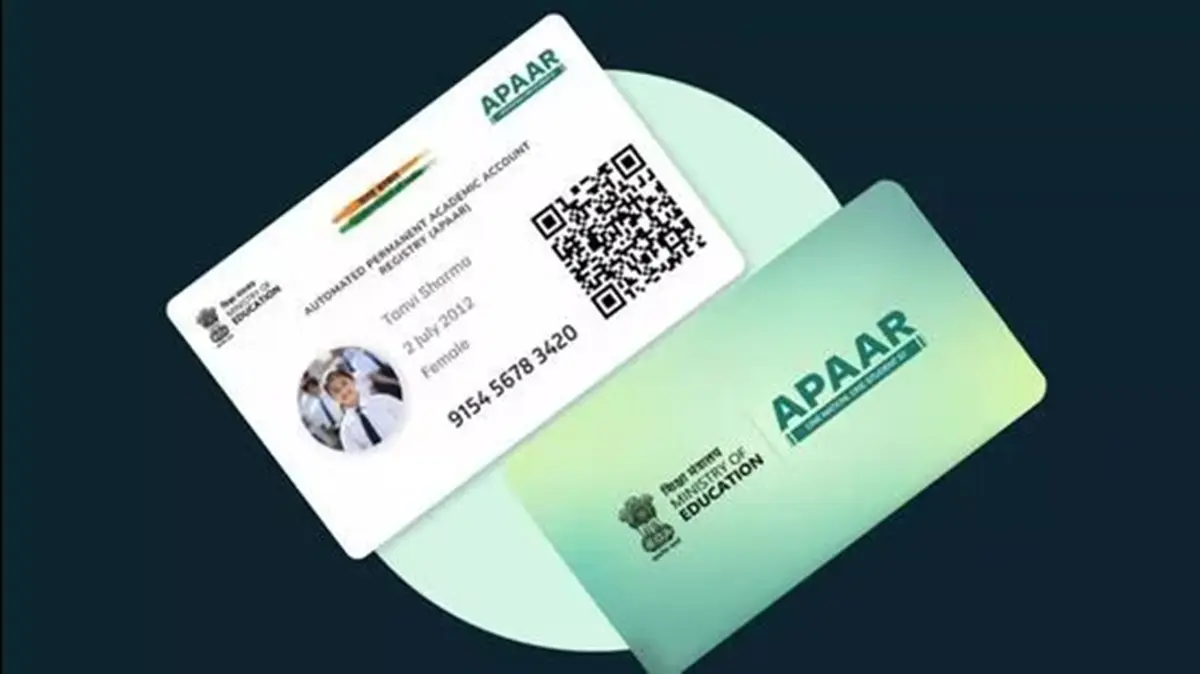
Why in news?
The Odisha High Court has directed education authorities to amend consent forms used for the Automated Permanent Academic Account Registry (APAAR) scheme. The court said parents must be given a clear option to refuse participation, emphasising the voluntary nature of the programme and the right to privacy. The directive follows a petition by a parent concerned about mandatory collection of Aadhaar details.
Background
APAAR, sometimes described as “One Nation, One Student ID,” is an initiative under India’s National Education Policy 2020. It aims to create a 12‑digit lifelong ID for every student from early school through higher education. The ID will link academic records, qualifications, scholarships and co‑curricular achievements on a digital platform. By consolidating data, the system seeks to simplify admission, track credits under the National Credit and Qualifications Framework and facilitate mobility between institutions.
Registration begins at schools where parents are asked to verify information and provide consent. Once created, the APAAR ID can be integrated with a student’s DigiLocker account so that certificates and marksheets can be accessed online. Authorities claim that data will be shared only with explicit consent and that privacy safeguards are in place.
What the court said
- Voluntary participation: The court noted that although official guidelines describe APAAR as voluntary, the consent form sent to parents lacked an option to opt out. This omission could mislead parents into believing participation is compulsory.
- Privacy concerns: Referencing the Supreme Court’s judgement in K.S. Puttaswamy v. Union of India, which recognised the right to privacy as a fundamental right, the court held that collecting Aadhaar numbers without clear consent violates privacy principles.
- Order to revise forms: Authorities have two months to include an explicit opt‑out clause and ensure that no student is denied admission or benefits for refusing to enrol in APAAR.
Potential benefits of APAAR
- Unified academic identity: Students will no longer need to repeatedly submit certificates and marksheets when moving between schools, colleges or states. Institutions can verify records digitally.
- Tracking learning: By recording credits and qualifications, the system can help identify skill gaps and guide students toward relevant courses and careers.
- Secure document storage: Linking to DigiLocker allows students to store documents securely and share them with employers or foreign universities when required.
Concerns and challenges
- Data security: Centralised databases are targets for cyber‑attacks. Ensuring robust encryption and access controls is vital.
- Consent and awareness: Parents and students need clear information about how their data will be used and must have the freedom to decline participation.
- Digital divide: Rural and underprivileged students may have limited access to the internet or smartphones. The scheme should provide alternatives and support to ensure inclusion.
Conclusion
The Odisha High Court’s directive reinforces that even well‑intentioned digital schemes must respect individual choice. A successful APAAR system will depend on transparency, trust and robust safeguards for privacy and data protection.
Source: Hindustan Times