

Why in news?
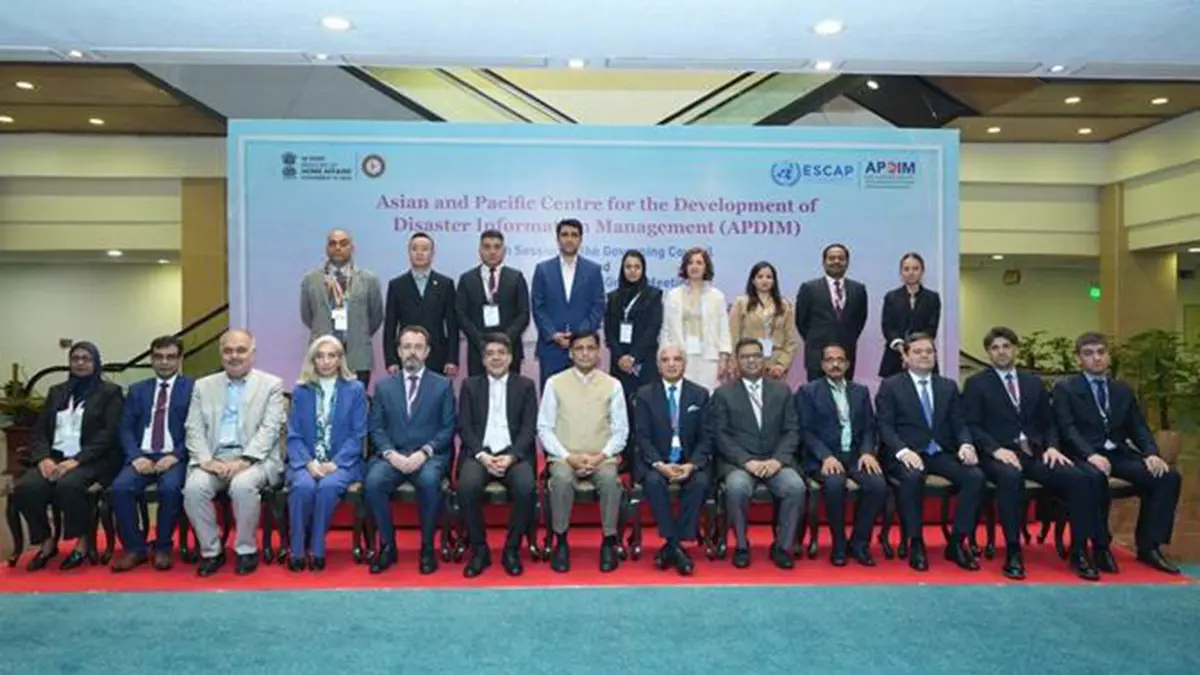
India hosted the 10th session of the Asian and Pacific Centre for Development of Disaster Information Management (APDIM) in New Delhi on 24 November 2025. Representatives from UN member states reviewed progress and charted a roadmap for regional cooperation on disaster and climate risk reduction. India pledged to lead capacity building and early warning initiatives across Asia and the Pacific.
Background
APDIM is a regional institution of the United Nations Economic and Social Commission for Asia and the Pacific (UN ESCAP). Headquartered in Tehran, it was established in 2015 to improve disaster information management and promote knowledge sharing among member countries. APDIM operates as a hub for data, technology and capacity development related to earthquakes, floods, droughts and other hazards. It also supports the implementation of the Sendai Framework for Disaster Risk Reduction (2015‑2030) and the UN’s Sustainable Development Goals.
Highlights of the 10th session
- Capacity building: India offered to spearhead programmes on impact‑based forecasting, early warning systems and geospatial tools. This aligns with the Prime Minister’s Ten‑Point Agenda on disaster management, which emphasises technology‑driven solutions.
- Action plan 2026: Delegates endorsed APDIM’s work plan for 2026, focusing on strengthening national data ecosystems, standardising risk information and supporting cross‑border responses.
- Long‑term roadmap: The centre presented a strategic plan for 2026–2030 that integrates climate adaptation with disaster risk reduction. It prioritises inclusion of vulnerable communities and gender‑responsive approaches.
- Regional cooperation: Members called for sharing best practices, pooling resources and coordinating humanitarian responses across borders. Enhanced collaboration is seen as essential to address transboundary hazards such as cyclones, river floods and earthquakes.
Significance
- Better early warnings: Improved data and forecasting tools help governments issue timely alerts, saving lives and reducing economic losses.
- Knowledge sharing: APDIM provides a platform for countries with advanced disaster management systems to assist those with limited capacity, promoting solidarity.
- Alignment with global goals: The centre’s work supports the Sendai Framework and the 2030 Agenda for Sustainable Development by building resilient societies.
Conclusion
The 10th APDIM session underscored India’s commitment to regional cooperation in disaster risk reduction. By championing early warning systems and data‑driven strategies, APDIM and its members can better prepare for the growing threats posed by climate change and natural hazards.
Source: PIB,