Why in news?
Researchers at the Council of Scientific and Industrial Research’s Indian Institute of Integrative Medicine (CSIR‑IIIM) in Srinagar have developed a “warm womb” method that allows colonies of the European or western honey bee (Apis mellifera) to survive the harsh sub‑zero winters of Kashmir. By providing insulated enclosures and carefully regulating hive nutrition and moisture, beekeepers can now overwinter their colonies locally instead of transporting them hundreds of kilometres to warmer areas.
Background
The western honey bee is one of the best‑known domesticated insects. Native to Europe, western Asia and Africa, the species has been introduced by humans to almost all continents for honey production and pollination. A colony contains a single queen, thousands of sterile worker females and seasonal male drones. The bees communicate through pheromones and the famous “waggle dance” to locate food. Commercial beekeepers favour Apis mellifera because it is relatively docile, adapts to different climates and produces large quantities of honey.
Key facts about the species
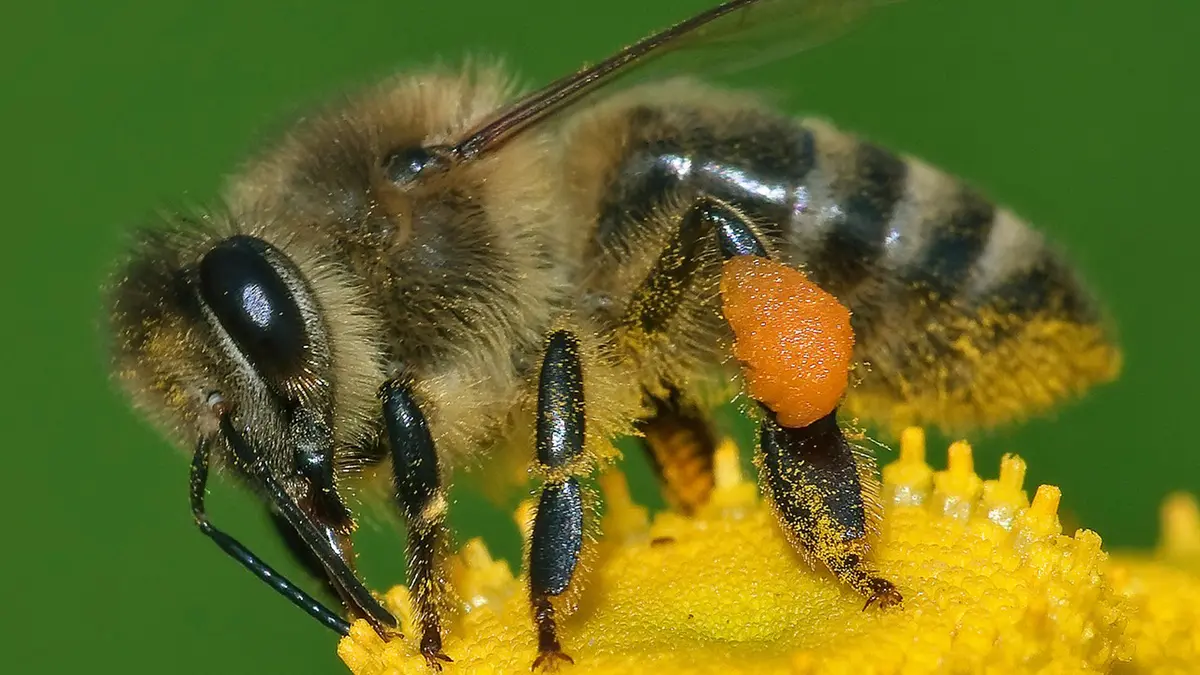
- Physical features: Workers measure about one centimetre long and are reddish brown to yellow with black bands and orange‑yellow abdominal rings. Queens are larger (2–2.5 cm), while drones are slightly bigger than workers and have large eyes. Only females possess barbed stingers used for defence.
- Complex social structure: A mature colony consists of a queen that lays eggs, sterile female workers that perform tasks such as cleaning, brood care, comb building, foraging and climate control, and drones whose only role is to mate with queens. Workers collect pollen using special baskets on their hind legs and convert nectar to honey inside wax combs.
- Life cycle and communication: Eggs hatch into larvae which are fed “bee bread” (a mix of pollen and honey) or royal jelly; pupae transform into adults inside capped cells. Returning foragers perform a “waggle dance” to tell nest‑mates the direction and distance of nectar sources.
- Pollination services: Honey bees are among the world’s most important agricultural pollinators. They fertilise over 75 percent of flowering plants and many crops, ensuring fruit and seed formation. According to U.S. agricultural statistics, pollination services by honey bees contribute hundreds of millions of dollars annually to economies.
- Products: Colonies produce honey, beeswax, royal jelly and propolis. Honey and wax have been used by humans for millennia, while propolis and royal jelly are valued for their medicinal properties.
Significance of the “warm womb” technique
- Reduced migration: Beekeepers in the Himalayan region traditionally move hives to warmer plains each winter. Overwintering colonies locally saves transportation costs and reduces stress on bees.
- Enhanced survival: Insulated hive boxes and controlled ventilation prevent colonies from freezing while allowing bees to regulate temperature through collective shivering.
- Boost to honey production: By avoiding long migrations, colonies maintain strength and start foraging earlier in spring, potentially increasing honey yield.
- Demonstration of scientific beekeeping: The method underscores the importance of scientific interventions such as supplemental feeding, moisture control and disease monitoring for successful apiculture in cold regions.
Conclusion
Apis mellifera is a cornerstone of modern agriculture and a symbol of ecological interconnectedness. By helping colonies withstand harsh winters, researchers show how simple innovations can support rural livelihoods, reduce bee mortality and ensure the pollination services that underpin food security.
Sources: The Hindu