

Why in news?
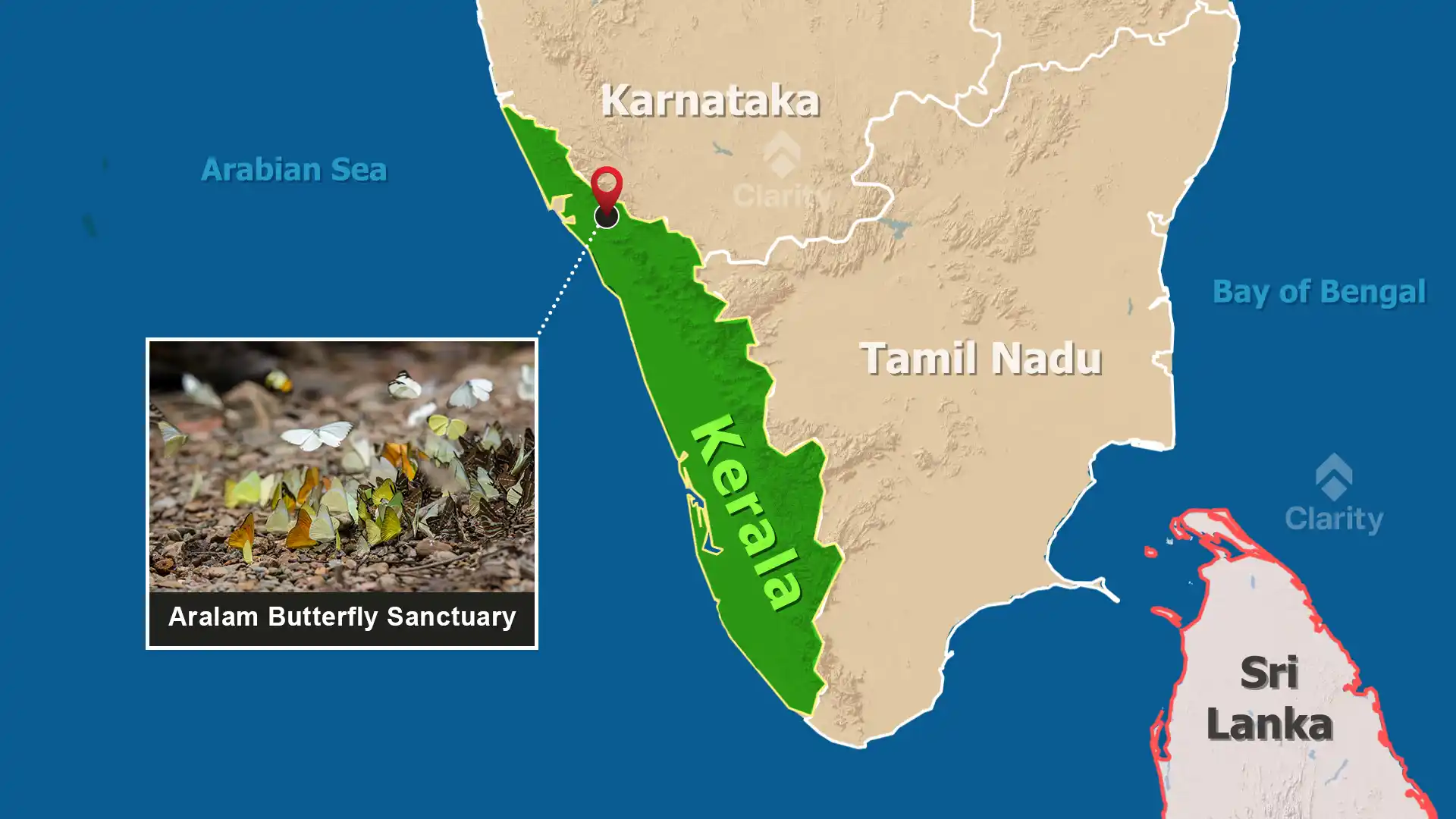
Kerala has officially renamed its Aralam Wildlife Sanctuary as the Aralam Butterfly Sanctuary to highlight the rich butterfly diversity in this part of the Western Ghats. The renaming follows a decision by the State Board for Wildlife and paves the way for a planned “butterfly village” linking four panchayats. The sanctuary lies in Kannur district and forms part of the UNESCO listed Western Ghats heritage site.
Background
The Aralam Wildlife Sanctuary was established in 1984 on the slopes of the Western Ghats in northern Kerala. Covering about 55 square kilometres of evergreen and semi‑evergreen forest, it is home to elephants, gaurs, Malabar giant squirrels and a spectacular array of butterflies. Scientists have recorded over 300 species of butterflies here, including migratory species that arrive during the monsoon. The decision to rename the sanctuary acknowledges this ecological wealth and intends to promote eco‑tourism centred on butterfly watching. It also aligns with Kerala’s efforts to develop nature‑based tourism while protecting fragile ecosystems.
Features and significance
- Biodiversity hotspot: The sanctuary’s forests support a high diversity of plant and animal life. Moist evergreen trees and flowering shrubs provide larval host plants and nectar for butterflies. Other notable fauna include sloth bears, sambar deer and numerous birds.
- Butterfly village initiative: Authorities plan to create a butterfly village by connecting the Aralam, Peravoor, Thalassery and Kannavam panchayats. This community‑based project will include nature trails, a butterfly garden, and interpretation centres to raise awareness about butterflies and their role as pollinators.
- Western Ghats connection: Aralam lies within the Western Ghats – UNESCO World Heritage Site, a mountain chain recognised for its biodiversity and endemic species. The renaming underscores the need to conserve the Ghats’ unique ecosystems.
- Economic opportunities: Eco‑tourism focused on butterflies can provide income for local communities through guided walks, homestays and sale of handicrafts. Properly managed tourism can create incentives for conservation.
Conclusion
By highlighting its butterfly treasure, the Aralam Butterfly Sanctuary showcases how protected areas can celebrate specific aspects of biodiversity. The initiative offers an opportunity to educate visitors about pollinators, support livelihoods and strengthen community involvement in conservation. Effective management will be crucial to balance tourism with the fragile forest ecosystem.
Source: The Hindu