
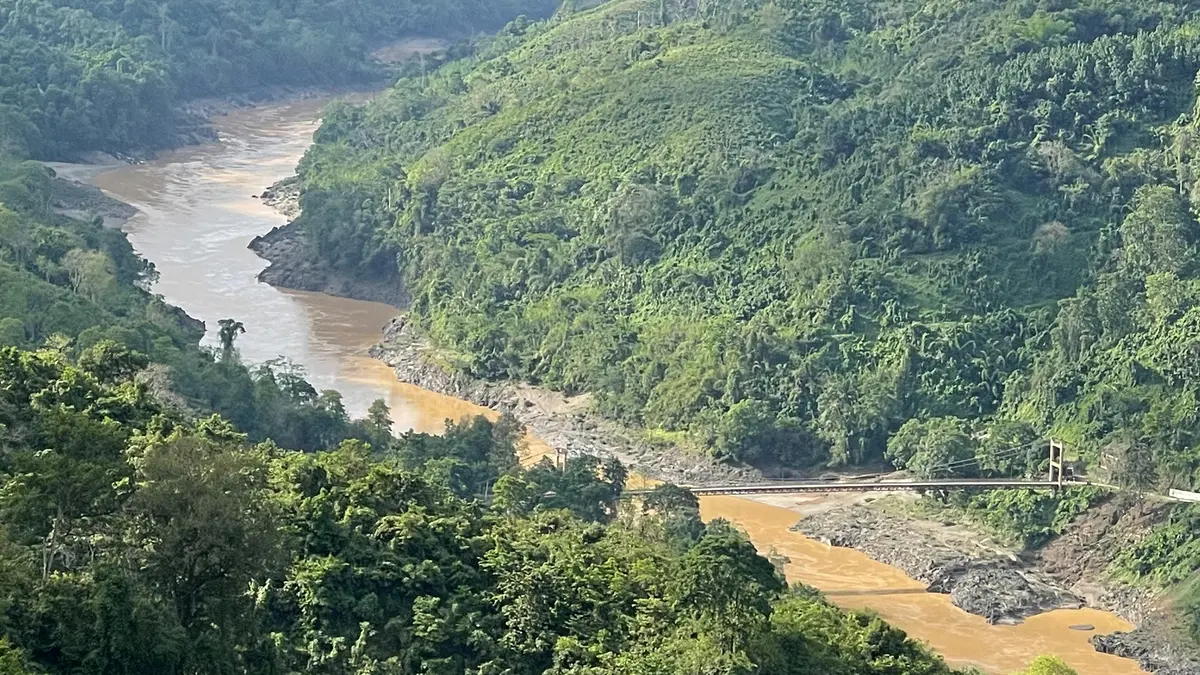
Why in news?
Environmental researchers and community groups have raised alarms about high levels of arsenic in the Salween River, which flows through China, Myanmar and Thailand. Tests conducted by Chiang Mai University in Thailand found arsenic concentrations far above World Health Organization standards, with some samples reaching 0.554 mg/L. The contamination is linked to unregulated rare‑earth and metal mines in Myanmar’s Shan State. Activists are calling for cooperation between upstream and downstream countries to safeguard the river and the communities relying on it.
Background
The Salween River, also called the Nu in China and Thanlwin in Myanmar, is mainland Southeast Asia’s longest undammed river. Originating on the Tibetan Plateau, it runs for about 3,289 km through rugged gorges in China and Myanmar, forming part of the Myanmar–Thailand border before emptying into the Andaman Sea. Unlike the Mekong, the Salween remains largely free‑flowing and sustains rich biodiversity and more than 10 million people. Its basin covers roughly 283,500 km² and includes numerous ethnic minority communities who depend on fishing, farming and river transport.
What is happening?
- Unregulated mining: The Stimson Center identified at least 127 suspected mining sites along tributaries in Myanmar’s Shan State. These include in‑situ rare‑earth extraction facilities that discharge waste into rivers.
- Arsenic contamination: Arsenic occurs naturally in rocks but can enter water when mining exposes sulphide minerals. Tests by Thai scientists found arsenic concentrations many times higher than the 0.01 mg/L guideline set by the WHO. Villagers reported health problems such as skin lesions and stomach ailments.
- Trans‑boundary impact: Since the Salween flows through three countries, pollution quickly spreads downstream. Thai civil society groups fear that the contamination could affect drinking water, irrigation and fisheries.
About the Salween River
- Length and course: The river stretches roughly 3,289 km. It begins in Tibet, cuts through deep gorges in China’s Yunnan province, meanders across Myanmar and forms the Myanmar–Thailand boundary before reaching the Andaman Sea.
- Undammed status: The Salween is one of the few large Asian rivers without major dams along its main stem. This free‑flowing nature supports migratory fish species and allows communities to move goods by boat.
- Biodiversity: The basin is home to rare species such as the Irrawaddy dolphin, giant catfish and numerous endemic plants. It is also culturally diverse, with Karen, Mon, Shan and other ethnic groups living along its banks.
Why does it matter?
- Health risks: Chronic arsenic exposure can cause skin disorders, cancers, cardiovascular disease and developmental problems. Rural communities often lack alternative water sources and may face long‑term health burdens.
- Cross‑border governance: The issue underscores the need for regional cooperation. China, Myanmar and Thailand must regulate mining and share monitoring data to protect shared water resources.
- Environmental justice: Indigenous groups and local residents have little say in resource projects that affect them. Advocates urge meaningful consultation and enforcement of environmental standards.
Sources: Times Of India

