

Why in news?
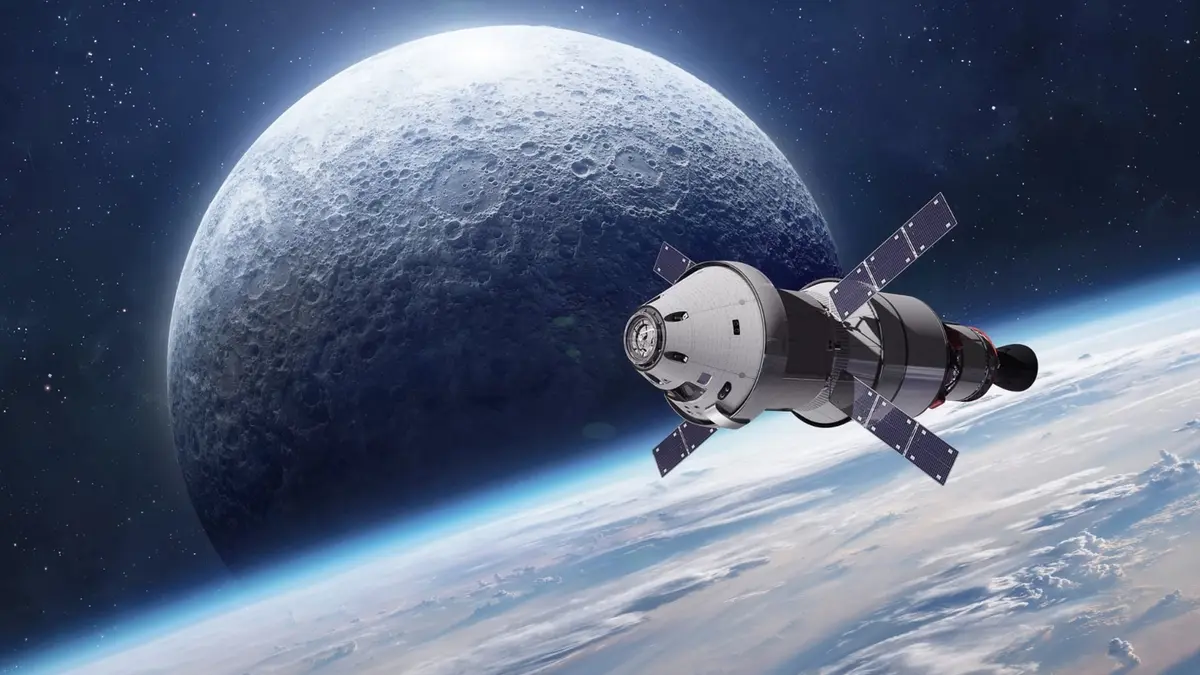
NASA is preparing to roll the Space Launch System (SLS) rocket and Orion spacecraft to the launch pad for the Artemis II mission. The agency recently announced that this crewed test flight is targeted for launch no earlier than April 2026, marking the first time astronauts will travel around the Moon since the Apollo era.
Background on the Artemis programme
The Artemis programme aims to return humans to the Moon and establish a sustainable presence, paving the way for missions to Mars. Artemis I, launched in 2022, flew the Orion spacecraft around the Moon without a crew to test its systems. Artemis II will be the first crewed flight, while Artemis III plans to land astronauts near the lunar south pole later in the decade.
Mission overview
- Duration and trajectory: Artemis II will be a ten‑day mission. After launching from Launch Complex 39B at the Kennedy Space Center, the SLS will send Orion into a high Earth orbit. The spacecraft will then perform a trans‑lunar injection to follow a free‑return trajectory, looping around the Moon and returning to Earth without landing.
- Crew: The mission will carry four astronauts: Reid Wiseman (commander), Victor Glover (pilot), and Christina Koch (mission specialist) from NASA, along with Jeremy Hansen from the Canadian Space Agency. This will be the first time a Canadian astronaut travels to the vicinity of the Moon and the first lunar mission for all four crew members.
- Objectives: The flight will test the life‑support systems, navigation and communication capabilities of Orion with humans aboard. Astronauts will evaluate how the spacecraft functions during exercise and rest periods and will practice manual control tasks.
- Flight path: After reaching high Earth orbit, Orion will head more than 65,000 km beyond the Moon before looping back. At its farthest point the crew will travel farther from Earth than any humans in history.
Significance
- Artemis II will be the first mission to carry humans beyond low Earth orbit in over fifty years. It demonstrates the capabilities needed for future lunar landings, long‑duration missions and eventual journeys to Mars.
- The inclusion of a Canadian astronaut reflects international cooperation. Canada is contributing the Canadarm3 robotic arm for the future Lunar Gateway space station.
- Success of Artemis II will validate the SLS rocket, Orion spacecraft and supporting ground systems, reducing risks for subsequent missions.