

Why in news?
To tackle Delhi’s persistent monkey menace, civic bodies have been relocating rhesus macaques to the Asola‑Bhatti Wildlife Sanctuary since 2021. By the end of 2025, more than 6,500 monkeys had been moved, with relocations continuing into 2026. The sanctuary itself is gaining attention for its unique semi‑arid ecosystems and ecotourism initiatives.
Background
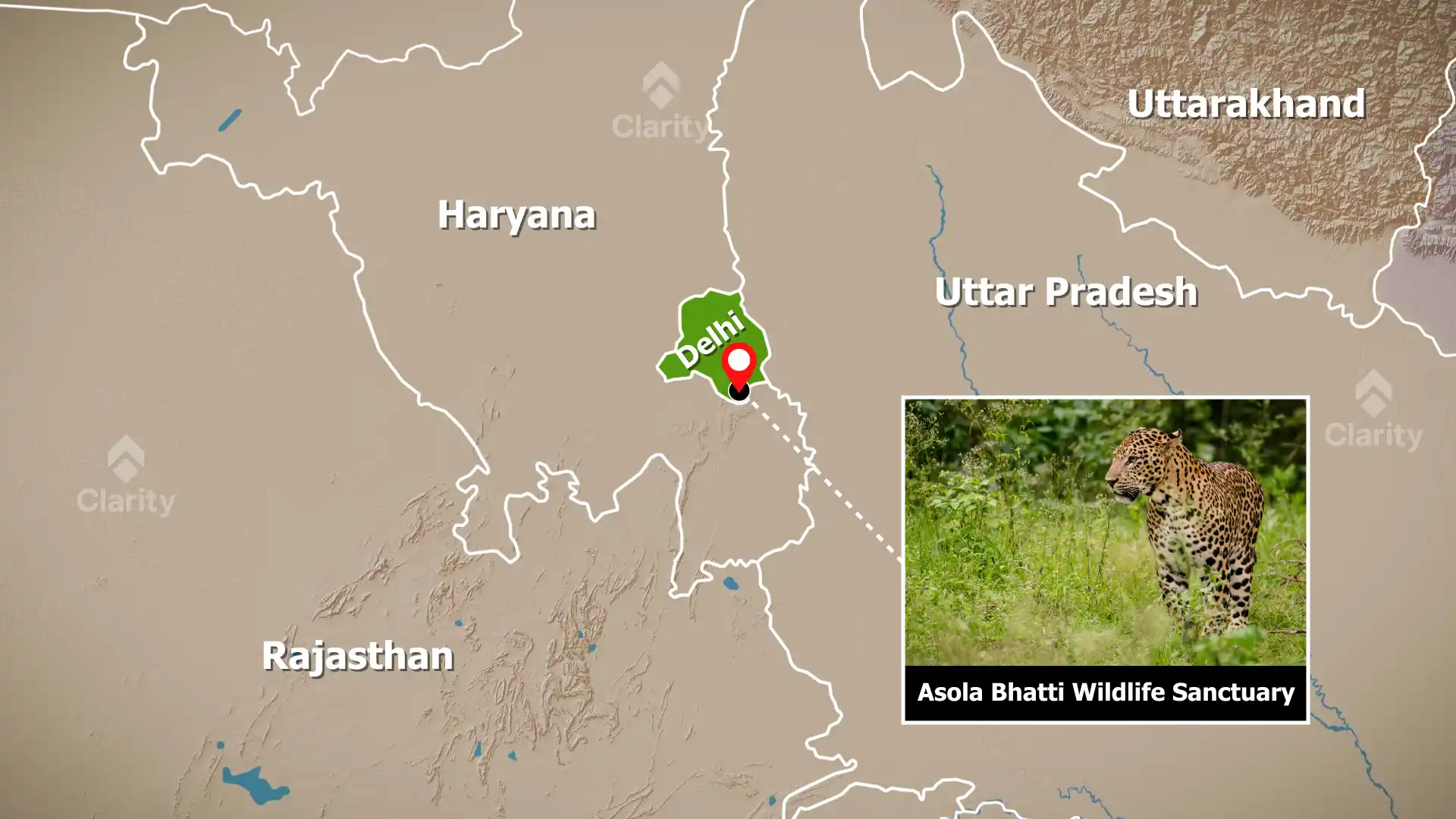
The Asola‑Bhatti Wildlife Sanctuary is the only protected area within Delhi’s borders. Situated on the southern ridge, it covers about 32 square kilometres and forms part of the Northern Aravalli Leopard Wildlife Corridor linking Delhi to Haryana. The sanctuary protects the rolling outliers of the ancient Aravalli hills, a landscape not represented elsewhere in India’s protected‑area network. Its semi‑arid forest hosts a mix of dhak, babool and khejri trees, interspersed with scrub and rocky outcrops. The area includes the crystal‑blue Neeli Jheel lake and several walking trails.
Relocation efforts and features
- Monkey relocation: Responding to Delhi High Court orders, the city’s forest department and municipal bodies began capturing rhesus macaques from urban neighbourhoods and releasing them into the sanctuary. Relocations increased each year: around 1,484 monkeys in 2022, 1,643 in 2023, 1,432 in 2024 and 1,534 in 2025, bringing the total to more than 6,500. The goal is to reduce human–macaque conflict in residential and commercial areas.
- Flora and fauna: Asola‑Bhatti hosts about 193 bird species, over 80 species of butterflies and around 25 mammal species. Large herbivores such as nilgai (blue bull) share the landscape with golden jackals, striped hyenas, leopards, porcupines and monitor lizards. Peafowl, sandgrouse and various raptors are common sightings.
- Ecotourism and education: The sanctuary offers guided trails like the Blue bull trail, Sandgrouse trail and Sparrow trail, as well as a butterfly park and nature centre. Visitors can take a permit‑controlled drive to Neeli Jheel. Educational programmes aim to raise awareness of the Aravalli ecosystem.
- Challenges: Relocated monkeys sometimes return to urban areas or clash with resident troops. Ensuring adequate food, water and space within the sanctuary is essential. Balancing ecotourism with conservation and preventing encroachment remain ongoing concerns.
Importance
Asola‑Bhatti serves as Delhi’s green lung and a refuge for wildlife in a rapidly urbanising region. The monkey relocation project highlights the complexities of managing human–wildlife conflict in cities. By restoring degraded ridges and providing habitat corridors, the sanctuary also contributes to broader conservation of the Aravalli hills. Effective management and community support will determine whether both people and wildlife can thrive together.
Source: The Week