
Why in news?
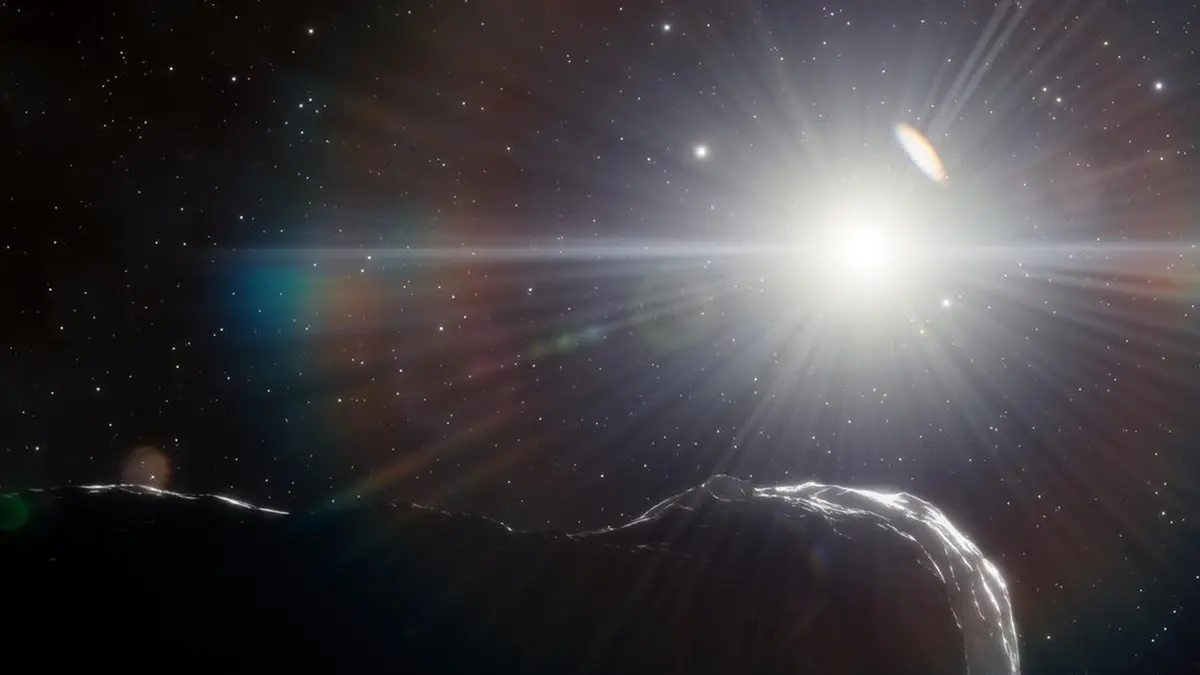
An asteroid designated 2024 YR4 briefly made headlines when early calculations suggested a small chance of it hitting Earth or the Moon in 2032. In February 2025 astronomers used the James Webb Space Telescope to study the object, and by March 2026 they confirmed that it poses no significant threat. The case demonstrates how modern observations refine asteroid risk assessments.
Background
2024 YR4 is a small near‑Earth asteroid discovered on 15 December 2024 by the Mount Lemmon Survey in Arizona. Initial orbit solutions showed about a 3 percent chance of Earth impact and later a 4 percent chance of striking the Moon in 2032. Such probabilities warranted attention because even a small impactor could damage infrastructure if it struck the Moon’s near side, altering lunar exploration plans.
What did Webb find?
- Accurate size and reflectivity: Webb’s infrared camera measured YR4’s thermal emission, showing it is about 60 metres long – roughly the height of a 15‑storey building – and moderately reflective. Knowing its size helps estimate the potential energy if a collision were possible.
- Precise orbit: Combining Webb data with radar and optical observations allowed astronomers to model the asteroid’s path. They found it will pass more than 20 000 kilometres from the Moon in 2032 and will not come dangerously close to Earth.
- Insight into asteroid surfaces: Analysis suggests YR4 is covered with fist‑sized rocks rather than fine dust. Understanding surface texture matters because it affects how sunlight alters an asteroid’s orbit through the Yarkovsky effect.
- Improved planetary defence: The episode illustrates the value of rapid follow‑up observations. International coordination among NASA’s Center for Near‑Earth Object Studies (CNEOS), the European Space Agency and the Webb mission quickly resolved the threat assessment.
Why does this matter?
Although YR4 is now considered harmless, its discovery underscores the need to monitor small near‑Earth objects. Early detection and precise tracking are vital for planetary defence. Space telescopes like Webb can observe small, faint asteroids that ground‑based surveys might miss, improving our ability to predict and mitigate potential impacts.
Sources: The Hindu.

