

Why in news?
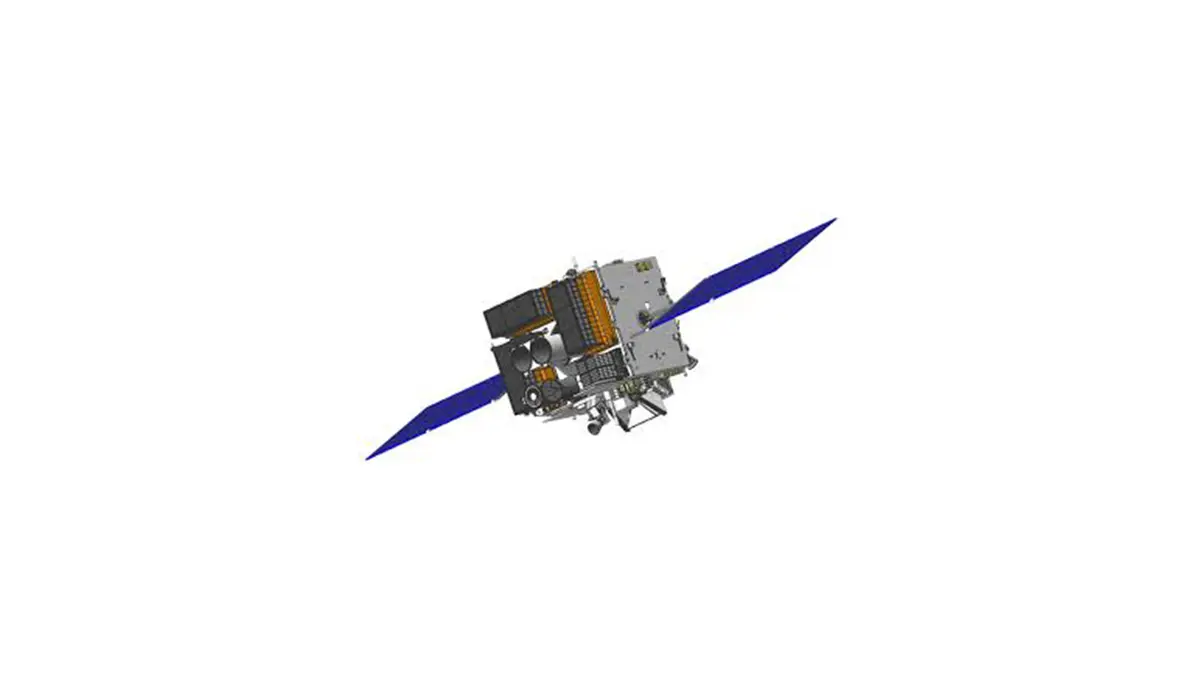
The Indian Institute of Astrophysics (IIA) recently celebrated a decade of successful operation of the UltraViolet Imaging Telescope (UVIT) on board AstroSat, India’s first dedicated astronomy satellite. A workshop in Bengaluru highlighted UVIT’s scientific achievements and discussed plans for future space‑based ultraviolet missions.
Background
AstroSat, launched by the Indian Space Research Organisation (ISRO) on 28 September 2015, is a multi‑wavelength observatory designed to study celestial objects simultaneously in X‑ray, ultraviolet and optical bands. Its five major payloads are:
- UltraViolet Imaging Telescope (UVIT): Consists of two telescopes, one for near‑ultraviolet and visible light and the other for far‑ultraviolet observations. Developed by the IIA in collaboration with the Inter‑University Centre for Astronomy and Astrophysics (IUCAA), the Tata Institute of Fundamental Research (TIFR) and various ISRO centres, with support from the Canadian Space Agency.
- Large Area X‑ray Proportional Counter (LAXPC)
- Cadmium–Zinc–Telluride Imager (CZTI)
- Soft X‑ray Telescope (SXT)
- Scanning Sky Monitor (SSM)
The satellite is managed from the Mission Operations Complex of ISRO’s Telemetry, Tracking and Command Network (ISTRAC) in Bengaluru.
Highlights from 10 years of UVIT
- Pioneering UV astronomy: UVIT is India’s first ultraviolet space telescope and, apart from the Hubble Space Telescope, one of the few instruments in the world capable of far‑ultraviolet observations. Its wide field of view and high spatial resolution (better than 1.5 arcseconds) have delivered sharp images of stars and galaxies.
- Scientific discoveries: Over the past decade UVIT has observed more than 1,400 celestial targets and contributed to around 300 research papers and numerous doctoral theses. It has revealed hot companion stars in Be‑star systems, discovered blue straggler stars in star clusters, mapped extended ultraviolet disks in dwarf galaxies, studied the structure of planetary nebulae, detected novae in the Andromeda galaxy and observed emission from distant galaxies at a redshift of 1.4.
- Data accessibility: Updated, science‑ready UVIT images and data products are being uploaded to ISRO’s PRADAN archive, allowing researchers worldwide to use them for further studies.
- Future roadmap: The workshop discussed plans for INSIST, a proposed next‑generation spectroscopic and imaging space telescope that will build on expertise gained from UVIT and AstroSat.
Objectives of AstroSat
- Investigate high‑energy processes in binary star systems containing neutron stars or black holes.
- Estimate the magnetic fields of neutron stars.
- Study star formation regions and high‑energy processes in stars beyond our galaxy.
- Detect new transient X‑ray sources in the sky.
- Conduct deep‑field surveys in the ultraviolet region of the universe.
Conclusion
AstroSat and UVIT have positioned India as a significant contributor to space‑based astronomy. The mission’s success demonstrates the value of collaborative, multi‑institutional projects and paves the way for more ambitious telescopes that will explore the cosmos in greater detail.
Source: DD News