

Why in news?
Two recent studies shed light on how the body’s cellular cleaning process, known as autophagy, underpins immunity and metabolic health. Researchers at the Ragon Institute showed that B cells require autophagy to remove damaged mitochondria and produce antibodies, while a clinical trial demonstrated that a fasting‑mimicking diet enhances autophagy and improves insulin sensitivity.
Background
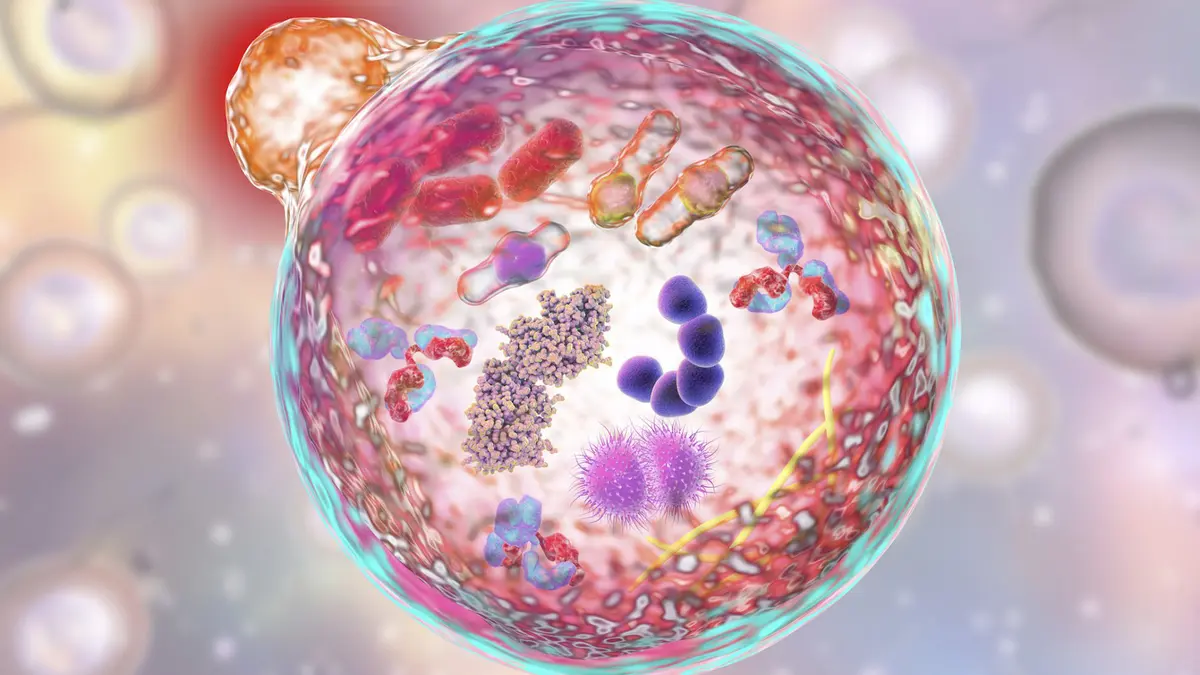
Autophagy is a self‑degradative process by which cells break down and recycle their own components through lysosomes. There are several pathways: macroautophagy involves the formation of membrane‑bound vesicles that engulf cellular debris; microautophagy directly engulfs cytoplasmic material; and chaperone‑mediated autophagy selectively targets proteins for degradation. This process removes damaged organelles, eliminates pathogens and provides energy during starvation.
Key findings
- Immune cell function: The Ragon Institute study found that B cells lacking the protein FIP200 cannot perform mitophagy (autophagy of mitochondria). As a result, damaged mitochondria accumulate, preventing the cells from differentiating into plasma cells that secrete antibodies. Supplementing with heme, which encourages mitochondrial turnover, restored antibody production.
- Metabolic benefits of fasting: In a randomised trial with 30 healthy adults, participants who followed a five‑day fasting‑mimicking diet showed increased autophagy flux, improved insulin sensitivity, lower fasting glucose and modest weight loss. Researchers noted that periodic dietary interventions could harness autophagy to promote healthy ageing and metabolic health.
Implications
- Maintaining efficient autophagy helps the immune system by clearing defective mitochondria and supporting antibody production, suggesting potential therapeutic targets for autoimmune diseases and vaccine responses.
- Dietary strategies that stimulate autophagy, such as fasting‑mimicking diets or caloric restriction, may improve metabolic health and delay age‑related diseases. However, such interventions should be supervised by healthcare professionals.