

Why in news?
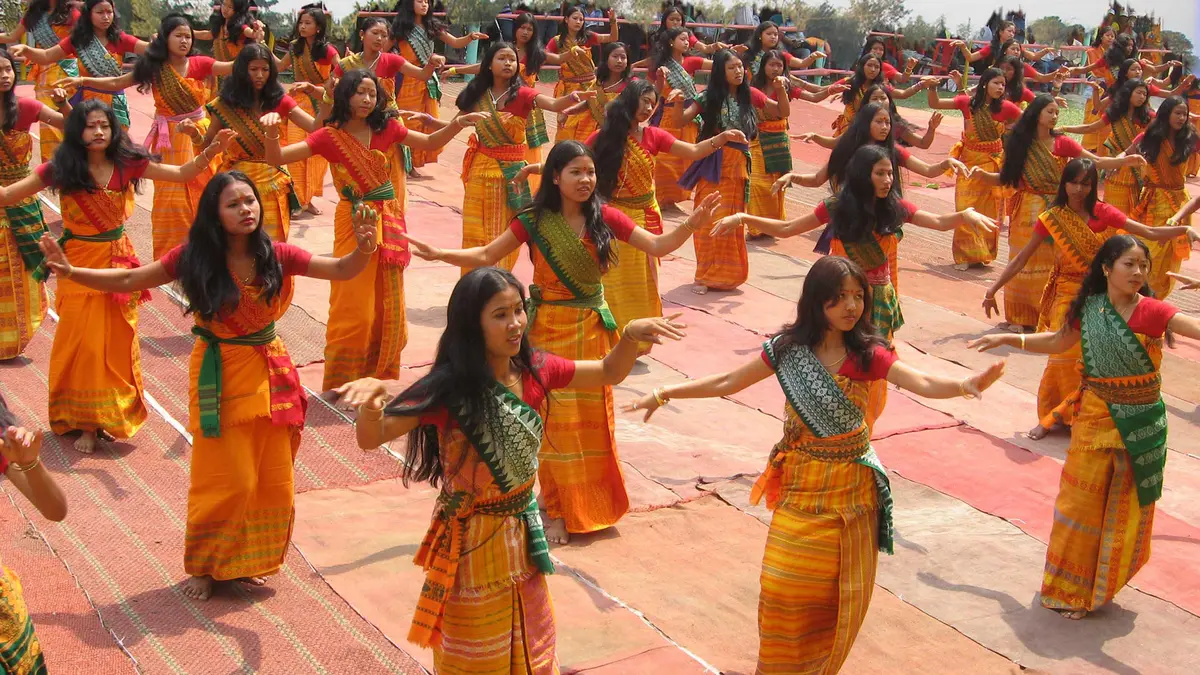
On 17 January 2026, around 10,000 women from the Bodo community performed the Bagurumba dance during a cultural programme in Guwahati, creating a colourful spectacle and setting a possible record. The mass performance drew attention to this traditional dance of Assam’s Bodo people.
Background
Bagurumba, sometimes called the “Butterfly Dance,” is a graceful folk dance of the Bodo tribe. The name comes from the Bodo words begu (bird) and rumba (dance). Performed by women, the dance imitates the movements of birds and butterflies, symbolising harmony with nature. It is a central feature of the Bwisagu festival that marks the Bodo new year.
Dance elements
- Movements: Dancers move in slow, rhythmic patterns with outstretched arms, swirling as if they were butterflies. The choreography emphasises elegance and collective synchrony.
- Costumes: Women wear brightly coloured Dokhona (traditional wrap), Jwmgra shawls and Aronai scarves. The garments are hand‑woven with floral or geometric designs.
- Musical accompaniment: Men play instruments such as the Kham (drum), Sifung (bamboo flute), Serja (string instrument), Jatha and Japsring. These instruments set a gentle rhythm while the dancers move.
Cultural significance
- Nature worship: The dance reflects the Bodos’ close relationship with nature. Many steps mimic birds, butterflies and flowers, conveying respect for the environment.
- Identity and unity: Performing together in colourful attire reinforces social bonds and pride in cultural heritage.
- Festive context: Bagurumba is performed during Bwisagu and Domasi festivals to celebrate spring and express hopes for prosperity.
Conclusion
The mass Bagurumba performance in Guwahati showcased the vibrancy of Bodo culture. Through graceful movements and traditional music, the dance continues to promote harmony between people and nature while preserving a unique tribal identity.
Sources: TME