
Why in news?
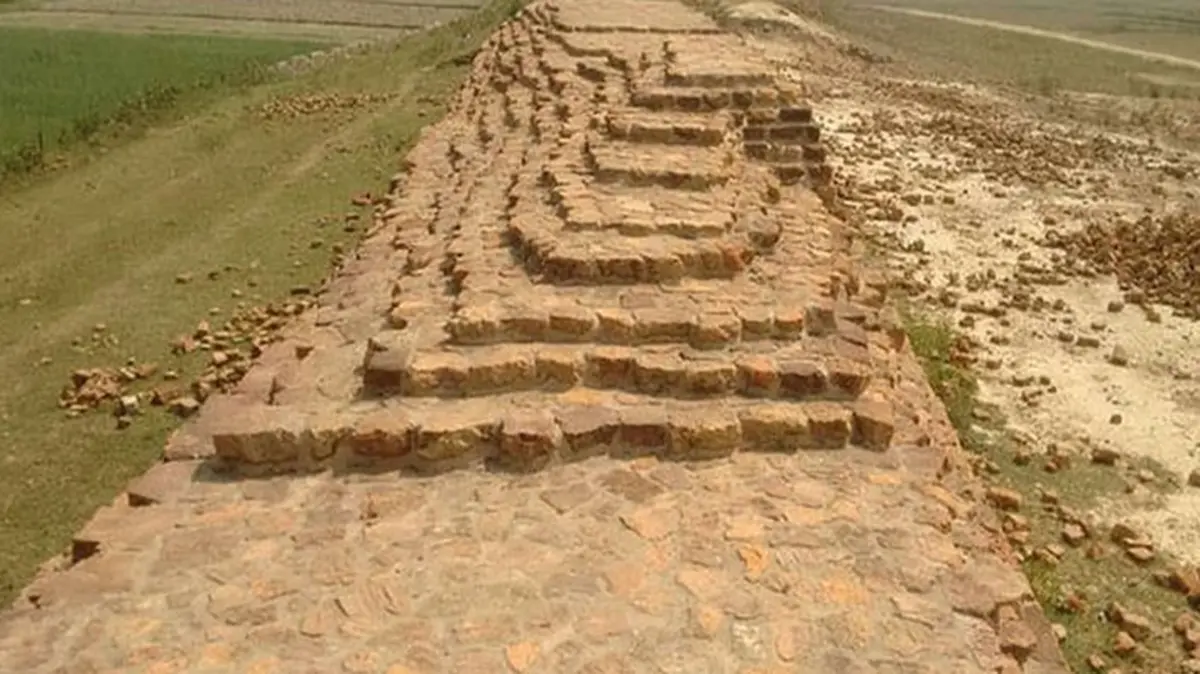
The Archaeological Survey of India (ASI) has begun a new round of excavations at Balirajgarh, a fortified mound in the Madhubani district of Bihar. Local lore identifies the site as the capital of the legendary King Bali, and historians believe it may have been an important centre of the ancient Videha Kingdom, one of the sixteen mahajanapadas mentioned in early Buddhist and Jaina texts.
Background
Balirajgarh lies in the Babubarhi block of Madhubani district. Preliminary explorations in 2013–14 revealed a massive brick fortification covering roughly 176 acres, along with beads, terracotta figurines, toys, copper tools and punch‑marked coins. These finds suggested occupation spanning several dynasties from the Mauryan (c. 3rd century BCE) through the Sunga, Kushan, Gupta and Pala periods. The site was declared a protected monument by the ASI in 1938.
Historical significance
- Videha Kingdom: Many scholars associate Balirajgarh with the Videha Kingdom, which was part of the Vajji confederacy. The Videha capital, Mithila, is believed to have been in or near this region. Videha was one of the sixteen mahajanapadas (large states) of ancient India.
- Continuous habitation: Findings at the site show cultural layers from the Iron Age through the early medieval period. Artefacts such as Northern Black Polished Ware (NBPW) indicate sophisticated urban planning and long‑distance trade networks during the Mauryan era.
- Mythological link: Folklore connects the mound with King Bali, a benevolent ruler mentioned in the Puranas. While the legend cannot be proven archaeologically, the story contributes to the site’s cultural significance.
Current excavation
The ASI’s Patna circle has opened about twenty trenches to study the site’s stratigraphy and establish a precise chronology. The aim is to reach the “virgin soil” (undisturbed natural layer) to determine when settlement began. Archaeologists hope to confirm whether the fort predates the Mauryan period and to understand its role in the political landscape of ancient Bihar. Local leaders expect the excavation to boost tourism, research and employment opportunities in the region.

