

Why in news?
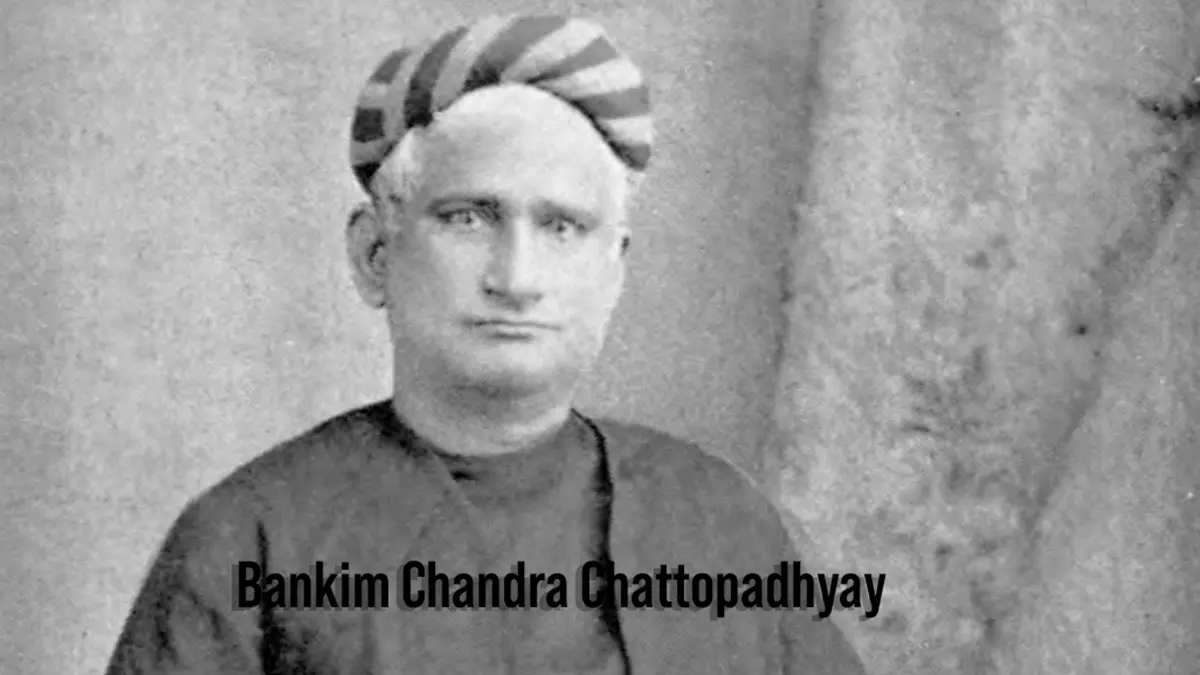
The 150th anniversary of the patriotic song Vande Mataram was celebrated in Parliament and across the country. Members of Bankim Chandra Chattopadhyay’s family thanked leaders for honouring his contribution to the freedom struggle. The song, penned by Chattopadhyay in the late 19th century, continues to evoke national pride and unity.
Background
Bankim Chandra Chattopadhyay (1838 – 1894) was born near Naihati in present‑day West Bengal. Educated at Hooghly College and Presidency College, he was among the first graduates of the University of Calcutta. He served as a deputy magistrate in the British administration but became better known as a novelist and thinker who helped shape modern Bengali literature. His novels Durgeshnandini (1865), Kapalkundala (1866) and Anandamath (1882) blended romance with patriotism. In Anandamath he included a hymn to the Motherland—Vande Mataram—which later became India’s national song.
Development and significance of Vande Mataram
- Origin of the song: Chattopadhyay wrote the verse in the 1870s to glorify “Mother India” and inspire courage against colonial rule. It was first printed in 1875 and later inserted into his novel Anandamath in 1882.
- Early public performance: Poet Rabindranath Tagore sang the song at the 1896 session of the Indian National Congress, giving it a national platform. Its stirring refrain quickly became a rallying cry for freedom fighters.
- Adoption as national song: On 24 January 1950, two days before India became a republic, the Constituent Assembly officially declared the first two stanzas of Vande Mataram the national song.
- Cultural impact: The hymn speaks of the land’s rivers, flowers and bountiful fields, personifying the nation as a mother. It inspired poems, songs and slogans during the independence movement and continues to be recited at political and cultural events.
Legacy and influence
- Symbol of unity: The song united people across linguistic and regional lines during the struggle against British rule. It still resonates with Indians worldwide as an expression of patriotic love.
- Contribution to literature: Chattopadhyay’s novels established the prose form in Bengali literature and inspired later writers such as Sarat Chandra Chattopadhyay. His characters embodied courage, sacrifice and moral strength.
- Commemoration: The 150‑year celebration highlights the enduring relevance of his work and encourages younger generations to understand the historical context of India’s national symbols.
Conclusion: Bankim Chandra Chattopadhyay’s Vande Mataram remains a timeless ode to India. By invoking the beauty of the land and the devotion of its people, the song galvanised a nation and continues to remind citizens of their shared heritage and responsibility.
Source: NDTV