

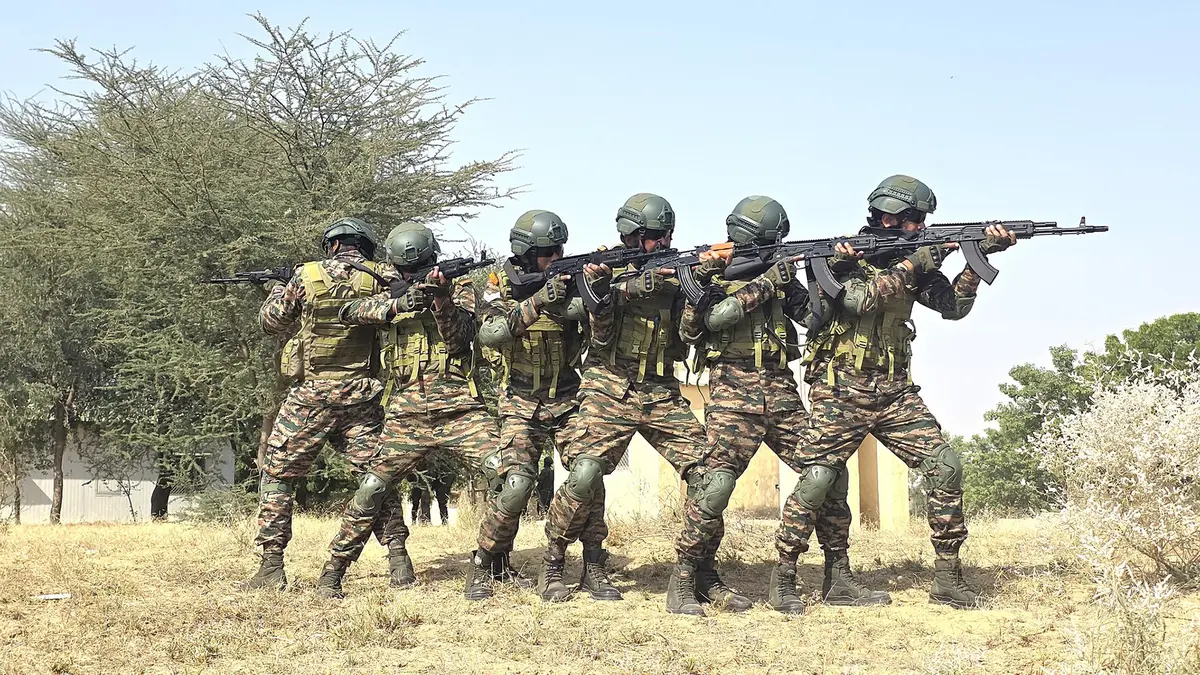
Why in news?
The Indian Army has started raising specialised Bhairav Battalions to respond swiftly to hybrid threats along India’s borders. By January 2026 at least 15 such battalions had been formed, and the Army plans to increase this number to around 25.
Background
The concept emerged after lessons from recent conflicts, including the Russia–Ukraine war, underscored the need for small, fast and technologically adept units. Traditional infantry battalions are large, while platoon‑level Ghatak teams operate at company scale. Bhairav Battalions bridge this gap by reorganising 200–250 soldiers from existing regiments into highly mobile teams trained for hybrid warfare – an environment that mixes conventional fighting with drones, cyber‑attacks and electronic warfare.
Key features
- Hybrid warfare training: Soldiers receive specialised instruction in drone piloting and counter‑drone measures, electronic disruption, and quick‑strike tactics. They learn to use loitering munitions, anti‑tank guided missiles and jammers.
- Small, autonomous units: Each battalion comprises multiple teams able to operate independently, supported by high‑speed off‑road vehicles. This structure enables rapid deployment across difficult terrain.
- Integration with existing forces: Bhairav Battalions complement Ghatak platoons and Para Special Forces. They provide a tactical response until larger formations arrive and are being deployed along sensitive sectors in Rajasthan, Jammu, Ladakh and the Northeast.
- Focus on technology: The Army plans to train more than one lakh drone operators as part of a wider modernisation drive. Bhairav units exemplify this shift by integrating surveillance and precision‑strike tools at the battalion level.
Significance
- Quick reaction capability: The battalions enable faster responses to border incursions or sudden escalations, reducing dependence on larger, slower formations.
- Adaptation to modern warfare: By combining infantry skills with drones and electronic warfare, the Indian Army is preparing for conflicts that blend conventional and unconventional tactics.
- Enhanced deterrence: Deploying Bhairav units in sensitive areas signals India’s readiness to counter hybrid threats and strengthens overall border security.
Source: India Sentinels