

Why in news?
An annual census conducted on 18 January 2026 counted 1,52,762 migratory birds from 106 species in Odisha’s Bhitarkanika National Park. The figure, reported by forest officials and ornithologists, shows a modest increase over last year’s count of 1,51,614 birds and highlights the park’s importance as a winter haven for waterfowl.
Background
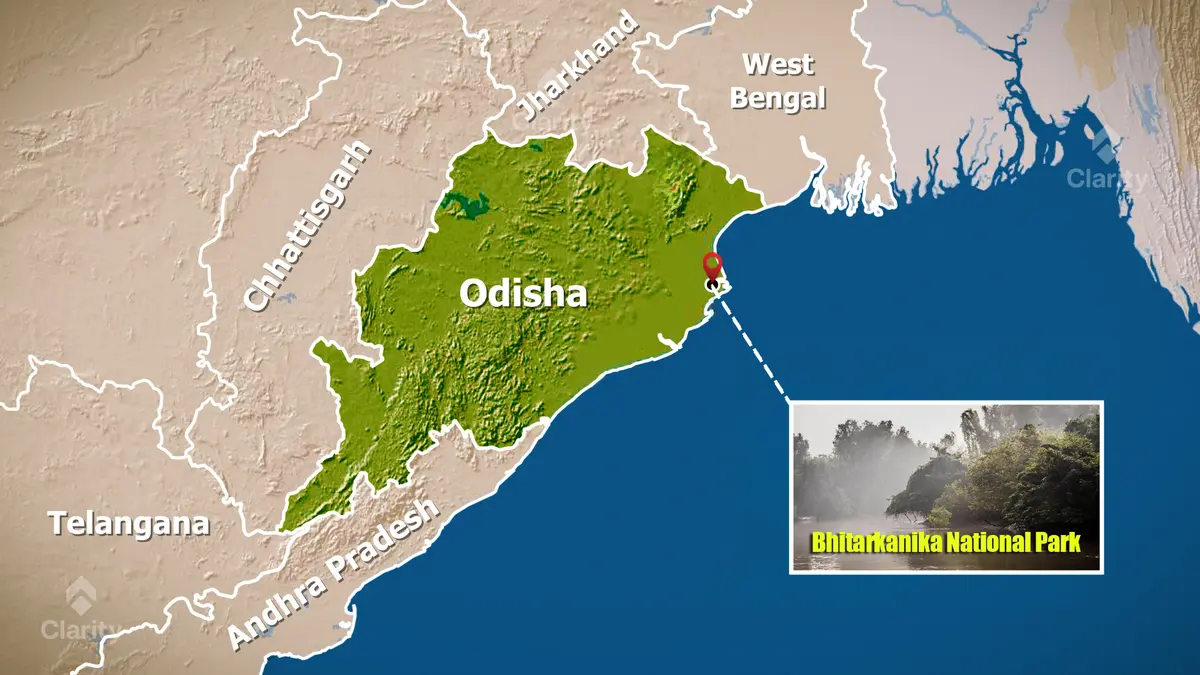
Bhitarkanika National Park lies in Kendrapara district on India’s east coast. Once part of a wildlife sanctuary declared in 1975, it gained national‑park status in 1998 and was designated a Ramsar wetland in 2002. Encompassing 145 sq km of creeks, mangroves and mudflats, it forms the core of the larger Bhitarkanika mangrove ecosystem bounded by the Brahmani, Baitarani, Dhamra and Pathsala rivers. The area harbours 21 true mangrove species and 10 associates, supports at least 174 bird species and 31 mammal species and is famous for its saltwater crocodiles and mass nesting of Olive Ridley sea turtles.
Census findings
- Participants: About 70 people — including ornithologists, wildlife officials and volunteers — formed 18 teams to conduct the count across the park’s creeks and mudflats.
- Total birds counted: 1,52,762 individuals representing 106 species were recorded. By comparison, 1,51,614 birds from 118 species were counted last year.
- Major groups: The census noted 93,821 geese and ducks; 17,643 gulls, terns and skimmers; 13,183 herons and egrets; 9,013 shorebirds and waders; 6,121 cormorants and darters; 4,002 other waterbirds; 3,533 storks; 2,296 rails, gallinules and coots; 2,167 ibises and spoonbills; 724 finfoots and jacanas; and 259 grebes.
- Trend: Park records show a steady rise in migratory bird numbers, from 76,268 birds in 2017 to over 1.5 lakh in 2025. This reflects improving habitat conditions and successful conservation measures.
Significance
- Ecological health: The large and diverse bird population indicates that Bhitarkanika’s mangrove and wetland ecosystems remain productive and undisturbed, offering ample food and roosting sites.
- Global importance: Many of the birds travel thousands of kilometres from Central Asia, Siberia and beyond. Bhitarkanika provides critical stopover and wintering grounds on the East Asian–Australasian Flyway.
- Conservation success: The upward trend suggests that protection measures, including restricted fishing and community awareness programmes, are benefiting wildlife. Continued monitoring helps park managers respond to threats such as pollution or habitat loss.
Conclusion
The slight increase in migratory bird numbers reinforces Bhitarkanika’s status as a key wetland on India’s eastern seaboard. Ongoing conservation and sustainable tourism will be essential to safeguard this vibrant refuge for birds and other wildlife.
Source: The PRINT