

Why in news?
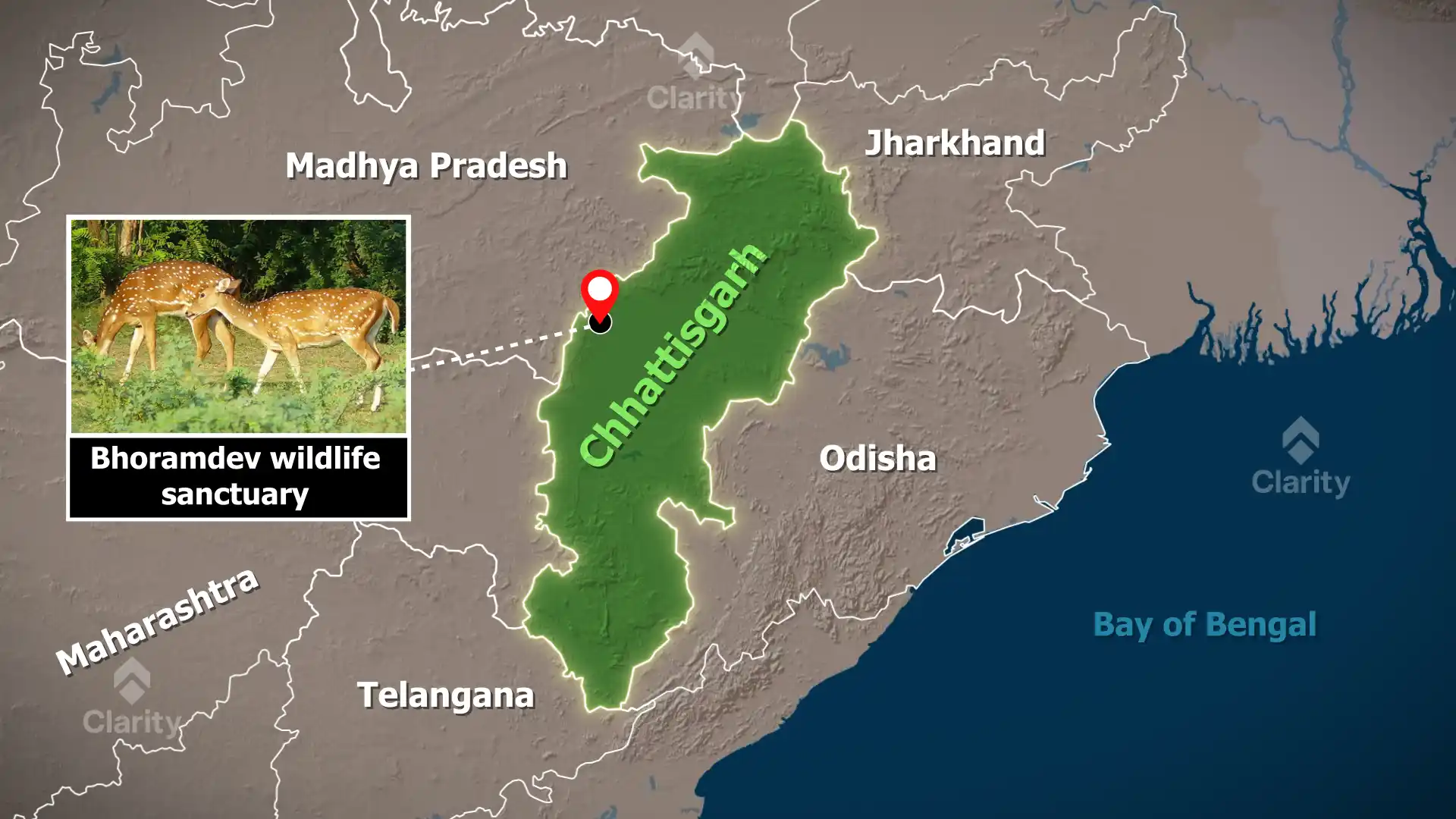
Forest authorities in Chhattisgarh recently reported that two Indian bison (gaur) were electrocuted by poachers in the Chilfi East Range of the Bhoramdev Wildlife Sanctuary, located in Kabirdham district. Officials arrested several suspects and seized bison meat and equipment used to lay kilometres of live electric wire. The incident has sparked concern over wildlife protection and the need for stronger anti‑poaching measures.
Background
Bhoramdev, also spelled Bhoramdeo, is a wildlife sanctuary in the Kabirdham district of Chhattisgarh. Notified in 2001, it covers about 352 square kilometres of the Maikal range in the Satpura hills. The sanctuary forms part of the Kanha–Achanakmar wildlife corridor, connecting Kanha National Park in Madhya Pradesh with Achanakmar Wildlife Sanctuary in Chhattisgarh. It is named after the nearby Bhoramdeo Temple, an ancient shrine dedicated to Lord Shiva often called the “Khajuraho of Chhattisgarh” because of its intricate carvings. The landscape is characterised by undulating hills, dense tropical moist and dry deciduous forests, and numerous streams. The Fen and Sankari rivers originate within the sanctuary. Local tribal communities such as the Baiga, Gond and Kanwar live in the surrounding villages.
Ecological importance
- Biodiversity hotspot: The sanctuary supports a wide range of flora including Saaj (Terminalia tomentosa), Sal (Shorea robusta), Tendu (Diospyros melanoxylon) and eucalyptus, creating habitats for diverse fauna.
- Wildlife corridor: As part of the Kanha–Achanakmar corridor, it enables tigers, leopards, sloth bears, wild dogs and deer to move between protected areas, maintaining genetic diversity.
- Birdlife: Over 150 species of birds, from hornbills to kingfishers, thrive in the mosaic of forest and riverine habitats.
Threats and conservation challenges
- Poaching: Illegal hunting for meat and traditional medicines poses the most immediate threat, as illustrated by the recent electrocution of bison.
- Habitat degradation: Deforestation, shifting cultivation and unsustainable collection of forest produce degrade the sanctuary’s ecology.
- Human–wildlife conflict: With villages nearby, crop depredation by wild animals and occasional attacks lead to tensions between communities and forest authorities.
- Limited resources: Forest staff shortages and inadequate equipment hamper effective patrolling and enforcement.
Conclusion
The Bhoramdev Wildlife Sanctuary plays a crucial role in conserving central India’s forest ecosystem. The recent poaching incident highlights the need for heightened surveillance, community engagement and stricter enforcement of wildlife laws. Protecting this corridor will ensure that iconic species and local communities continue to coexist in this rich landscape.
Sources: ETV Bharat