

Why in news?
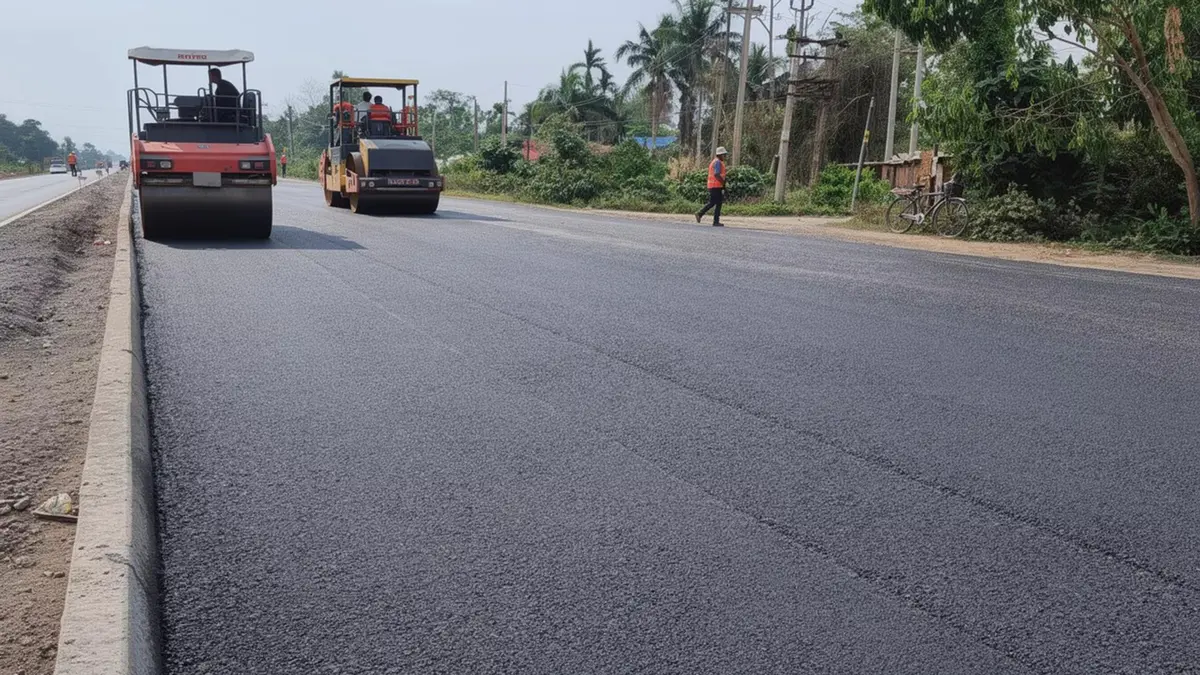
India has entered the era of “clean, green highways” after successfully transferring technology to produce bio‑bitumen from farm residue. Developed by the CSIR‑Central Road Research Institute and CSIR‑Indian Institute of Petroleum, this technology converts post‑harvest rice straw into a bio‑oil that can partially replace conventional petroleum‑based bitumen in road construction.
Background
Traditional bitumen is a thick petroleum product used to bind road surfaces. India imports roughly half of its bitumen needs, and burning rice straw after harvest contributes to severe air pollution. To address both issues, researchers developed a pyrolysis‑based process that transforms agricultural waste into a sustainable binder called bio‑bitumen. Laboratory and field tests show that replacing 20–30 percent of conventional bitumen with bio‑bitumen does not compromise road performance.
How bio‑bitumen is made
- Biomass collection: Rice straw is collected from fields and pelletised to make it easier to handle.
- Pyrolysis: The pellets are heated in a low‑oxygen environment, causing them to break down and release a viscous bio‑oil.
- Refining and modification: The bio‑oil is refined and polymer additives are blended in to improve its viscosity, thermal stability and adhesive properties.
- Blending: The modified bio‑bitumen is mixed with conventional VG‑grade bitumen to create a final binder suitable for road construction.
Benefits
- Reduced imports: Partially replacing petroleum‑based bitumen could save billions of rupees in imports and create a domestic market for bio‑bitumen.
- Lower emissions: Using farm waste reduces greenhouse‑gas emissions by roughly 70 percent compared with conventional bitumen and provides a productive use for crop residue that would otherwise be burnt.
- Longer‑lasting roads: Bio‑bitumen’s improved elasticity and adhesion can increase road life and reduce maintenance costs.
- Value for farmers: Buying crop residue from farmers generates additional income and discourages stubble burning, improving air quality in agricultural regions.
Source: DD News