
Why in news?
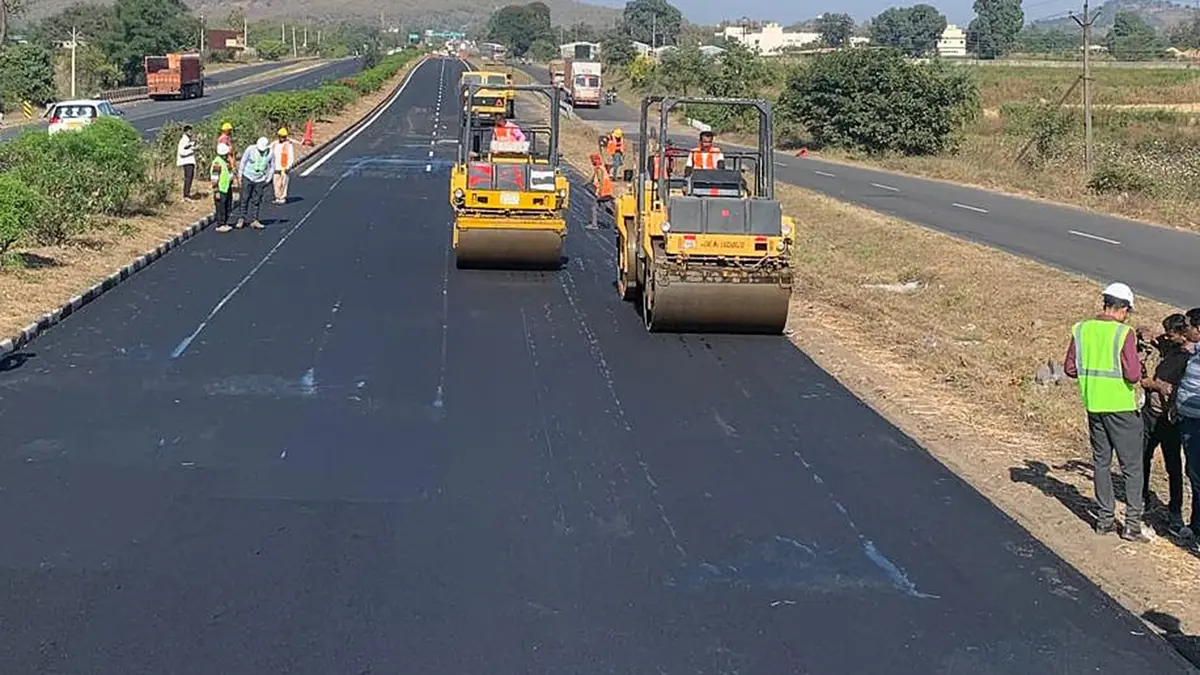
India is set to become the first country to commercially produce bio‑bitumen by converting agricultural residue into a binder for road construction. A new technology developed by the Council of Scientific and Industrial Research (CSIR) laboratories will reduce dependence on imported petroleum‑based bitumen and help address crop‑waste burning.
Background
Bitumen is the sticky, black binder that holds asphalt roads together. India consumes millions of tonnes of bitumen each year and imports about half of its requirement. At the same time, farmers burn large quantities of crop residue after harvest, contributing to air pollution in northern India.
Scientists from CSIR‑Central Road Research Institute (CRRI) and the Indian Institute of Petroleum (IIP) have jointly developed a process to produce bio‑bitumen from biomass. The technology uses pyrolysis — heating organic material in the absence of oxygen — to break down agricultural waste into liquids and solids that can be blended with conventional bitumen.
How it works
- Pyrolysis of biomass: Agricultural residues such as paddy straw, sugarcane bagasse and other crop wastes are heated in sealed reactors. The process yields bio‑oil, bio‑char and gases.
- Formulation: The bio‑oil and bio‑char are processed with polymers and additives to create a binder that meets road‑construction standards. Up to 30 percent of conventional bitumen can be replaced without compromising pavement performance.
- Commercial production: A pilot plant will be established to produce bio‑bitumen on an industrial scale, and the product will be tested in road projects across states.
Benefits
- Reducing imports: By replacing a share of petroleum‑based bitumen, India could save up to ₹40,000 crore in foreign exchange.
- Cutting emissions: Using crop residues diverts them from open‑field burning, reducing smoke and particulate pollution.
- Supporting farmers: Buying agricultural waste creates an additional revenue stream for farmers and encourages circular‑economy practices.
- Sustainable infrastructure: Roads built with bio‑bitumen are expected to have similar or improved durability compared with conventional asphalt.
Conclusion
Bio‑bitumen represents a convergence of agriculture, innovation and infrastructure. Its adoption could make Indian roads greener while providing new income for farmers and reducing reliance on imported raw materials.
Source: Press Information Bureau

