Why in news?
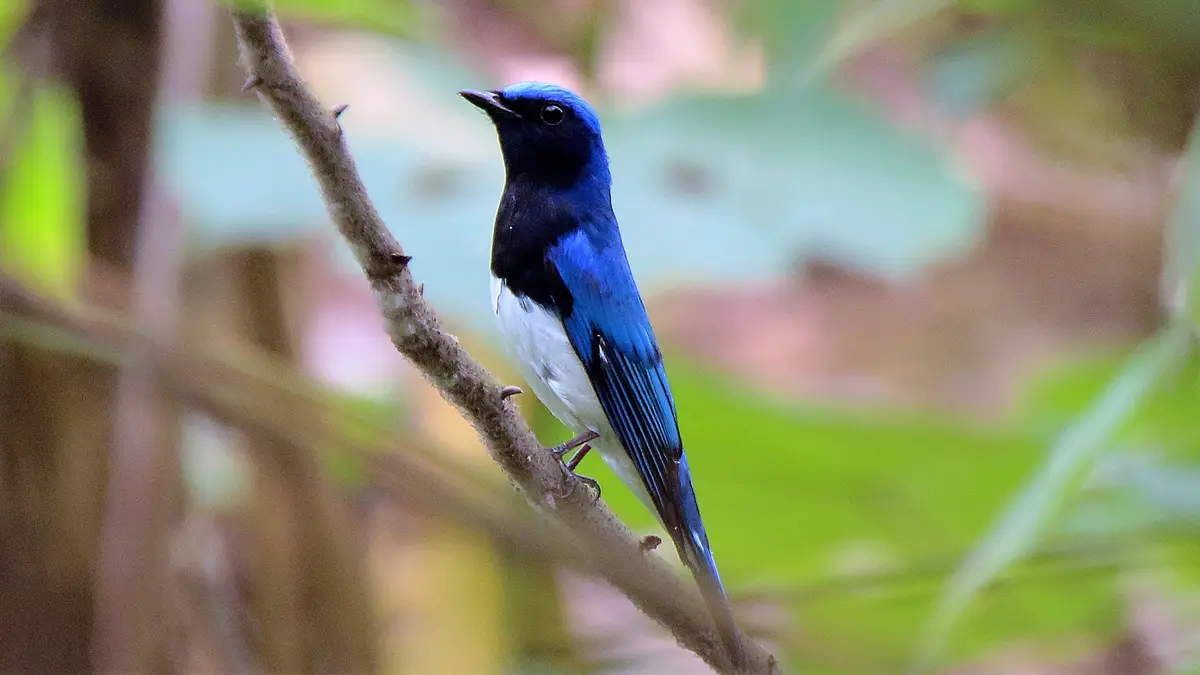
Birdwatchers in Gujarat recently observed a male blue‑and‑white flycatcher on Pavagadh Hill. This small migratory songbird rarely visits India, so the sighting on 8 March 2026 delighted ornithologists and highlighted the importance of conserving migratory stopover habitats.
Background
The blue‑and‑white flycatcher (Cyanoptila cyanomelana), also known as the Japanese flycatcher, belongs to the Old World flycatcher family. It breeds in Japan, Korea, northeastern China and the Russian Far East between May and July. After breeding, the birds migrate south to wintering grounds in Southeast Asia – mainly Vietnam, Cambodia, Thailand, Sumatra and Borneo – returning northward between February and May.
These birds prefer wooded habitats, such as lowland forests, sub‑montane forests, wooded slopes and stream gullies at elevations up to about 1,200 metres. Outside the breeding season they may inhabit scrub, plantations and parks. The species is listed as Least Concern on the IUCN Red List, but it is seldom recorded in India because the country lies outside its usual migratory flyway.
Identifying features
- Male plumage: The adult male has deep cobalt‑blue upperparts, including the crown, back, wings and tail. The chin, throat, breast and flanks are black, while the belly and vent are pure white. The bill is black and the eyes are dark brown.
- Female plumage: Females are duller, with grey‑brown upperparts and dark wings edged with rufous brown. The throat and breast are greyish, and there are distinctive creamy patches on the throat.
- Size: The species measures about 16–17 centimetres in length. It has a slim build and an upright posture when perched.
- Habits: Blue‑and‑white flycatchers feed on insects, often sallying from a perch to catch prey in flight. Their melodious song adds to the spring chorus in their breeding range.
Significance of the sighting
- Rare vagrant: Only a handful of blue‑and‑white flycatcher records exist from India. This observation shows that the species occasionally deviates from its normal migratory route.
- Conservation awareness: The sighting underscores the importance of protecting wooded habitats and water sources on hills like Pavagadh, which can serve as resting and feeding spots for migratory birds.
- Citizen science: Documentation by forest officials and birders contributes valuable data on bird distribution and migration patterns.
Conclusion
The unexpected appearance of a blue‑and‑white flycatcher in Gujarat reminds us that migratory birds may traverse long distances and use a variety of stopover sites. Protecting natural habitats, reporting unusual sightings and supporting citizen science initiatives can help track these avian travellers and ensure their safe passage.
Sources: Times of India