

Why in news?
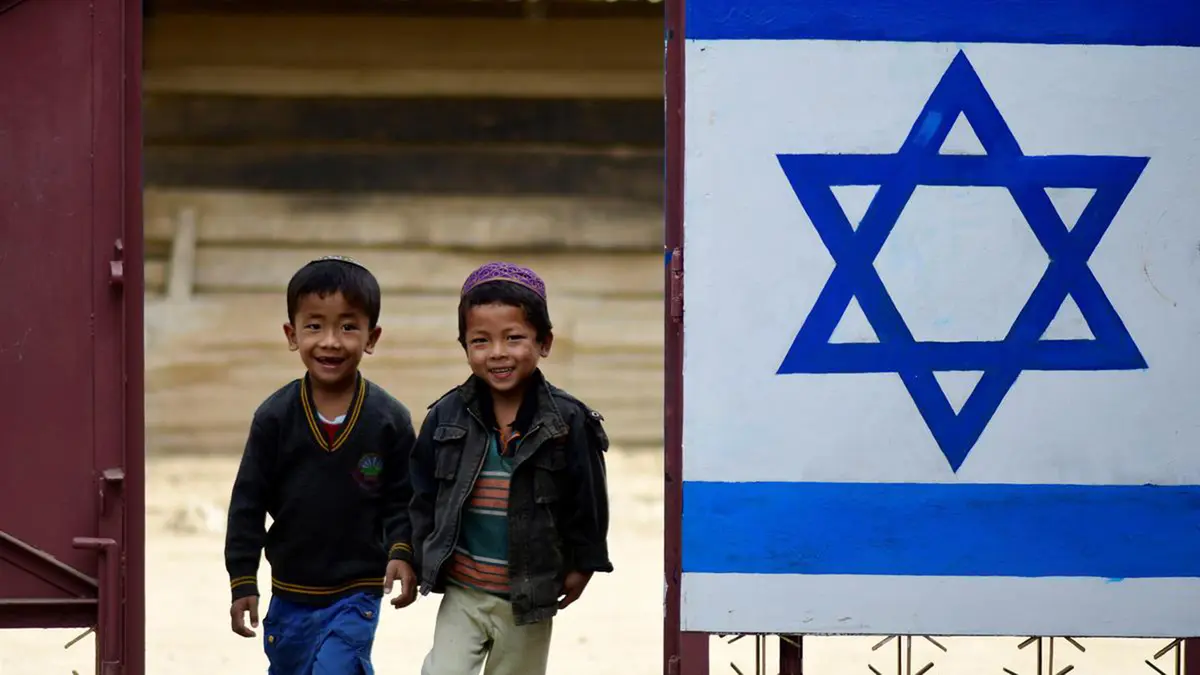
The Israeli Cabinet approved a plan to relocate the remaining members of the Bnei Menashe community from India’s northeastern states to Israel over the next five years. Approximately 1,200 individuals will move by the end of 2026, with another 4,600 following by 2030. The programme marks the largest ever migration of this little‑known community to the Jewish homeland.
Background
The Bnei Menashe are an ethnic group from the hilly regions of Manipur and Mizoram in north‑east India. They claim descent from the biblical tribe of Manasseh — one of the “ten lost tribes” of Israel exiled by the Assyrian empire around 722 BCE. According to community lore, their ancestors wandered through Central Asia before eventually settling in the Indo‑Burmese hills. Over centuries they adopted Christian practices but retained elements they interpret as ancient Hebrew traditions, such as observing the Sabbath and dietary laws.
Immigration to Israel
- Discovery and recognition: In the 1980s anthropologists and rabbis became aware of the community’s claims. After extensive investigations, Israel recognised members of the Bnei Menashe as a “lost tribe” eligible for immigration under the Law of Return, provided they undergo formal conversion to Judaism.
- Previous migrations: Over the past two decades roughly 4,000 Bnei Menashe have migrated to Israel, many settling in under‑developed towns in the Galilee and Negev regions. Upon arrival they complete conversion courses and integrate into Israeli society.
- Current plan: Israel’s latest decision aims to resettle the remaining 5,800 members of the community. They will relocate gradually, receive language training, and be housed in Israeli towns. The move is part of both a religious repatriation mission and a demographic strategy to populate the country’s peripheral areas.
Implications
- Cultural preservation: The migration provides an opportunity for the Bnei Menashe to reconnect with what they believe are their ancestral traditions while preserving their unique cultural heritage.
- Integration challenges: Many migrants face language barriers, differing social norms and the need to adjust economically. Israeli authorities provide education and employment support to facilitate integration.
Source: TH