

Why in news?
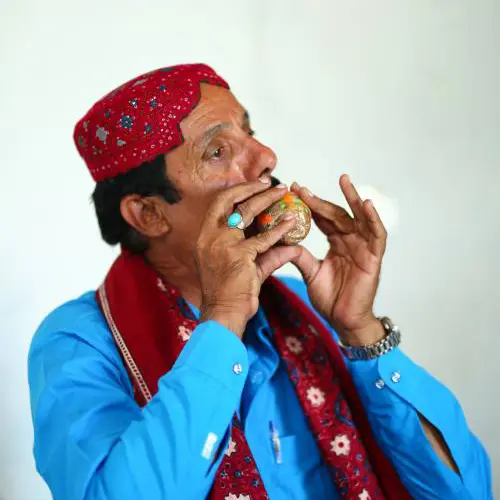
The boreendo (also spelled bhorindo) has been added to UNESCO’s List of Intangible Cultural Heritage in Need of Urgent Safeguarding. This clay whistle from Pakistan’s Sindh province is more than five thousand years old and survives today in the hands of just a couple of practitioners. Its recognition drew attention to the urgent need to preserve and pass on the knowledge of this fading tradition.
Background
The boreendo is believed to have originated in the Indus Valley Civilisation, with finds linked to archaeological sites such as Mohenjo Daro. It is typically made from sun‑dried and kiln‑fired clay shaped into a hollow sphere. After firing, women decorate the instrument with natural pigments and geometric patterns. When played, air is blown into a mouthpiece and escapes through holes, producing a haunting, flute‑like sound. Historically the instrument accompanied winter bonfires, weddings and village festivals, and was passed down through families or taught in community schools. Although once widespread, industrialisation and the spread of modern music have reduced its popularity, and only one master musician and one artisan are known to practise the craft today.
Key features
- Construction: Boreendos are hand‑shaped from clay into globes ranging from 6 cm to 12 cm in diameter. They are pierced with three to four finger holes and one blow hole. Modern makers sometimes add extra holes to expand the instrument’s scale.
- Decoration: Women paint the surfaces with plant‑based dyes and natural clay slips. Common motifs include spirals, dots and linear patterns reflecting Sindh’s folk art.
- Playing technique: Musicians hold the boreendo with both hands and modulate the pitch by covering and uncovering holes. Tilting the instrument alters the air flow and changes the tone. Different sizes produce distinct pitches, allowing performers to play melodies.
- Cultural role: Traditionally the instrument accompanied storytelling, marriage processions and winter gatherings. Its mellow sound blends with folk songs and dance rhythms of the Sindhi people.
Significance
- Heritage preservation: The UNESCO listing acknowledges that the boreendo is part of humanity’s shared cultural heritage and requires active safeguarding. Documentation and training initiatives can help prevent the instrument from disappearing.
- Cultural identity: For the people of Sindh, the instrument symbolises a living link to the Indus Valley civilisation and showcases local craftsmanship.
- Educational value: Reviving interest in the boreendo can inspire younger generations to value traditional arts and learn about ancient musical systems.
Conclusion
The boreendo’s journey from the Indus Valley to the modern world illustrates how fragile cultural practices can be. International recognition provides an opportunity for musicians, artisans and authorities to document techniques, encourage apprenticeships and integrate the instrument into cultural programmes. Without such efforts, this unique sound could be lost forever.
Sources: DEVD