

Why in news?
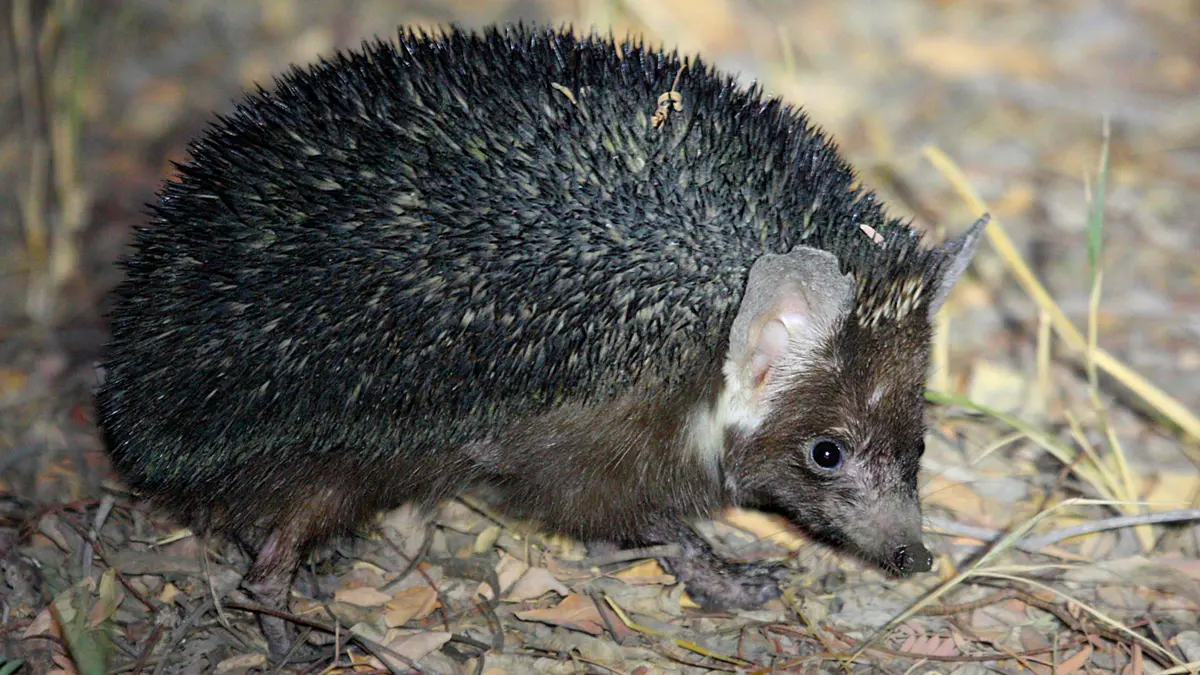
Researchers in Jammu and Kashmir have confirmed the first presence of Brandt’s hedgehog in India. The animal was initially spotted in the Rajouri–Poonch sector in 2024 and thought to be a long‑eared Indian hedgehog. Subsequent DNA analysis and detailed morphological study showed that it is actually Paraechinus hypomelas, commonly known as Brandt’s hedgehog. This discovery adds a new species to India’s mammalian fauna.
Background
Brandt’s hedgehog is a desert‑adapted hedgehog found in arid and semi‑arid regions of the Middle East and Central Asia, including Iran, Afghanistan, Pakistan, Oman, Yemen, Saudi Arabia, Turkmenistan, Tajikistan and Uzbekistan. It inhabits rocky deserts, scrublands and dry mountain slopes, often sheltering in rock crevices or abandoned burrows. Because of its adaptation to extreme temperature fluctuations and sparse vegetation, the species had not been recorded in India until now.
Physical traits
- Size: Adults measure about 22–27 cm in length and weigh between 400 and 900 grams, making them similar in size to European hedgehogs but lighter due to thinner spines.
- Distinctive features: The species has pale spines with dark tips, a dark facial mask and a blackish underbelly. Its large rounded ears aid heat dissipation and improve hearing, while a long, pointed snout and strong limbs allow it to dig and climb.
- Nocturnal habits: Brandt’s hedgehogs emerge after sunset to forage for insects, small vertebrates and occasionally seeds or fruit. They rest by day in self‑dug burrows or under rocks and may enter short periods of aestivation during extreme heat. In colder areas they can go dormant over winter.
- Reproduction: Breeding typically occurs in spring and early summer. Females gestate for about 30–40 days and give birth to litters of two to six hoglets. The young are born blind with soft spines and become independent within six weeks.
Discovery and significance
- The hedgehog found in Jammu and Kashmir was initially misidentified but later confirmed through DNA sequencing and comparison of skull and spine characteristics.
- Key distinguishing features include the segmentation of the swimming legs (in copepods this refers to appendages; in hedgehogs it relates to limb structure), the shape of the caudal rami and the morphology of the antennae; importantly, the species shows little sexual dimorphism.
- The finding extends the known range of Brandt’s hedgehog westwards and highlights the biodiversity of India’s arid frontiers. It underscores the importance of combining field observations with molecular techniques to accurately identify cryptic species.
- Although the International Union for Conservation of Nature lists Brandt’s hedgehog as Least Concern, localised threats exist. Habitat loss due to agriculture, overgrazing and infrastructure development, road mortality and pesticide use can impact populations. Climate change may further alter its habitat.
Sources: Hindustan Times