

Why in news?
Tata Advanced Systems and Lockheed Martin broke ground on a Maintenance, Repair and Overhaul (MRO) facility for C‑130J aircraft in Bengaluru in December 2025. The facility, scheduled to receive its first aircraft in early 2027, will provide heavy maintenance and upgrade services for India’s fleet of C‑130Js and support regional operators.
Background
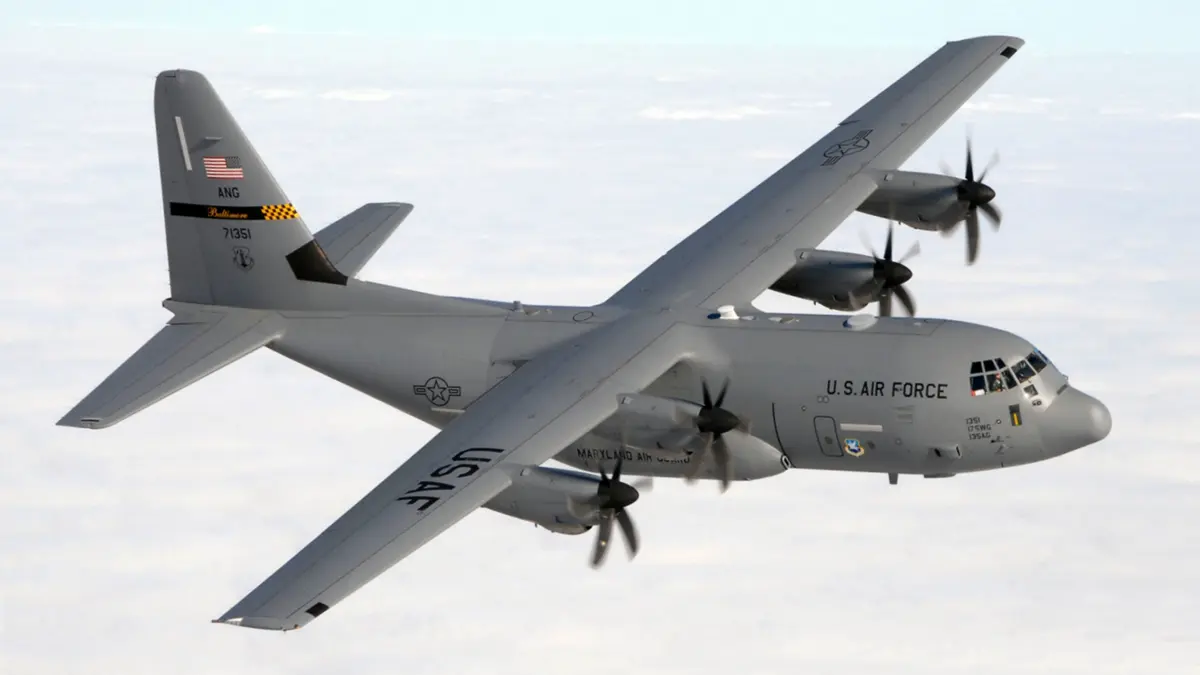
The C‑130 Hercules is a four‑engine turboprop transport aircraft developed in the 1950s. The latest C‑130J Super Hercules variant features digital avionics, a two‑pilot cockpit, head‑up displays, advanced navigation and defensive systems, and six‑bladed composite propellers. Compared to older models, the C‑130J climbs faster, flies farther at higher speeds and uses less runway. Its rugged design allows operations from unprepared airstrips, and it can carry oversized cargo, troops and humanitarian supplies.
C‑130J MRO Facility
- Comprehensive maintenance: The Bengaluru centre will handle heavy structural inspections, component repair, avionics upgrades and periodic servicing. It will join Lockheed’s global network of C‑130 maintenance sites.
- Training and jobs: The project includes training programmes for Indian engineers and technicians, building local expertise in servicing complex military aircraft. It is expected to generate employment and opportunities for small suppliers.
- Enhanced readiness: Domestic maintenance reduces aircraft downtime and improves availability for missions such as transport, disaster relief, special operations and humanitarian assistance.
- Timeline: Construction is expected to finish by the end of 2026, and the facility will welcome its first aircraft for overhaul in early 2027.
Capabilities of the C‑130J
- Powerplant and performance: The aircraft is powered by four Rolls‑Royce AE 2100D3 turboprop engines driving six‑bladed propellers. It can cruise at around 417 mph (about 670 km/h) and has a range of more than 3,000 km with a 15‑tonne payload.
- Payload capacity: The C‑130J can carry up to 19 tonnes of cargo or 92 passengers. It is equipped for airdrops, parachute delivery and medical evacuation.
- Short take‑off and landing: Its robust landing gear and powerful engines enable operations from short, austere runways less than 1,000 metres long, making it ideal for disaster relief.
- Advanced avionics: Digital displays, head‑up displays and autopilot reduce crew workload and improve situational awareness. The aircraft also has defensive systems for hostile environments.
Conclusion: Establishing an in‑country MRO facility for the C‑130J marks a significant step towards self‑reliance in defence aviation. Combined with the aircraft’s proven capabilities, the centre will enhance India’s airlift readiness and create new skills and opportunities in the aerospace sector.
Source: TH