Why in news?
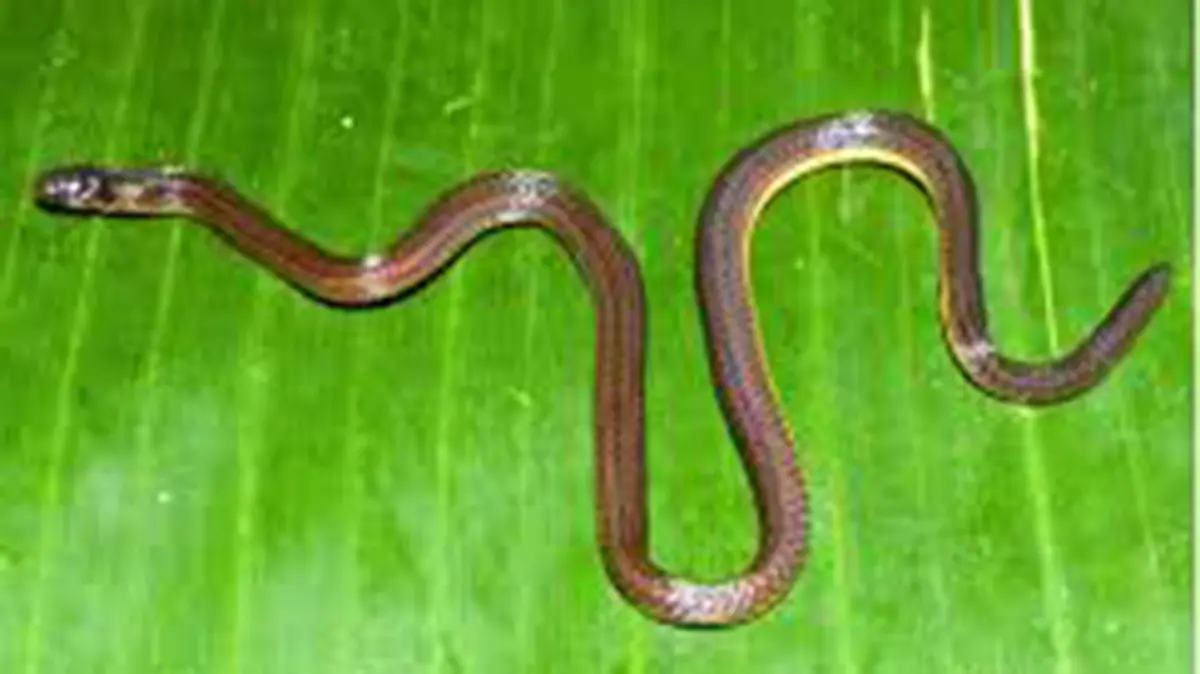
Herpetologists recently described a new species of reed snake from the humid forests of the West Garo Hills in Meghalaya. Named Calamaria garoensis, the small burrowing snake was discovered during field surveys near the Nokrek Biosphere Reserve and formally announced in April 2026. The find highlights the rich yet under‑studied biodiversity of north‑east India.
Background
Reed snakes of the genus Calamaria are tiny, non‑venomous and fossorial. They live under leaf litter and soil, feed on earthworms and rarely bite humans. Scientists from local universities collected an unusual specimen in the Garo Hills and used an integrative approach combining morphology and DNA analysis to determine that it belonged to an undescribed species. Genetic sequencing showed about 6.3 percent mitochondrial DNA divergence from the closely related C. mizoramensis, confirming that the Garo Hills snake is distinct. The species measures roughly 20–30 cm in length, has a slender brown body and a blunt non‑tapering tail. Its dorsal scales are smooth and arranged in 13 rows; a faint light collar separates the head and neck while a broad dark stripe runs along the belly. The snake was previously misidentified as C. pavimentata; the new description corrects this classification.
Key traits and importance
- Restricted range: Known only from a handful of sites in the West Garo Hills near the Nokrek Biosphere Reserve, indicating a very narrow distribution and possible vulnerability to habitat loss.
- Unique morphology: The combination of smooth 13‑row dorsal scales, short blunt tail and distinctive ventral stripe distinguishes C. garoensis from its congeners.
- Integrative taxonomy: The discovery underscores the value of combining genetic data with traditional morphology to unravel hidden species diversity in north‑east India.
- Biodiversity hotspot: The find adds to the rich fauna of the Garo Hills and highlights the need to conserve these evergreen forests against deforestation and mining.
Conclusion
Calamaria garoensis reminds us that many small and secretive creatures remain undocumented in India’s hill forests. Protecting their habitats will safeguard genetic diversity and provide opportunities for future discoveries.
Source: East Mojo · Academic Jobs