

Why in news?
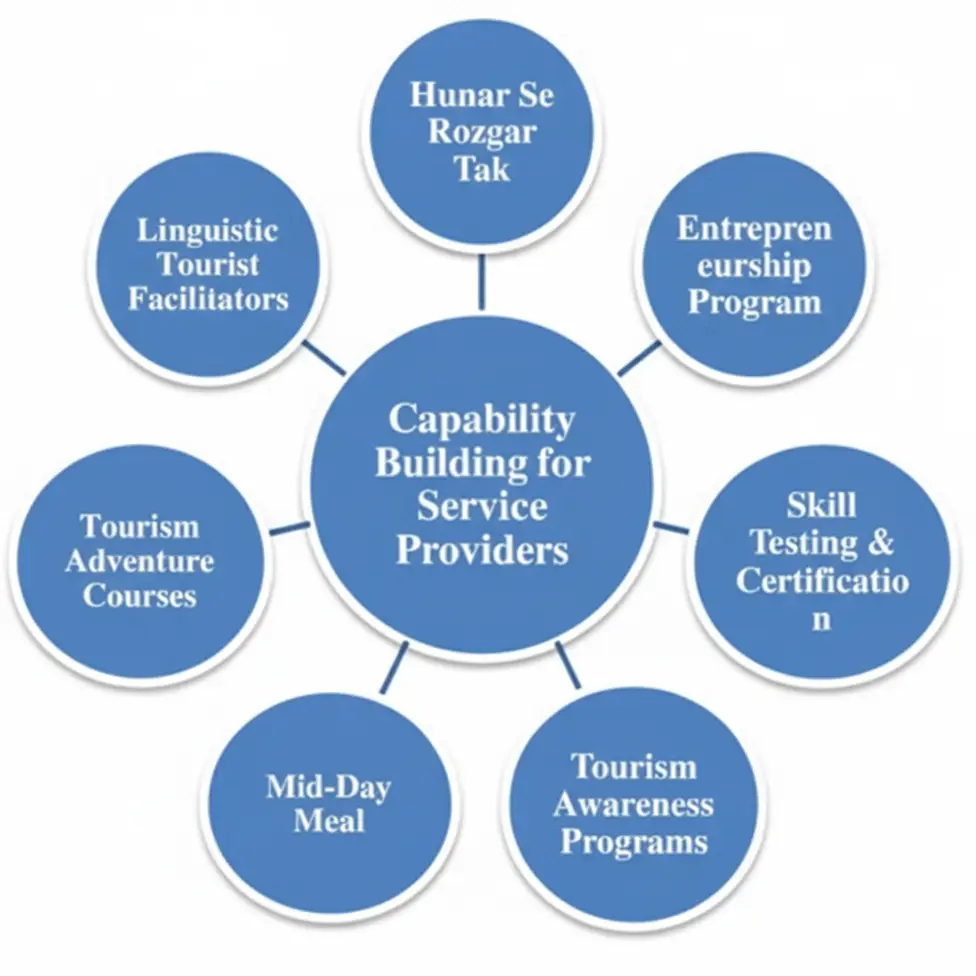
The Ministry of Tourism has announced that more than 6.4 lakh people have been trained under its Capacity Building for Service Providers (CBSP) scheme since 2009. The disclosure, made during a review of tourism initiatives, has focused attention on how the programme is improving the quality of services in India’s hospitality industry and creating jobs for youth and women.
Background
Launched in the 2009–10 financial year, the CBSP scheme is part of the government’s wider effort to develop human resources in tourism and hospitality. India’s tourism economy relies heavily on small service providers – including drivers, tour guides, ticketing agents, homestay operators, street food vendors, police personnel and even immigration staff. Many of these workers are self‑taught and have limited exposure to hospitality standards. The CBSP scheme was created to provide short, intensive training programmes that instil professional skills and customer‑friendly attitudes.
Programme features
- Short courses: Training modules typically last 4–6 days and cover topics such as hygiene, clean cooking techniques, garbage disposal, etiquette, communication skills, energy conservation and basic first aid. Participants learn how to welcome guests, handle payments and promote local heritage.
- Flexible delivery: Institutes of Hotel Management (IHM), Food Craft Institutes (FCI), the India Tourism Development Corporation (ITDC) and the Indian Institute of Tourism and Travel Management (IITTM) organise the courses at their campuses or directly at worksites in villages and towns. Faculties adapt the curriculum to local needs and languages while adhering to broad guidelines.
- Wide outreach: Advertisements in newspapers, radio and social media encourage youths, women and people from tribal or rural areas to apply. Many programmes reserve seats for women to promote gender equality in the tourism workforce.
- Certification and placement: At the end of the course participants receive certificates recognised by the Ministry of Tourism. Through tie‑ups with hotels, tour operators and state‑run tourism boards, a significant number of trainees secure employment or start their own services.
Achievements
- Large‑scale training: Between 2009–10 and October 2025, more than 643,000 people have been trained under CBSP across India. Over 84,000 have been placed in jobs through institutional linkages.
- Regional focus: Special drives in the north‑eastern states and other remote areas have brought training to communities that previously lacked access to hospitality education.
- Entrepreneurship support: The scheme complements other programmes such as “Hunar Se Rozgar Tak” and the Start‑up Tourism initiative, which provide seed funding, mentorship and micro‑credit to help trainees start homestays, craft shops and food stalls.
Significance
- Improving tourist experience: Well‑trained service providers can offer clean facilities, courteous interactions and accurate information, enhancing visitors’ impressions of India.
- Employment generation: Short training courses open doors for youth and women who may not have formal qualifications. This helps reduce unemployment and contributes to poverty alleviation.
- Inclusive growth: By reaching remote villages and tribal communities, the CBSP scheme ensures that the benefits of tourism are shared widely and that local cultures are presented respectfully to tourists.
Conclusion
The Capacity Building for Service Providers scheme shows that even short, practical training can make a difference in the tourism industry. Continued expansion of the programme, combined with follow‑up support and linkages to entrepreneurship schemes, will help more communities harness tourism for sustainable livelihoods.
Source: OV