

Why in news?
A team of researchers has demonstrated that injecting a colloidal carbon mixture into polluted aquifers can dramatically lower the levels of per‑ and polyfluoroalkyl substances (PFAS) in groundwater. Their field trial, conducted in the United States, found that the carbon slurry removed both long‑chain and short‑chain PFAS, achieving reductions of up to four orders of magnitude. This development offers hope for cleaning up legacy contamination without constructing expensive treatment plants.
Background
PFAS are a large family of human‑made chemicals used since the 1940s in products such as non‑stick cookware, stain‑resistant fabrics, firefighting foams and food packaging. Because the carbon–fluorine bond is one of the strongest in chemistry, PFAS do not break down easily and accumulate in water, soil and living organisms. Exposure has been linked to health risks such as liver damage, immune suppression and developmental problems. Communities around the world are grappling with PFAS pollution in drinking water and looking for effective, affordable remediation techniques.
How the carbon filter works
- Colloidal carbon injection: Scientists prepared a slurry of tiny activated carbon particles suspended in water. The mixture was injected into a contaminated aquifer through a well using a push–pull method – pushing the carbon into the formation and then pumping water back to monitor contaminant concentrations.
- Adsorption of PFAS: The carbon particles act like a sponge, adsorbing PFAS molecules onto their surfaces. Unlike conventional activated carbon filters that sit on the surface, the injected colloid coats the soil grains and creates a subsurface treatment zone.
- Long‑term effectiveness: Because the carbon remains dispersed in the aquifer, the filter continues to trap PFAS for months or years without maintenance. In the field test, concentrations of several PFAS fell by 99.9 percent or more.
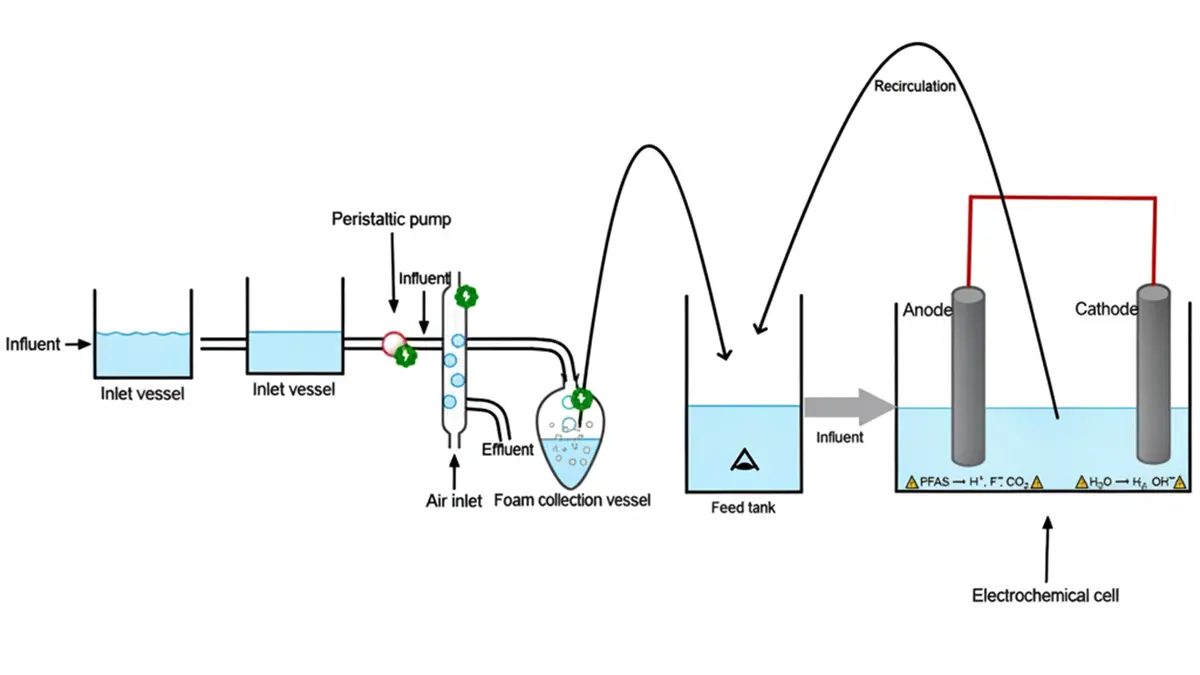
- Compatibility with other technologies: Researchers plan to pair the carbon filter with destruction methods, such as high‑temperature plasma or electrochemical oxidation, to permanently break down the captured PFAS.
Significance
- Low‑cost remediation: Injecting carbon into the ground avoids the need for pump‑and‑treat facilities or disposal of contaminated media, making it attractive for rural and resource‑limited regions.
- Applicability to diverse PFAS: The technique captured both older “long‑chain” compounds like PFOA and PFOS and newer “short‑chain” alternatives, which often evade traditional filters.
- Reducing human exposure: By lowering PFAS concentrations in groundwater, the technology can protect drinking water sources and reduce health risks to nearby communities.
- Scalable solution: The method can be adapted to different site conditions and could be combined with surface barriers or other adsorbents to treat larger plumes.
Conclusion
PFAS contamination is a serious environmental problem because these “forever chemicals” do not degrade easily. The successful field trial of a carbon‑based subsurface filter provides a promising path toward cleaning up polluted aquifers using relatively simple equipment. As researchers refine the technology and integrate it with PFAS destruction techniques, it may become an important tool for safeguarding groundwater quality.
Source: Phys.org