Why in news?
Researchers studying Arctic ecosystems have warned that declining lichen across the Arctic could threaten caribou populations. A long‑term study using GPS tracking data found that caribou are about nine times more likely to survive winter in areas with abundant lichen, while deep snow that covers their food can lead to starvation. The finding underscores how climate change and changing snow patterns endanger these iconic animals.
Background
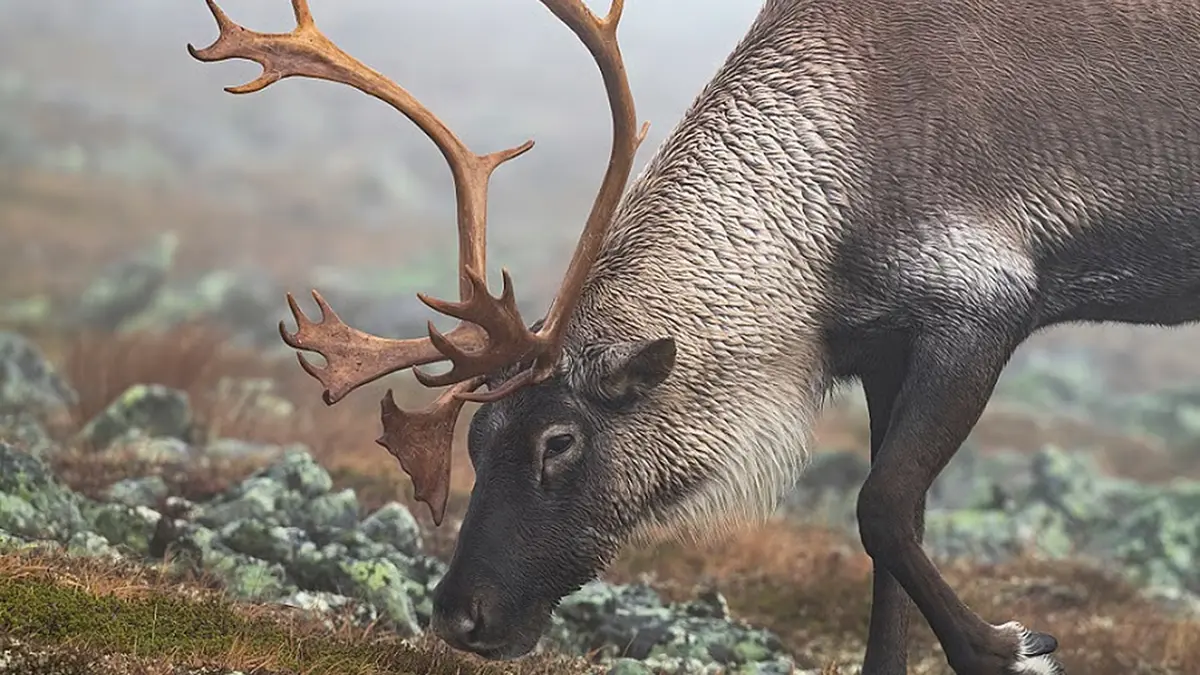
Caribou (Rangifer tarandus) belong to the deer family and are known as reindeer in Eurasia. They inhabit Arctic, subarctic, tundra and boreal regions of Greenland, Scandinavia, Russia, Alaska and Canada. Indigenous peoples have relied on caribou for meat, clothing and transportation for thousands of years. Unlike most deer, both male and female caribou grow antlers, which they shed and regrow annually. Their wide hooves, warm coats and specialized nasal bones help them walk over snow, swim in icy waters and warm cold air before it reaches their lungs.
Ecology and adaptations
- Lichen diet: Caribou are one of the few mammals able to digest lichen, a symbiotic organism of algae and fungi that grows slowly in cold environments. In winter when other vegetation is scarce, caribou use their hooves to scrape away snow and feed on this nutrient‑poor but essential food.
- Migratory behaviour: Caribou undertake some of the longest terrestrial migrations on Earth, travelling hundreds of kilometres between summer calving grounds and winter ranges.
- Unique senses: They can detect ultraviolet light, which helps them spot predators or find food against snowy backgrounds. Both sexes bear branched antlers, used for defence and foraging.
- Social structure: Herd sizes vary widely. In North America, barren‑ground caribou gather in large herds during migration, while forest‑dwelling woodland caribou stay in small groups.
Threats and conservation
- Habitat loss: Industrial development, roads and pipelines fragment caribou ranges, disrupting migrations and exposing herds to predators.
- Climate change: Warming temperatures lead to deeper or icier snow and alter plant growth, making it harder for caribou to access lichen and other forage. Earlier spring thaws can also mismatch food availability with calving.
- Predation and disease: Wolves, bears and parasites pose natural threats that become more severe when caribou are weakened by lack of food.
Significance
- Cultural importance: Caribou are integral to the livelihoods and cultures of many Indigenous communities, who depend on them for sustenance and traditional practices.
- Ecosystem role: As large herbivores, they shape plant communities, disperse seeds and provide prey for predators, maintaining the balance of Arctic ecosystems.
- Indicator species: Their health reflects the state of northern environments; declining caribou numbers are a warning signal for broader ecological changes.
Conclusion
The recent study highlights how a simple organism like lichen can be key to caribou survival. Protecting lichen habitats, limiting industrial disturbance and combating climate change are essential steps to ensure that caribou continue to roam the Arctic tundra for generations to come.
Source: DTE