

Why in news?
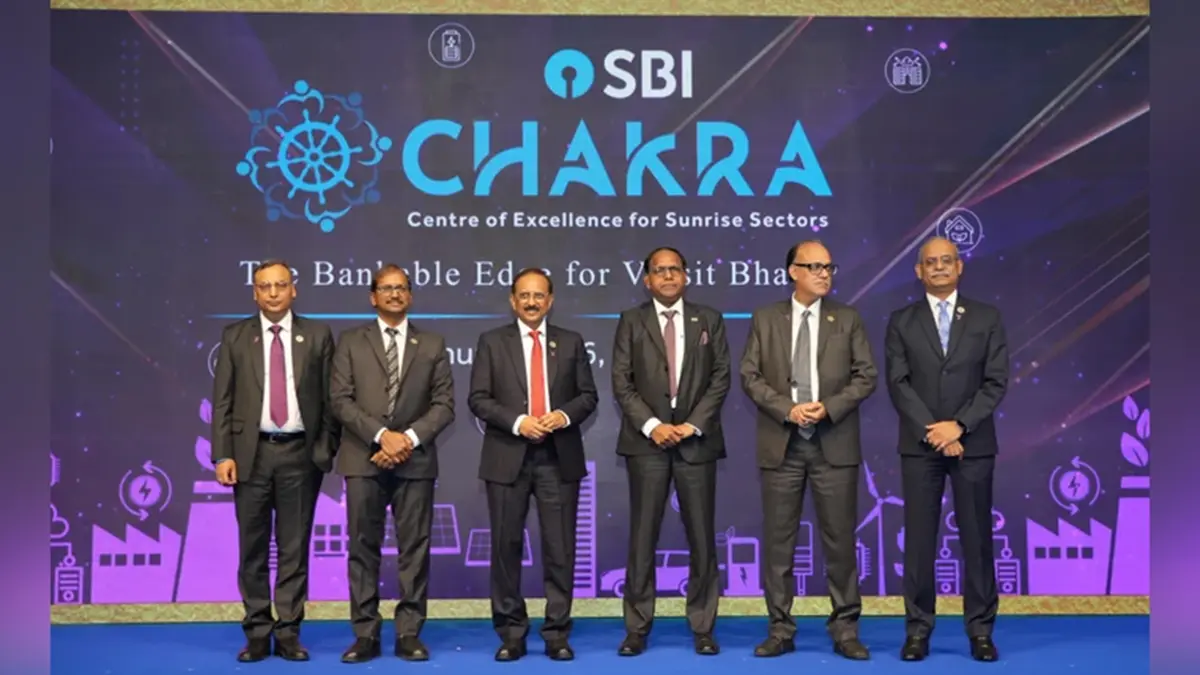
On 1 February 2026 the State Bank of India (SBI) launched CHAKRA, a centre of excellence designed to finance India’s emerging “sunrise” industries. The initiative aims to channel long‑term capital into eight high‑growth sectors such as renewable energy, semiconductors and electric mobility. SBI hopes to attract investments worth about ₹100 lakh crore over the next five years by partnering with multilateral agencies, foreign banks and domestic financiers. CHAKRA’s launch drew attention because it signals the country’s intent to build expertise and risk‑assessment frameworks for technologies that will power India’s green and digital transformation.
Background
As India pursues the goals of a carbon‑neutral and technologically advanced economy, it must unlock huge amounts of private and public capital. Traditional bank lending has been cautious towards new industries due to uncertain business models, long gestation periods and unfamiliar risks. SBI recognised that a dedicated centre bringing together experts, bankers and policy makers could improve the “bankability” of these projects. The CHAKRA idea reflects a wheel with eight spokes — one for each sector — symbolising coordination and steady progress. The sectors identified align with government initiatives such as the National Green Hydrogen Mission, semiconductor manufacturing incentives and urban smart infrastructure programmes.
Focus sectors and features
- Renewable energy: Financing solar, wind and hybrid power projects, including pumped storage plants and utility‑scale batteries.
- Advanced cell chemistry & battery storage: Supporting research and manufacture of next‑generation energy storage systems essential for electric vehicles and grid stability.
- Electric mobility: Funding electric buses, charging infrastructure and related supply chains.
- Green hydrogen: Investing in production and infrastructure for hydrogen and its derivatives (such as ammonia) to decarbonise industries and transport.
- Semiconductors: Developing fabrication plants, chip design centres and packaging facilities to reduce import dependence.
- Data centre infrastructure: Creating energy‑efficient data centres and digital infrastructure to support India’s growing cloud‑computing needs.
- Smart infrastructure: Building resilient urban infrastructure, including sensors, electric grids and transport systems, as part of the Smart Cities Mission.
- Decarbonisation technologies: Financing carbon capture, energy‑efficient industrial processes and other innovations that reduce greenhouse‑gas emissions.
How CHAKRA works
- Expertise hub: SBI will bring together specialists from banking, engineering and policy research to understand technical aspects of each sector. This will help in designing customised loan products and risk‑mitigation strategies.
- Collaborative financing: The bank has signed memoranda of understanding with more than 20 domestic and international financial institutions. Project finance teams from these partners will work at CHAKRA to co‑fund large projects and share knowledge.
- Risk assessment frameworks: CHAKRA aims to develop standardised methodologies for evaluating long‑term projects, including environmental and social impact assessments, so that credit decisions are transparent and accountable.
- Policy alignment: The centre will work closely with government agencies and think‑tanks to stay aligned with national strategies like Viksit Bharat 2047 and to advise on policy changes that facilitate investment.
Significance
- Mobilising capital: By focusing on sectors with high capital needs, CHAKRA seeks to unlock both domestic and foreign debt to accelerate India’s green transition.
- Building confidence: A dedicated team reduces information asymmetry and builds investor confidence in nascent industries.
- Supporting innovation: By providing patient capital and technical advice, the centre can help start‑ups and innovators scale up more rapidly.
- Promoting self‑reliance: Investments in semiconductors and advanced batteries will reduce dependence on imports and create high‑skill jobs.
Source: TH