

Why in news?
A recent wildlife survey reported that the population of the rare golden langur has increased slightly in Chakrashila Wildlife Sanctuary, highlighting the success of conservation efforts. The sanctuary remains important as one of the only protected habitats for this endangered primate.
Background
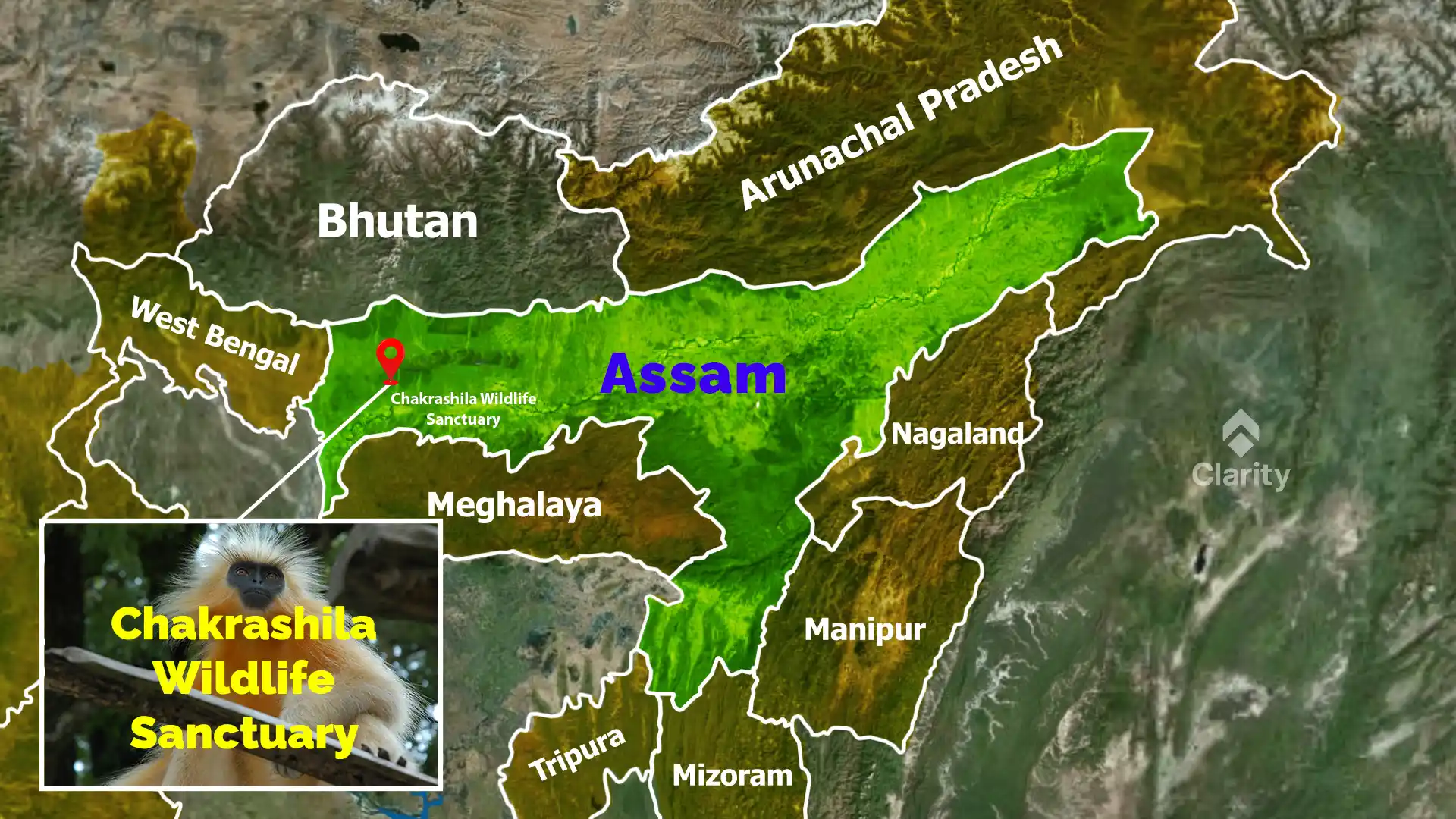
Chakrashila Wildlife Sanctuary is situated in Assam’s Kokrajhar and Dhubri districts and covers about 45.5 square kilometres. Initially declared a reserve forest in 1966, it was upgraded to a wildlife sanctuary on 14 July 1994 after sustained activism by local environmental organisation Nature’s Beckon. The sanctuary consists of low hills with two large lakes—Dipla i Beel and Dheer Beel—and a mix of sal coppice and moist deciduous forests.
Golden langurs and other wildlife
- Golden langur habitat: The sanctuary is the second protected area in India for the golden langur (Trachypithecus geei). A recent survey counted 838 individuals in Chakrashila, up from 601 during a 2008–09 estimate.
- Other mammals: Wildlife recorded in Chakrashila includes Indian flying foxes, Chinese pangolins, Bengal foxes and rhesus macaques. The sanctuary also supports fishing cats and leopard cats.
- Birds and reptiles: More than 119 bird species have been documented, including black francolin, lesser whistling duck and red‑headed vulture. About 23 reptile species inhabit the area, such as monitor lizards and pythons.
Conservation challenges
Although the golden langur population shows signs of recovery, their habitat continues to shrink due to encroachment, logging and grazing. Fragmentation has isolated groups of langurs, making it difficult for them to breed. Conservationists are calling for better protection of forest corridors connecting Chakrashila with other reserves such as Manas National Park. Community‑based initiatives that involve local villages in sustainable forest management are seen as key to long‑term success.
Source: SENT