

Why in news?
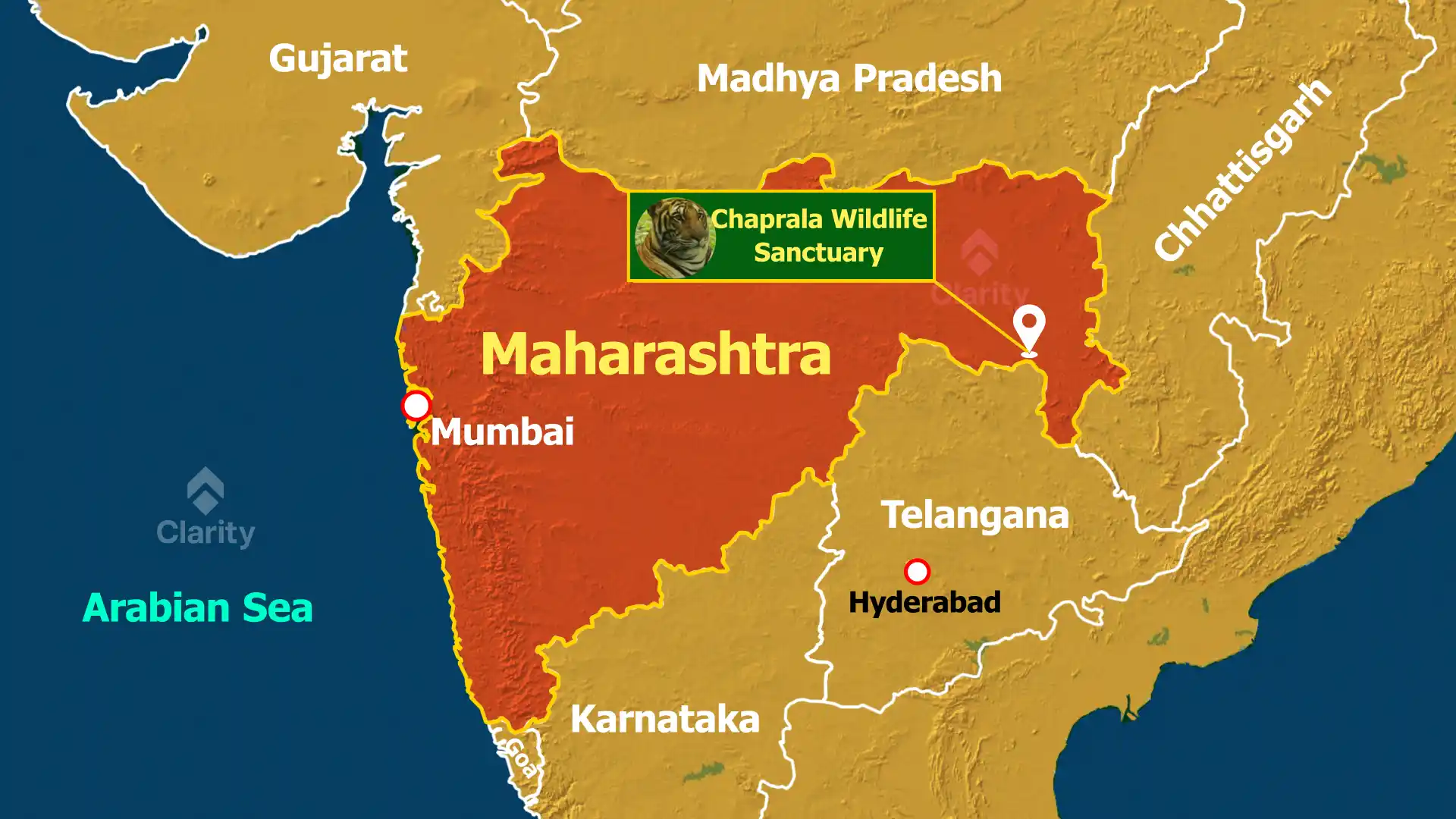
Chaprala Wildlife Sanctuary drew attention in December 2025 as conservationists highlighted its rich biodiversity and the need for enhanced protection. Located at the confluence of Maharashtra, Chhattisgarh and Telangana, it serves as a corridor for wildlife and a destination for eco‑tourism.
Background
Established in 1986, the Chaprala Wildlife Sanctuary covers about 134.8 square kilometres in the Gadchiroli district of Maharashtra. It lies in the eastern part of the state where the Pranhita River forms its western boundary. The terrain consists of undulating hills, dry deciduous forests and patches of grassland interspersed with water bodies such as Murgikunta, Raikonta and Komatkunta tanks.
The sanctuary is part of the larger Central Deccan Plateau landscape, which supports a mixture of teak, tendu, mahua, arjun, bel and salai trees. It provides habitat for several threatened species and acts as a buffer between human settlements and the deeper forests of neighbouring states.
Flora and fauna
- Mammals: Tigers, leopards, sloth bears, wild dogs, jackals and striped hyenas roam the forests. Herbivores such as sambar, chital, nilgai, wild boar and four‑horned antelope graze in the open areas.
- Birds: More than 130 bird species have been recorded, including peafowl, grey hornbills, paradise flycatchers, racket‑tailed drongos and various raptors. The sanctuary is also an important stopover for migratory birds during winter.
- Reptiles: Indian rock python, monitor lizards and several snake species inhabit the rocky slopes and riverbanks.
- Plant diversity: Dry deciduous trees dominate, accompanied by shrubs like bamboo and lantana. During the monsoon, the undergrowth becomes lush and flowers attract pollinators.
Cultural significance and tourism
- Gond community: Indigenous Gond villages border the sanctuary. Their traditional knowledge of the forest helps in sustainable resource use and wildlife monitoring.
- Visitor facilities: The best time to visit is between February and May when animals congregate around water sources. Eco‑tourism activities include guided safaris, bird‑watching and cultural tours of nearby villages.
- Conservation challenges: Human–wildlife conflict, forest fires and illegal grazing pose threats. Strengthening patrolling, involving local communities and promoting awareness can mitigate these issues.
Conclusion
Chaprala Wildlife Sanctuary is a biodiversity hotspot that links various ecosystems across three states. Protecting its forests and wildlife not only conserves endangered species but also supports livelihoods through eco‑tourism. With careful management and community participation, this sanctuary can remain a thriving refuge for generations.
Source: TOI