

Why in news?
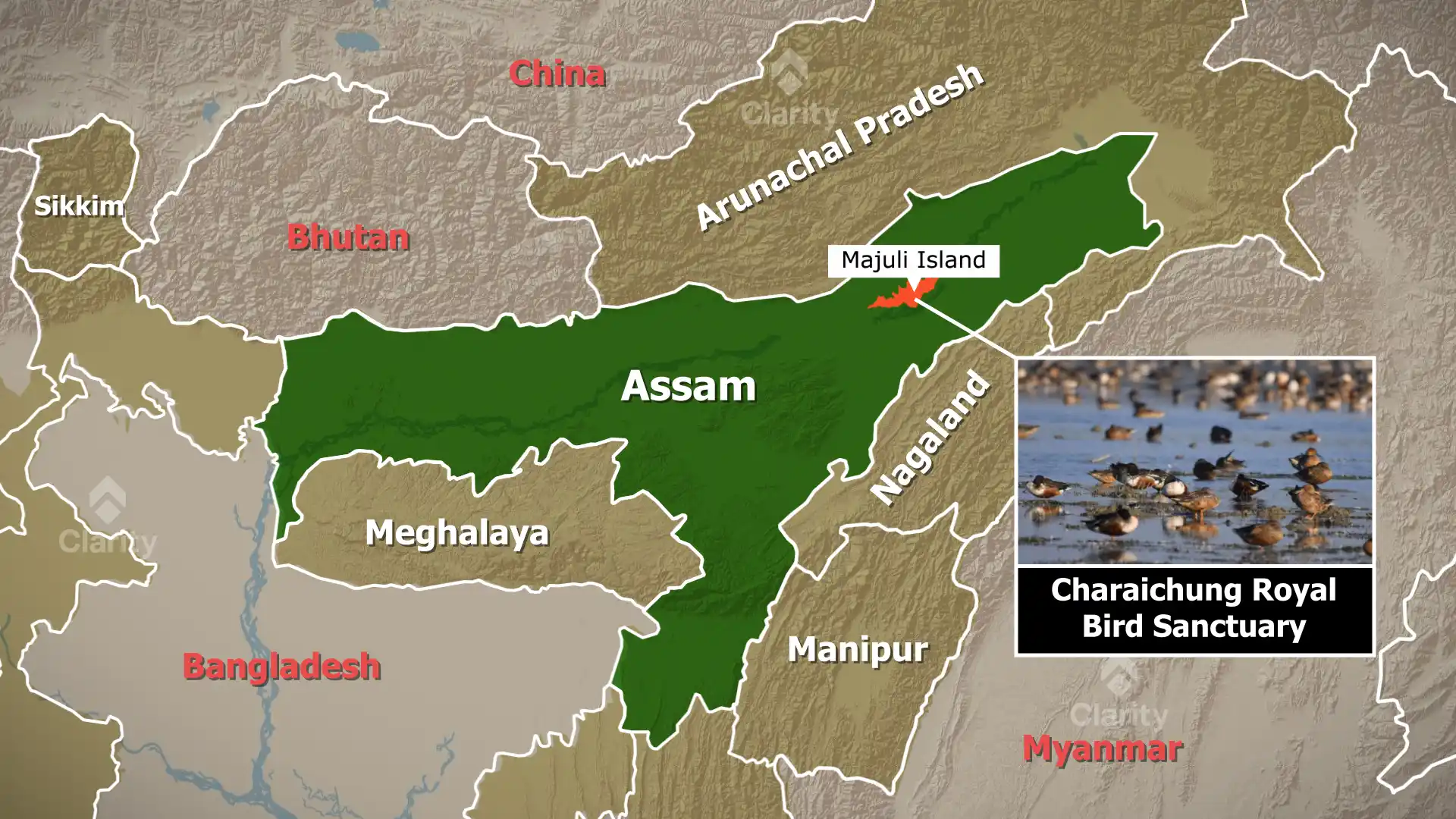
The Charaichung Festival was held on Majuli island in Assam from 7 to 10 December 2025 to rejuvenate the historic Charaichung Royal Bird Sanctuary. Organised by the Majuli Sahitya and local residents, the festival seeks to conserve Asia’s first protected bird sanctuary, which was established in 1633 and had fallen into neglect.
Background
Majuli, the world’s largest river island, lies in the Brahmaputra River. In 1633 AD the Ahom king Swargadeu Pratap Singha (also known as Burha Roja) set aside part of this island as a royal bird sanctuary – one of the earliest legally protected wildlife reserves in Asia. Over the centuries the sanctuary, known locally as Charaichung, suffered from erosion, deforestation and neglect. Many wetlands dried up, and bird habitats degraded.
Highlights of the festival
- The four‑day event combined cultural performances with nature walks and bird‑watching sessions to raise awareness about conservation.
- An exhibition on forest conservation showcased ongoing efforts to protect Majuli’s biodiversity, including community‑led reforestation and wetland restoration projects.
- Local leaders invited people from across Assam and international tourists to experience the sanctuary’s natural beauty. They emphasised that about 150 species of indigenous and migratory birds inhabit the island and that preserving their habitat is critical.
- The festival also served as an appeal to state authorities to promote Charaichung as an eco‑tourism destination. Increased tourism could provide revenue for conservation and generate livelihood opportunities for local communities.
Importance of Charaichung
- Biodiversity hotspot: The wetlands and woodlands of Majuli support a wide range of birds, including storks, herons, cranes, ducks and migratory species from Siberia and Central Asia. Protecting the sanctuary helps maintain ecological balance in the Brahmaputra basin.
- Cultural heritage: As one of the oldest protected bird sanctuaries in Asia, Charaichung is a part of Assam’s historical legacy. Reviving it honours the vision of the Ahom kings and educates younger generations about traditional conservation practices.
- Community involvement: Local participation ensures that conservation initiatives are sustainable. The festival demonstrates how culture and ecology can work together to revitalise a long‑forgotten sanctuary.
Conclusion
The Charaichung Festival shows that heritage sites can be revived through community effort, cultural pride and government support. Restoring the royal bird sanctuary will require long‑term commitment to habitat restoration, eco‑tourism planning and awareness programmes. If successful, Majuli could once again become a refuge for hundreds of bird species and a model for community‑driven conservation.
Sources: DDN