

Why in news?
Recent studies on charophytes, a group of freshwater green algae, have renewed interest in their role as the closest living relatives of land plants. Understanding their biology provides insight into how plants colonised land hundreds of millions of years ago.
Background
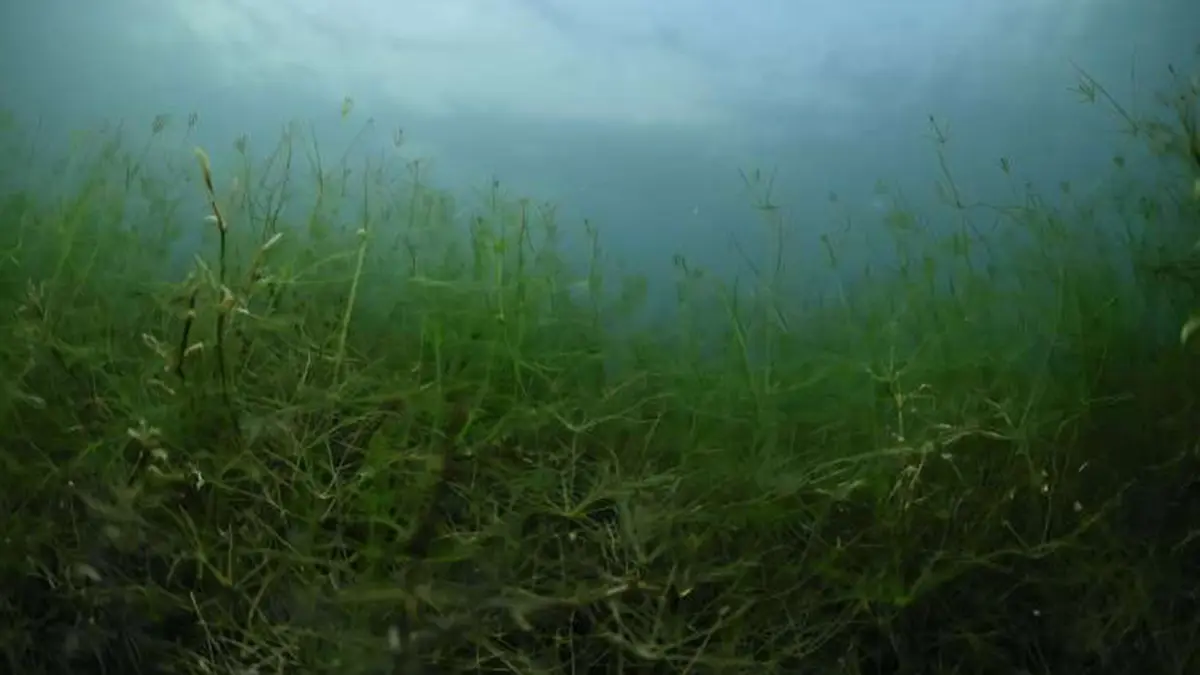
Charophytes belong to the division Charophyta, which includes several classes of green algae such as Charophyceae (stoneworts), Coleochaetophyceae and Zygnematophyceae. They are mostly freshwater organisms found in lakes, ponds, slow‑flowing rivers and wetlands. Many charophytes form dense submerged meadows anchored by rhizoids, earning the common names “stoneworts,” “muskgrass” or “skunkweed” due to the lime encrustations and strong odours produced by some species.
Characteristics
- Morphology: The body (thallus) consists of a central stem or axis differentiated into long single‑cell internodes and short multicellular nodes. Whorls of branchlets arise at each node, giving the plant a jointed appearance. Rhizoids anchor the plant to the substrate but do not absorb nutrients; instead, nutrients are taken directly from the water.
- Calcareous deposits: Many species accumulate calcium carbonate on their surfaces, making them feel rough and earning the name “stonewort.” These deposits help clarify water by trapping suspended particles.
- Reproduction: Charophytes reproduce both sexually and asexually. Asexual reproduction occurs via fragmentation or the production of bulbils. Sexual reproduction involves conspicuous male (antheridia) and female (oogonia) organs that are often bright orange when mature. The zygote undergoes meiosis to produce haploid spores that grow into new plants.
- Evolutionary significance: Phylogenetic studies show that land plants (embryophytes) emerged from within the charophyte lineage, particularly the class Zygnematophyceae. Charophytes share features with land plants, such as cell division using a phragmoplast and, in some species, retention of the zygote on the parent plant.
Ecological role
- Habitat engineers: Dense mats of charophytes reduce phytoplankton growth and improve water clarity by absorbing nutrients and trapping sediments.
- Food and shelter: They provide habitat for invertebrates and fish and are a food source for waterfowl and other wildlife.
- Bioindicators: Because charophytes are sensitive to nutrient pollution and salinity, their presence or absence can indicate water quality.
Significance
- Understanding plant evolution: Studying charophytes helps scientists trace the evolutionary steps that led from aquatic algae to terrestrial plants.
- Conservation importance: Protecting wetlands that support charophyte meadows safeguards biodiversity and maintains water quality.
- Research models: Some charophytes, such as Chara, serve as model organisms for studying cell biology, including cytoplasmic streaming and cell wall formation.
Source: PHYS