

Why in news?
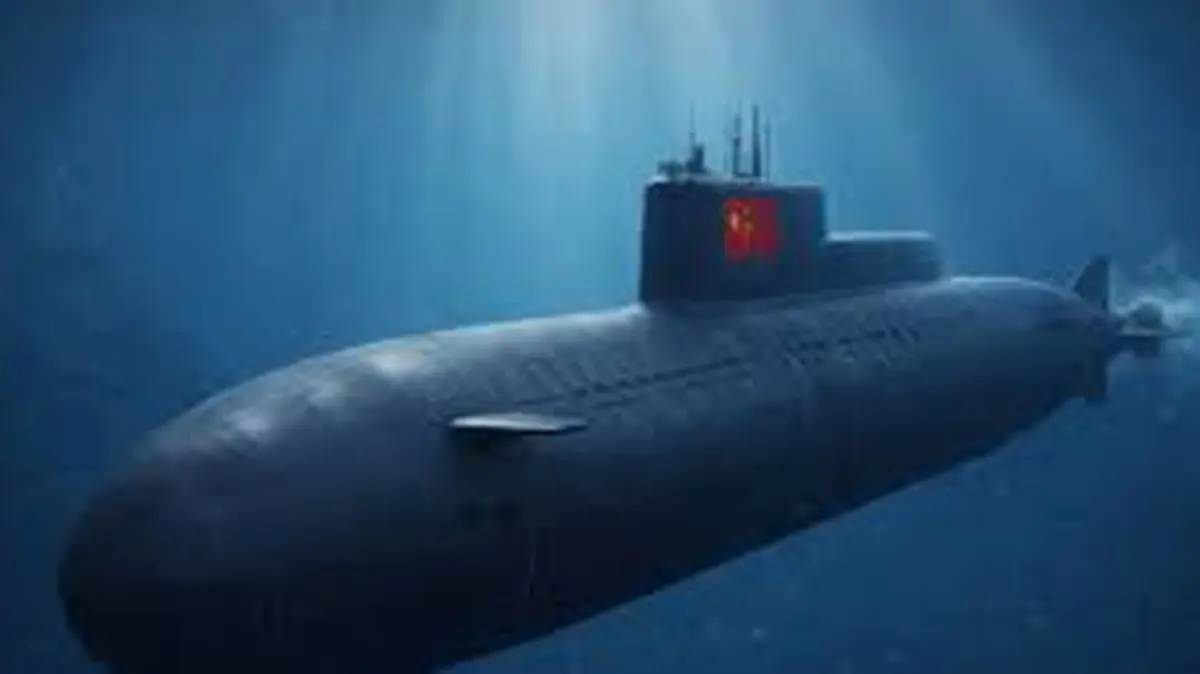
Chinese state media recently revealed new specifications for the Type 096 (Tang‑class) nuclear‑powered ballistic missile submarine. The disclosures suggest a major leap in China’s sea‑based nuclear capability and have drawn international attention.
Background
Ballistic missile submarines (SSBNs) form the underwater leg of a nuclear triad, providing a stealthy, second‑strike deterrent. China’s current fleet includes Type 094 “Jin”‑class submarines, which carry 12 JL‑2 missiles. The new Type 096 class, under construction, represents the next step in the People’s Liberation Army Navy’s effort to build a continuous at‑sea deterrent akin to those of the United States and Russia.
Key features
- Increased displacement: Leaked figures indicate a submerged displacement of 15,000–20,000 tons, similar to the U.S. Navy’s Ohio‑class. The larger hull allows more room for noise‑reduction measures and additional missiles.
- Reduced noise: The design reportedly uses raft‑mounted machinery, extensive hull isolation and a pump‑jet propulsion system to lower acoustic signatures. Chinese sources claim a noise level around 95–100 decibels, far quieter than earlier Chinese SSBNs.
- Enhanced sensors: Improved sonar arrays and processing algorithms may provide detection ranges up to several hundred kilometres, giving the submarine greater situational awareness.
- Powerful armament: The Type 096 is expected to carry 16–24 JL‑3 submarine‑launched ballistic missiles, each with an estimated range of 10,000–14,000 km and the ability to carry multiple independently targetable re‑entry vehicles (MIRVs). This would double the missile load of the preceding Type 094 and enable strikes on continental targets from well within Chinese waters.
- Torpedo capability: Besides missiles, the submarine will be equipped with high‑speed Yu‑6 torpedoes for self‑defence.
Strategic implications
- Continuous deterrence: With larger missile capacity and quieter operation, the Type 096 could allow China to maintain SSBNs on patrol in the Pacific or potentially under Arctic ice, complicating adversaries’ tracking efforts.
- Regional balance: The new class narrows the capability gap with U.S. and Russian SSBN fleets, adding pressure on anti‑submarine warfare assets in the region.
- Arms control concerns: As sea‑based arsenals expand, analysts urge renewed dialogue on maritime confidence‑building measures to reduce risks of miscalculation.
Conclusion
The Type 096 Tang‑class submarine signals a significant upgrade in China’s sea‑based deterrent. Its combination of size, stealth and firepower demonstrates Beijing’s intention to secure a credible second‑strike capability, underscoring the evolving dynamics of undersea nuclear competition.
Source: WION