

Why in news?
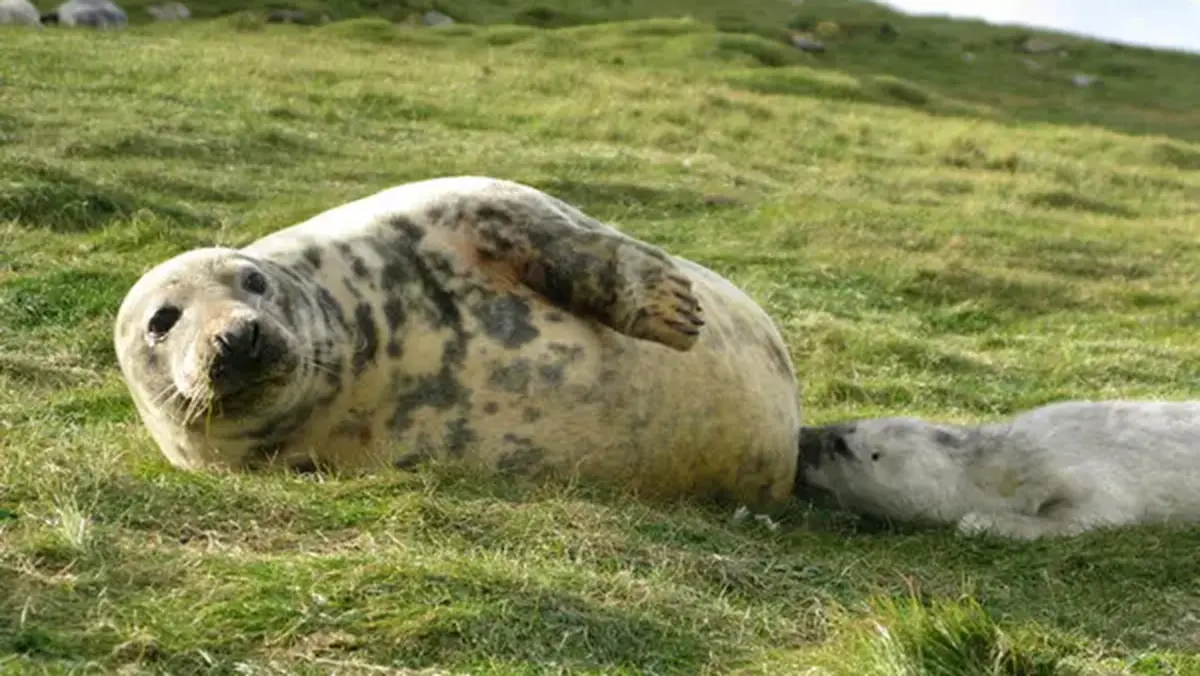
An international team of scientists recently discovered that the milk of Atlantic grey seals contains an astonishing 332 different oligosaccharides (complex sugars). This makes it roughly a third more diverse than human breast milk and sheds light on how wild mammal mothers protect their pups in harsh environments. The findings could help improve formulations for human infant formula.
Background
Grey seals (Halichoerus grypus) are large marine mammals that give birth on remote beaches in sub‑Arctic regions. Mothers nurse their pups for only two to three weeks, during which the pups triple their weight on milk extremely rich in fat and protein. Unlike lactose, milk oligosaccharides are indigestible by babies but feed beneficial gut bacteria and provide immunity against pathogens. Human breast milk contains about 200 known oligosaccharides, which support the infant microbiome, brain development and disease resistance. Scientists have long suspected that marine mammals might produce even more complex milk to cope with colder, more infectious environments.
Key discoveries
- 332 unique sugars: Researchers used advanced mass‑spectrometry to identify 332 distinct oligosaccharides in grey seal milk, the highest number recorded for any mammal to date.
- Functional roles: Many of the sugars are thought to block viruses and bacteria from attaching to the pups’ gut cells, while others nourish specific microbes that help digest the high‑fat diet and train the immune system.
- Evolutionary adaptation: The extreme complexity may reflect the seals’ need to equip their pups with rapid immunity and robust microbiota before they are weaned and left to fend for themselves in cold oceans.
- Implications for humans: Understanding these sugars could inform the design of improved infant formula that better mimics the protective functions of human milk. It also highlights the diversity of mammalian lactation strategies.
Conclusion
The discovery that Atlantic grey seals produce the most complex milk sugars known underscores the intimate link between environment, evolution and early life nutrition. By studying such extraordinary adaptations, scientists hope to translate lessons from wildlife into better health outcomes for human infants.
Source: The Indian Express – Explained