

Why in news?
A collaborative study by the Wildlife Institute of India and the Andhra Pradesh Forest Department radio‑collared three fishing cats in Coringa Wildlife Sanctuary. The project aims to monitor their movements and reduce conflicts with fish farmers, highlighting the importance of this mangrove ecosystem.
Background
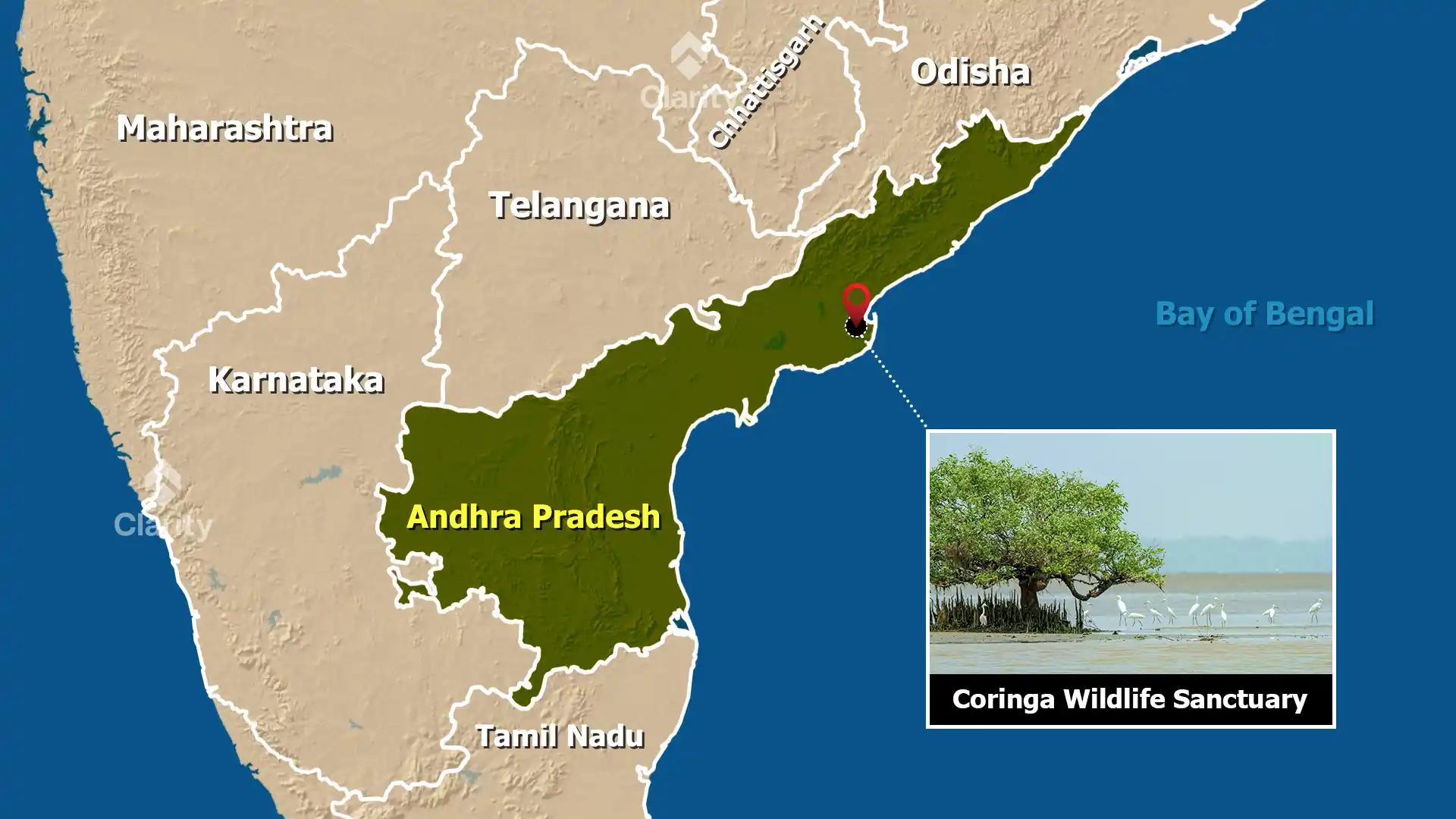
Location: Coringa Wildlife Sanctuary is situated about 20 km south of Kakinada in the East Godavari district of Andhra Pradesh. It lies at the confluence of the Gouthami–Godavari river branch and the Bay of Bengal.
- Area and habitats: Covering roughly 235 km², it protects one of the largest stretches of mangroves on India’s eastern coast, accounting for around 40 % of Andhra Pradesh’s mangrove cover. The sanctuary comprises tidal creeks, mudflats, marshes and 24 species of salt‑tolerant trees such as Rhizophora mucronata, Avicennia officinalis and Excoecaria agallocha.
- Fauna: More than 245 species of birds—including lesser adjutant, pied kingfisher and brahminy kite—use the wetlands. The area supports endangered white‑backed and long‑billed vultures. Mammals include the fishing cat, golden jackal, smooth‑coated otter and small Indian civet. The beaches serve as nesting sites for olive ridley sea turtles. Around 382 fish species have been recorded, making the estuary a vital fish nursery.
- Livelihoods and ecosystem services: About 80,000 people in surrounding villages depend on the mangroves for fishing, honey collection and wood. The mangroves act as natural barriers against cyclones, store carbon and attract tourists through boardwalks and bird watching.
- Threats: Climate change, sea‑level rise and extreme weather events threaten to submerge mudflats. Industrial pollution from the nearby port and oil refineries, unregulated aquaculture, cutting of mangroves for fuelwood and encroachment pose major challenges. Invasive species such as water hyacinth also degrade habitats.
- Fishing cat research: The 2025 radio‑collaring project fitted GPS collars on one male and two female fishing cats. Data on their movement will help design strategies to prevent conflict with fish farmers and assess habitat use. A 2019 census estimated about 115 fishing cats in Coringa, indicating a healthy population.
Significance
- Biodiversity hotspot: Coringa’s mangroves support rich plant and animal diversity and are a designated Important Bird Area and Key Biodiversity Area.
- Climate resilience: Protecting and restoring mangroves enhances coastal resilience against storms and sequesters significant amounts of carbon.
- Community involvement: Conservation programmes need to balance ecological protection with the livelihoods of local communities who depend on the mangroves.
Source: TH,