

Why in news?
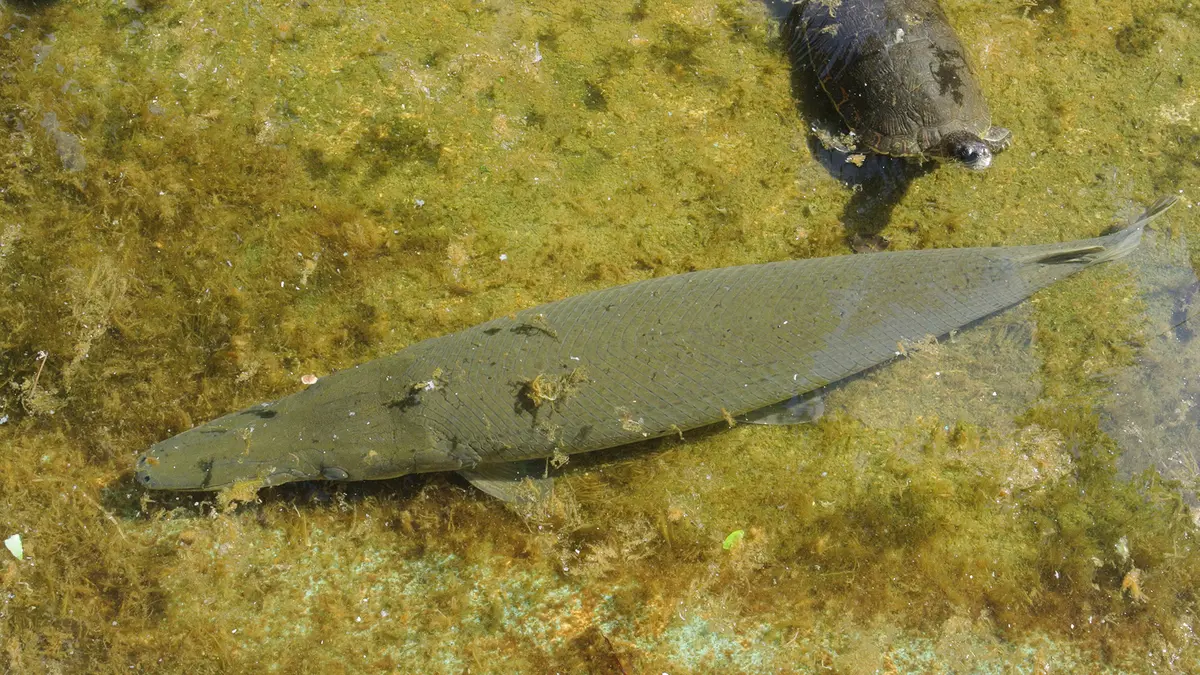
Conservationists in Cuba have stepped up efforts to restore populations of the Cuban gar, a prehistoric fish now listed as critically endangered. Hatcheries in the Zapata Swamp are breeding juvenile fish and releasing them into protected waterways in hopes of preventing extinction. The programme follows years of habitat loss and competition from invasive species that drastically reduced numbers in the wild.
Background
The Cuban gar (Atractosteus tristoechus), known locally as manjuarí, belongs to an ancient family of fishes that thrived alongside dinosaurs. It has a long, slender body armoured with hard scales and an elongated snout filled with sharp teeth. Although mainly a freshwater species, it can tolerate brackish water and even survive short periods of low oxygen by gulping air at the water’s surface. Historically, the fish inhabited rivers, lakes and coastal lagoons of western Cuba and the Isla de la Juventud.
Threats
- Habitat degradation: Deforestation, pollution and dam construction have altered the slow‑moving backwaters that Cuban gars require for breeding and feeding.
- Overfishing: The species was once caught for food and sport, leading to steep population declines.
- Invasive species: Introduction of African walking catfish and other non‑native fish intensified competition for prey and disturbed spawning grounds.
Conservation measures
Biologists are collecting eggs from surviving adults and rearing larvae in controlled hatcheries. Once the juveniles reach a certain size, they are released into protected channels of the Zapata Swamp. The programme also involves monitoring water quality, restricting fishing and educating local communities about the gar’s ecological role. Early results are encouraging but researchers note that it will take years to rebuild self‑sustaining wild populations.
Sources: India Today ·