
Why in news?
Recent medical updates have expanded treatment options for Cushing’s syndrome, a hormonal disorder caused by prolonged exposure to high levels of the hormone cortisol. Awareness is growing because the condition’s subtle symptoms often lead to delayed diagnosis.
Background
Cushing’s syndrome (also called hypercortisolism) occurs when the body produces too much cortisol over an extended period. Cortisol is produced by the adrenal glands and helps regulate blood pressure, metabolism, immune responses and the body’s reaction to stress. High cortisol may result from long‑term use of corticosteroid medications prescribed for conditions like asthma or autoimmune diseases, or it may be produced endogenously due to a non‑cancerous tumour in the pituitary or adrenal glands.
Signs and symptoms
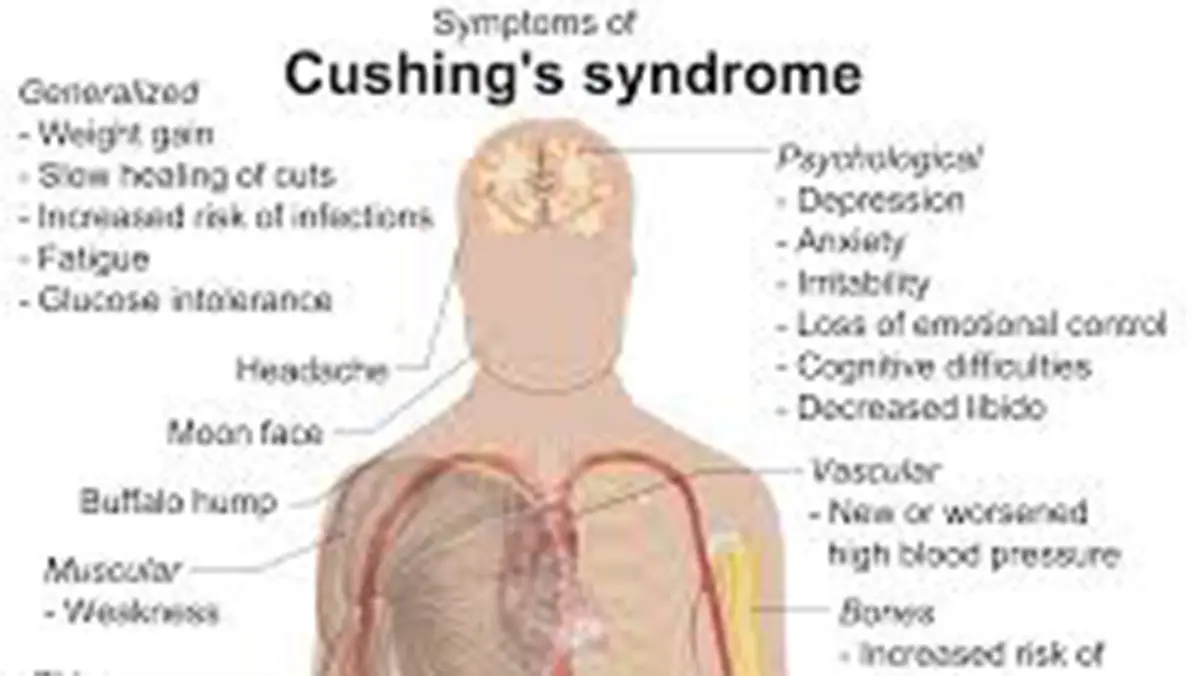
- Weight gain, especially around the abdomen and face, with fat deposits on the back of the neck (a “buffalo hump”).
- Thin, fragile skin that bruises easily; slow wound healing and purple stretch marks on the abdomen, thighs or arms.
- Acne and increased facial or body hair, irregular or absent menstrual periods in women, and reduced libido or fertility issues in men.
- High blood pressure, high blood sugar and, in some cases, diabetes and bone loss leading to osteoporosis.
- Mood changes such as anxiety, irritability, depression, sleep problems and memory difficulties.
Causes
- Medication‑related (exogenous): Long‑term use of glucocorticoid drugs is the most common cause. Doctors may prescribe corticosteroids to treat chronic inflammatory diseases, but prolonged high doses can trigger Cushing’s syndrome.
- Body‑generated (endogenous): A non‑cancerous tumour in the pituitary gland (Cushing’s disease) can cause overproduction of adrenocorticotropic hormone (ACTH), stimulating the adrenals to release excess cortisol. Rarely, a tumour in the adrenal glands or an ectopic (external) tumour secreting ACTH (often in the lungs) can also be responsible.
Treatment and management
- Adjusting medications: When steroid medicines are the culprit, healthcare providers gradually reduce the dose or switch to an alternative under close supervision.
- Surgery and radiation: If a tumour in the pituitary or adrenal glands causes the syndrome, surgical removal is usually the first‑line treatment. Radiation therapy may follow if surgery cannot remove the entire tumour.
- Medications: In some cases, doctors prescribe drugs that inhibit cortisol production or block its effects. Treatment plans depend on the cause and the patient’s overall health.
Conclusion
Although Cushing’s syndrome is rare, untreated hypercortisolism can be life‑threatening. Early diagnosis and specialist care improve outcomes dramatically. People taking long‑term steroids should do so under medical supervision, and anyone experiencing the above symptoms should seek medical advice to evaluate hormone levels.
Source: The Hindu · Cleveland Clinic

