

Why in news?
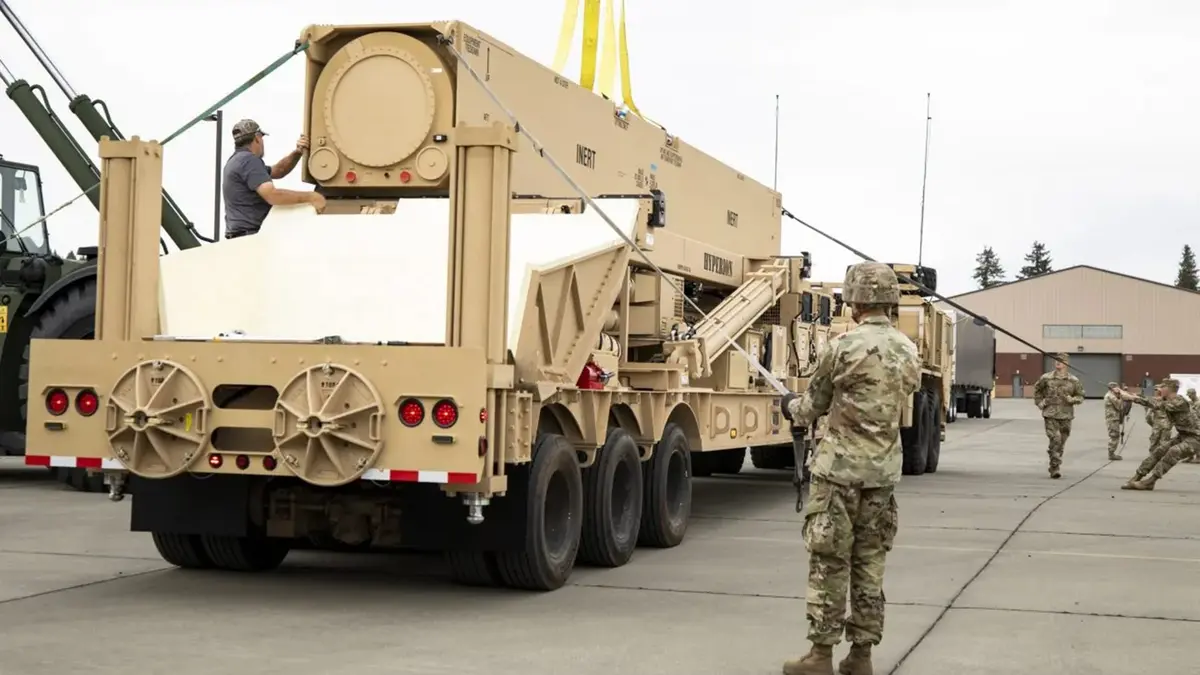
The U.S. Army activated the Bravo Battery of the 1st Battalion, 17th Field Artillery Regiment at Joint Base Lewis‑McChord on 17 December 2025 to operate the Dark Eagle long‑range hypersonic weapon system. This event marked the formal fielding of a new class of missile capable of striking targets thousands of kilometres away at speeds exceeding Mach 5.
Background
Hypersonic weapons travel at least five times the speed of sound and manoeuvre to evade air defences. The U.S. Army’s Long‑Range Hypersonic Weapon (LRHW), nicknamed Dark Eagle, was developed jointly with the Navy and incorporates a common hypersonic glide body and booster. Testing of the system began in 2020, and the first live deployment occurred in July 2025 during an exercise in Australia.
Technical features
- Range and payload: The Dark Eagle LRHW is estimated to have a range between 1,725 and 2,175 mi (2,775–3,500 km). It carries a non‑nuclear warhead weighing less than 30 lb (13 kg) but can destroy a target area the size of a parking lot due to its extreme kinetic energy.
- Launch platform: The missile is fired from a truck‑mounted launcher, providing mobility and allowing deployment in austere locations.
- Hypersonic glide body: After booster separation, the glide body travels outside the atmosphere at hypersonic speed and manoeuvres unpredictably, making it difficult to intercept.
- Indo‑Pacific deployment: The newly activated battery will ultimately deploy to the Indo‑Pacific theatre, enhancing U.S. capabilities to deter adversaries and respond rapidly to crises.
Strategic implications
- The Dark Eagle system aims to overcome anti‑access/area‑denial defences by striking time‑critical targets before they can be relocated or defended.
- Its deployment signals intensifying technological competition among major powers, spurring debates about arms control and escalation risks.
- Collaboration with the Navy suggests future sea‑launched variants, underscoring joint‑force integration.