

Why in news?
A woman from the Sahariya tribe in Madhya Pradesh died after waiting in a long queue to obtain subsidised urea fertiliser, drawing attention to systemic issues in fertiliser distribution and the marginalised status of this tribal community.
Background
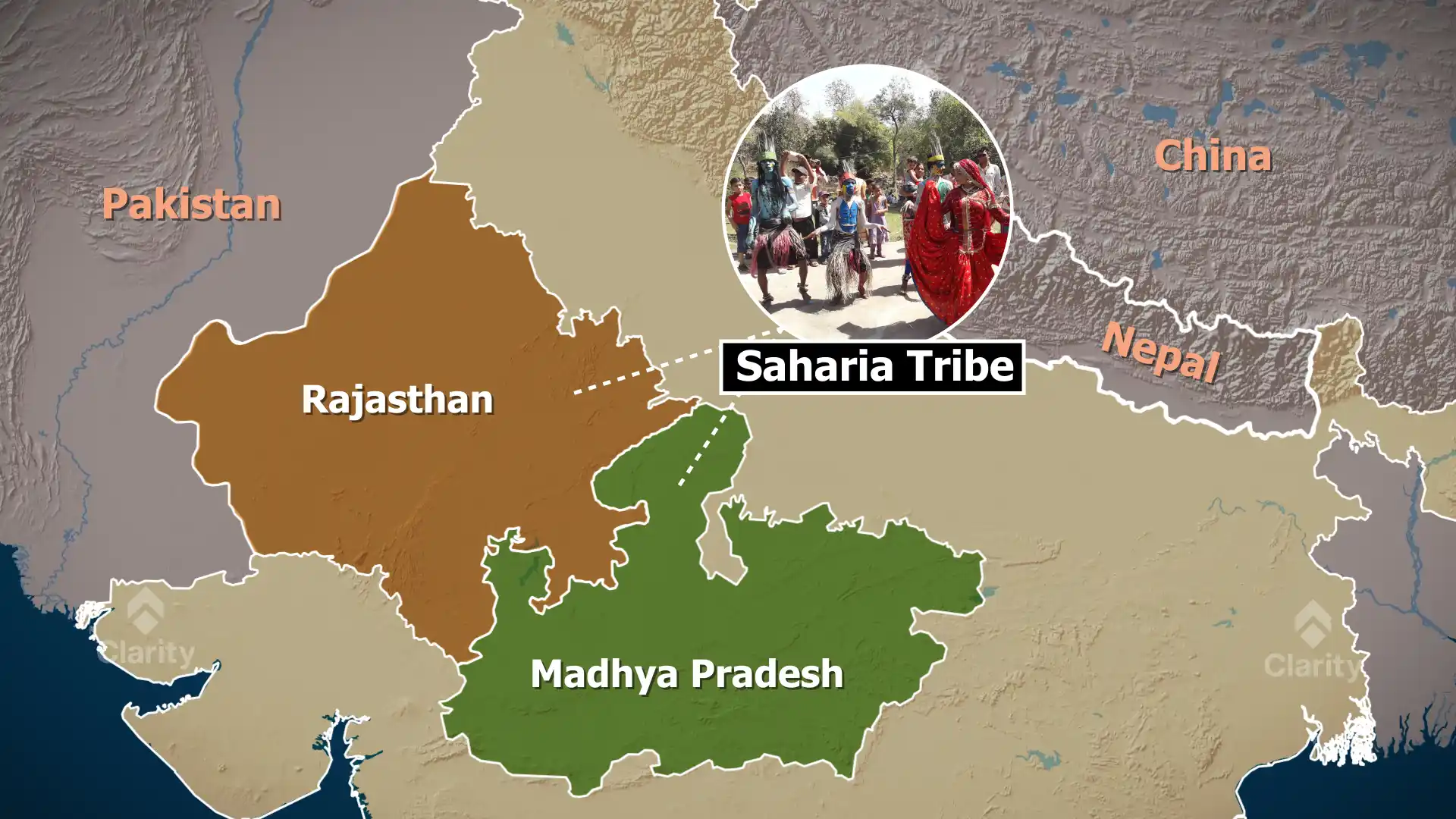
The Sahariyas are an Adivasi group primarily living in the districts of Morena, Sheopur, Bhind, Gwalior, Datia, Shivpuri, Vidisha and Guna in Madhya Pradesh, with smaller populations in the Baran district of Rajasthan. The community is classified by the Indian government as a Particularly Vulnerable Tribal Group (PVTG), signifying extreme social and economic deprivation.
According to anthropological studies, many Sahariyas live in clusters of stone‑ or mud‑walled houses called saharana on the fringes of villages. They practice Hinduism interwoven with folk traditions, speak Hindi dialects and organise social life through a council headed by a hereditary patel. Their traditional livelihoods include gathering forest products such as wood, gum and tendu leaves, crafting catechu from khair trees, hunting and fishing. Some practise rain‑fed agriculture growing wheat, pearl millet and sorghum, while others work as labourers.
The incident and its context
- Tragic death: Bhuri Bai, a 45‑year‑old Sahariya woman from Guna district, collapsed and died after waiting in line for more than 16 hours to buy urea. She had made multiple trips to the distribution centre with her children because supplies were scarce and queues long.
- Marginalised status: Sahariyas suffer from low literacy rates and high malnutrition, as highlighted by surveys in Rajasthan and Madhya Pradesh. The NDTV network recently reported that hundreds of Sahariya children in Baran district were severely malnourished despite government nutrition programmes.
- Government response: The incident sparked criticism of local administration. Political leaders, including Union Minister Jyotiraditya Scindia, visited the family, offered compensation and ordered disciplinary action against officials. Measures such as expanding distribution counters and increasing allocations were announced.
- Structural issues: High demand and poor management at fertiliser distribution centres have led to similar crises in the past. Farmers must present tokens and land papers, and delays in supply often create confusion and overcrowding. Many Sahariya families rely on a timely supply of fertiliser to cultivate their modest landholdings; when systems fail, the consequences can be devastating.
Challenges faced by the Sahariya community
- Poverty and malnutrition: Studies show widespread chronic under‑nutrition and diseases such as tuberculosis. Government programmes provide additional nutrition kits to Sahariya children, but implementation gaps persist.
- Land and livelihood insecurity: Encroachment by powerful groups has reduced the cultivable land available to Sahariyas, pushing many deeper into forests and leaving them dependent on daily wage labour.
- Access to services: Remote settlements and low literacy rates hamper access to healthcare, education and welfare schemes. Social stigma and caste discrimination further isolate the community.
Conclusion
The death of Bhuri Bai highlights the intersection of infrastructural shortcomings and the vulnerability of tribal communities. Addressing the immediate issues in fertiliser distribution is important, but long‑term solutions must focus on improving nutrition, education, land rights and healthcare for the Sahariya people.
Source: The Indian Express